The Principal Secretary for Immigration and Citizen Services Dr Belio Kipsang has reaffirmed the government’s commitment to strengthening cross-border security through enhanced collaboration with state agencies while improving access to essential public services for Kenyans.
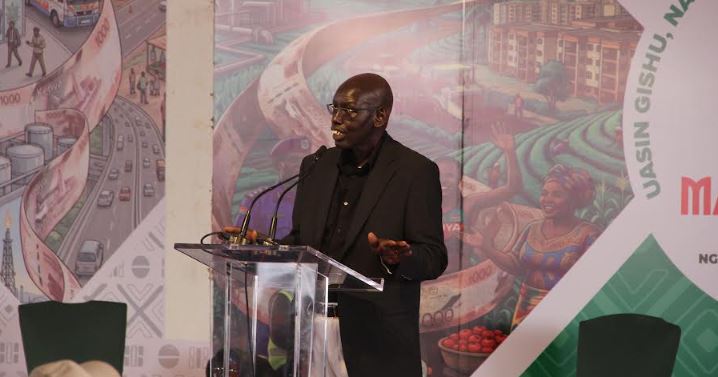
Speaking during a panel discussion at Eldoret National Polytechnic, where government agencies brought services closer to citizens as part of preparations for this year’s Mashujaa Day celebrations, Dr. Kipsang underscored the importance of a coordinated approach to securing the country’s borders, protecting national interests and safeguarding the economy.
He noted that effective security requires collaboration among government institutions responsible for immigration, wildlife protection and border management, alongside reliable identification systems and authentic travel documents.
“We shall be looking at the issues of borders, wildlife and transitional rights, and how we secure our country so that when we go to bed, we know our surroundings are safe and our economy is secure,” he said.
Dr. Kipsang emphasised that the State Department for Immigration and Citizen Services plays a central role in establishing and maintaining the identity of every Kenyan throughout their lifetime.
He described identity documentation as the foundation of citizenship, explaining that the process begins with a birth certificate, progresses to a national identity card upon attaining adulthood, and includes a passport for international travel. A death certificate, he added, completes the official documentation of an individual’s life.

“The birth certificate becomes the root of your identity,” he said, noting that national identity cards affirm an individual’s belonging to the Kenyan family, while passports enable citizens to travel beyond the country’s borders.
The PS observed that access to reliable identification and travel documents is particularly important for young people seeking educational, employment and business opportunities beyond their immediate communities.
He encouraged residents of the North Rift region, which he described as a region of champions, to take advantage of passport services to pursue opportunities both locally and internationally.
Beyond identity management and border security, Dr. Kipsang highlighted the government’s efforts to make public services more accessible through digital platforms, reducing the need for citizens to travel to government offices to obtain essential documents.
He said the government’s service delivery approach was increasingly shifting towards bringing services closer to the people, in line with its commitment to ensuring that taxpayers receive value for their contributions.
“Today, services are not only available in offices; they are also available on digital platforms. We are bringing government services into the hands of the people,” he said.
Dr. Kipsang cited the use of the eCitizen platform as an example of how digital transformation has eased access to government services, allowing citizens to apply for documents and access other services conveniently.
He said the platform receives approximately 600,000 visits daily, demonstrating the growing demand for online government services and the potential of digital systems to ease congestion at public offices.
The PS also highlighted improvements in the processing of identification documents, stating that national identity cards could be obtained within seven days, while passports were processed within three to seven days.
He further explained that the government had introduced electronic birth notification systems to simplify birth registration, enabling parents to obtain birth certificates more conveniently following the birth of a child in a hospital.
Under the system, a newborn is assigned a unique personal identifier through electronic notification, allowing parents to use the identifier to access and print the birth certificate without necessarily returning to government offices.
Dr. Kipsang said such innovations were part of broader efforts to improve efficiency, reduce administrative burdens and ensure that citizens could access services with greater ease.
He further linked efficient public service delivery to the government’s responsibility to account for public resources, noting that citizens who pay taxes expect tangible benefits from the services provided by state institutions.
The panel discussion also provided an opportunity for representatives of various government agencies to engage citizens on matters relating to border protection, wildlife conservation, secure identification and travel documentation.
Dr. Kipsang said the engagement was intended to give members of the public an opportunity to raise concerns and seek clarification directly from government officials.
He assured participants that the officials were available to address their questions, emphasising that public engagement and accountability remained central to the government’s service delivery agenda.
The outreach at Eldoret National Polytechnic forms part of activities ahead of the Mashujaa Day celebrations, bringing government services closer to residents while creating a platform for dialogue on national security, citizenship and public service delivery.
By Ekuwam Sylvester and Fredrick Maritim