Kenya is eyeing the global livestock market for its farmers with the rolling out of the Animal Identification and Traceability System (ANITRAC), a digital platform and mobile app rolled out by the Kenyan government to register and track livestock using electronic RFID ear tags.
The system turns livestock into easily verifiable, bankable assets for loans and financial services by utilizing dual ear tags: a visual tag on the left ear and a microchip button tag on the right, enabling real-time geolocation and geo-mapping.
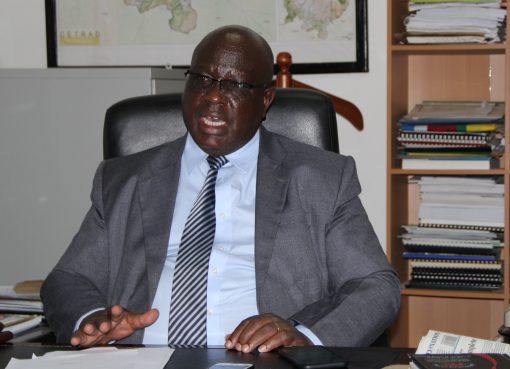
Speaking during the official launch of the ANITRAC system in Karawa village, Tarasaa sub county in Tana River, Agriculture Cabinet Secretary Mutahi Kagwe said that the system was not an end by itself, but a means to an end especially for farmers being able to get better prices and ability to sell or export their livestock or products into the global market.
The CS noted that the global market was keen on having traceable products; their origin, the vaccinations offered, and diseases treated for safety and transparency.
At the same time, Kagwe said that livestock theft and banditry will be a thing of the past, given that every animal will be easily traceable to their location.
“This system is supposed to help the farmer, the livestock herders, who are the biggest beneficiaries of this system called ANITRAC because the idea is that the animal is tracked with a chip that is going to trace the animal wherever it is. At the same time, we can literally identify the animal. It is an ID that is going to be attached to a specific animal,” Kagwe said.
“Moving forward, we will be indirectly fighting banditry, especially those who have been stealing animals from all over the places, and all over the country. That will be a thing of the past. Secondly, the animals we are identifying, we will now be able to export animals that have been clearly identified and traced. Outside Kenya, the consumers of our livestock do not want to import animals that cannot be traced or that cannot be identified,” he added.
The Agriculture and Livestock development CS further called on the farmers countrywide to embrace the technology the government was adopting because it was mainly for their advantage in terms of market opening and disease surveillance and control which would maximize their profits.
“We want to help the farmer and make sure that they are tuned to the global market, and serve the global market for meat as well as live animals. We want to use technology to the advantage of the farmer. This is the first time we are introducing technology in a very big way in the livestock industry in our nation. We want to make sure that farmers understand it, embrace it and they know that it is for their own benefit,” he added.
Tana River County Chief officer for Livestock development Kanchoru Golo on his part revealed that the county had millions of livestock and that the newly rolled out system would help them in knowing the approximate number of livestock which would help in planning for vaccinations, surveillance of diseases and in knowing migration patterns within the county.
“We have at least 600,000 cows, one million goats, 800,000 sheep, 50,000 donkeys and 100,000 camels and so we have a great wealth in livestock and this system will help us to know our livestock in Tana River county because many times we have a challenge when livestock from other counties migrate to this county and we face the challenge of knowing what ours and what is not ours,” Golo said.
“This will help us in making necessary planning for our livestock in terms of treatment and vaccination, animal drugs, and development of the local livestock industry,” he added.
On his part, Mr Hussein Mohamed Jelmo, a resident urged his fellow farmers to support the program and avail their livestock for the system. “The system that the government is bringing to us is very important in our county, and I urge our people to embrace it because now, cattle rustling will be over,” Jelmo said.
by Erick Kyalo