Kenya and Georgia seek to expand bilateral trade and investment by linking their regional markets, with business partnerships, manufacturing, and agricultural cooperation at the forefront of efforts to deepen economic ties.
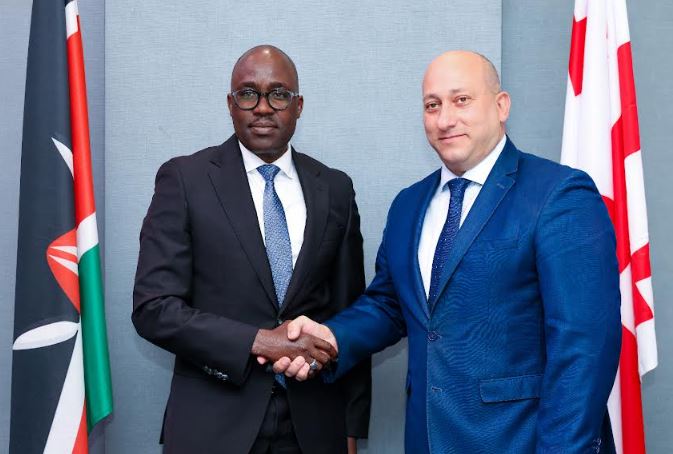
The agenda took centre stage during the inaugural Kenya–Georgia Political Consultations in Nairobi, co-chaired by Dr Korir A. Sing’Oei, Kenya’s Principal Secretary for Foreign Affairs, and H.E. Alexander Khvtisiashvili, Georgia’s Deputy Minister of Foreign Affairs.
“The central task before us is to move our relationship from cordial diplomatic engagement towards a more dynamic partnership anchored in trade, investment, connectivity, technology and institutional cooperation,” Dr Sing’Oei said.
The consultations seek to give the bilateral relationship a stronger commercial dimension by leveraging the two countries’ strategic positions. Kenya’s access to regional markets through the East African Community, the Common Market for Eastern and Southern Africa and the African Continental Free Trade Area presents potential opportunities for Georgian businesses.
At the same time, Georgia’s position along trade corridors connecting Europe and Central Asia offers Kenyan exporters another avenue for exploring new markets.
“Our priority is to diversify bilateral trade beyond cut flowers, expand agricultural cooperation and unlock new opportunities in manufacturing, value addition and investment. By strengthening business-to-business partnerships and improving market access, Kenya and Georgia can build a more competitive, balanced and mutually beneficial economic relationship,” Dr Sing’Oei said.
He added that Kenya and Georgia had significant potential to expand trade and investment by strengthening business links, improving market access and diversifying commercial exchanges. Bilateral trade remains an area for expansion, with Kenya’s exports to Georgia valued at approximately US$3.28 million and Georgian exports to Kenya at about US$793,000.
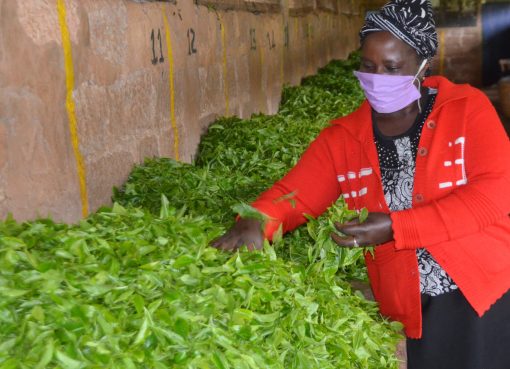
Kenyan tea, coffee, cut flowers and fruits provide a basis for expanding exports. Stronger engagement between chambers of commerce and private-sector organisations could help businesses identify buyers, establish distribution networks and address barriers relating to customs procedures, certification and product standards.
H.E. Alexander Khvtisiashvili said stronger investment and economic ties could attract Georgian interest in Kenya’s Special Economic Zones, particularly in manufacturing, agro-processing, pharmaceuticals, logistics and distribution. Such ventures could strengthen local production and value addition while positioning Kenya as a base for accessing wider African markets.
The two countries are also exploring investment opportunities in Kenya’s Special Economic Zones and potential transport links through Georgia’s Black Sea ports of Poti and Batumi and the Trans-Caspian Middle Corridor.
Agriculture also emerged as a potential area for technical cooperation. Khvtisiashvili requested assistance in assessing whether Kenya’s soils and growing conditions could support Georgian grape varieties. Dr Sing’Oei said the request would be facilitated through the Kenya Plant Health Inspectorate Service (KEPHIS), which would assess their suitability for possible trials.
“We see an opportunity to explore the suitability of Georgian grape varieties for cultivation in Kenya through local trials. This exchange could open new avenues for agricultural cooperation, diversify production and support the development of Kenya’s wine industry, subject to the varieties’ adaptability to local conditions,” Khvtisiashvili said.
Tourism presents a further avenue for cooperation. Georgia recorded approximately 7.8 million international traveller visits in 2025, including 5.52 million international tourist visits, generating about US$4.69 billion in international travel revenue. Kenya reported tourism earnings of approximately KSh458.2 billion in the 2024/25 financial year. While the figures reflect different measures and reporting periods, the two countries could explore destination marketing and cultural tourism exchanges.
The consultations also provide a platform for strengthening cooperation between the two foreign services through professional exchanges, diplomatic training and the sharing of institutional experience. Such engagement could reinforce economic diplomacy and support efforts to identify and advance bilateral trade and investment opportunities.
The talks build on the Memorandum of Understanding on Political Consultations signed in September 2025 and follow the meeting between President William Samoei Ruto and Georgian Prime Minister Irakli Kobakhidze on the sidelines of the 13th World Urban Forum in Baku in May 2026.
However, expanding trade will depend on addressing market-access requirements, strengthening business partnerships and ensuring commercially viable logistics. The consultations build on the Memorandum of Understanding on Political Consultations signed in September 2025, as Kenya and Georgia seek to translate diplomatic relations, established in July 2010, into stronger trade and investment ties.
The priority now is to translate diplomatic engagement into measurable economic outcomes through stronger business links, viable investment proposals and sustained growth in bilateral trade.
By Hassan Adan Ali (PCO)