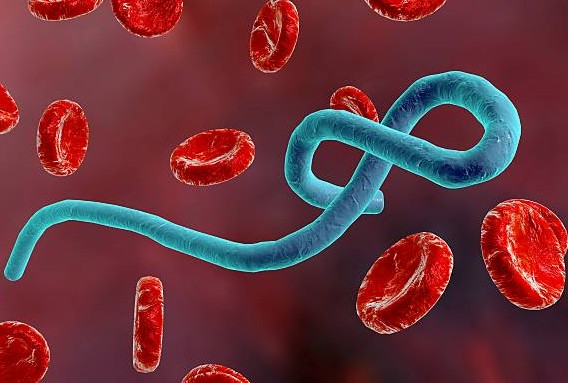
The World Health Organization (WHO) has declared a Public Health Emergency of International Concern (PHEIC), following a rapidly escalating Ebola outbreak in the Democratic Republic of the Congo (DRC) and Uganda.
WHO Director-General Dr. Tedros Adhanom Ghebreyesus said the decision was made on Sunday under Article 12 of the International Health Regulations, following consultations with health authorities in both countries.
He noted that this marks a rare step, as it is the first time, a WHO Director-General has declared a global health emergency before convening the Emergency Committee.
Health officials report that the outbreak has already spread across multiple locations. In DRC, 30 confirmed Ebola cases have been recorded in Ituri Province in the northeast.
Uganda has also confirmed two cases in the capital, Kampala, including one death linked to travelers from DRC. An American national has also tested positive and was later transferred to Germany for specialized treatment.
WHO warned that the situation may be more severe beyond the confirmed cases, citing more than 500 suspected cases and 130 suspected deaths.
The organization expressed particular concern over infections among healthcare workers, which point to possible transmission within health facilities.
WHO also highlighted that insecurity and conflict in some parts, like Ituri province in DRC, a key mining zone since late 2025, has seen displacement of more than 100,000 people and increased population movement across borders has further heightening mobility and exposure risks.
In response, Uganda has postponed its annual Martyrs’ Day celebrations, an event that typically attracts millions of pilgrims, as part of efforts to limit large public gatherings and reduce transmission risk.
WHO said it had deployed personnel, medical supplies, and emergency funds to support the affected countries.
An additional USD3.4 million has been released from its Contingency Fund for Emergencies, bringing total support to USD3.9 million.
The agency has further called on the international community to urgently scale up assistance to prevent further spread and loss of life.
Meanwhile, Kenya has heightened its preparedness following regional alerts, and Director General for Health Dr. Patrick Amoth on Sunday said the Ministry of Health has activated a National Ebola Preparedness Team and placed the National Public Health Emergency Operations Center (PHEOC) on high alert for real-time monitoring and coordination.
He added that surveillance for viral hemorrhagic fevers has been strengthened across the country, while screening at airports, border points, and other entry points has been intensified.
Laboratory capacity and diagnostic readiness are also being reinforced, alongside continuous training of healthcare workers on Ebola detection and response protocols, even as public awareness campaigns step up to improve risk communication and counter misinformation.
Dr. Amoth emphasized that Kenya is working closely with the WHO and the Africa Centres for Disease Control and Prevention (Africa CDC) to ensure a coordinated regional response, urging the public to remain calm but vigilant and to observe strict hygiene measures.
Health Principal Secretary Mary Muthoni also confirmed that, as of Sunday the 17th, no confirmed or suspected Ebola cases had been detected in Kenya.
However, she directed all counties to immediately strengthen preparedness due to increased movement of people and goods across the region.
According to the Africa CDC, the regional outbreak has so far recorded 246 suspected cases and 65 deaths, underscoring growing concern among health authorities, even as surveillance continues.
By Wangari Ndirangu