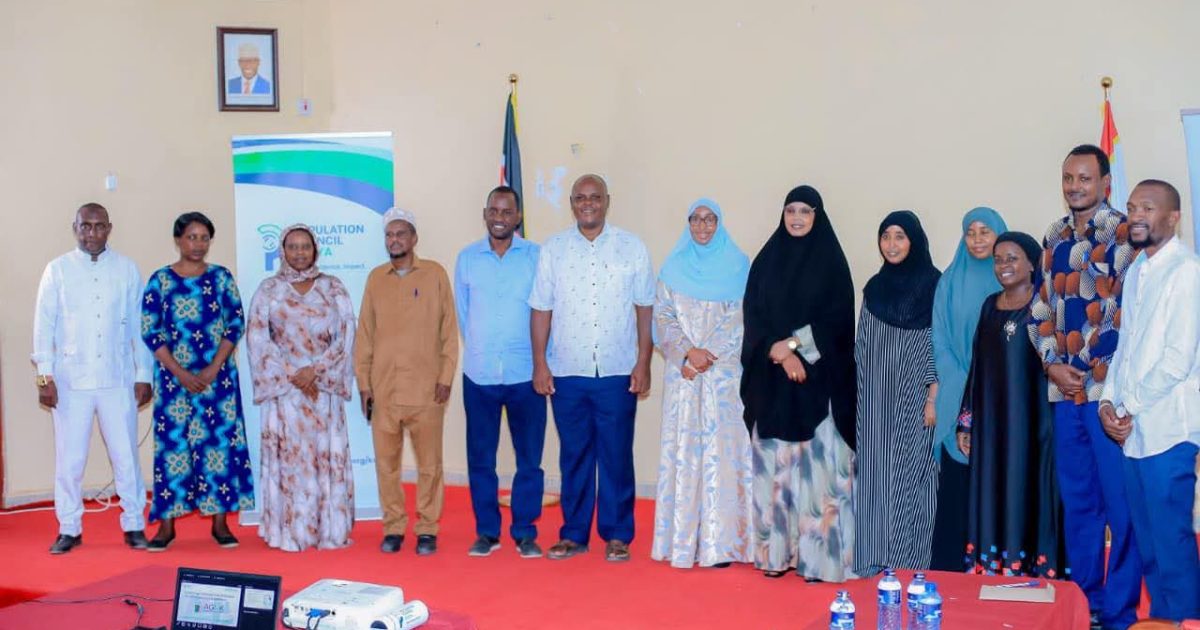
The Wajir County government and the Population Council have concluded the Adolescent Girls Initiative in Kenya (AGI-K) programme, which has been implemented in the county since 2015 to support girls’ education and wellbeing.
Speaking during the programme close-out meeting in Wajir, AGI-K County Focal Person Mohamed Abdille said the initiative was introduced as a research programme by Population Council in partnership with the county government to identify cost-effective interventions, aimed at improving the health, education and welfare of adolescent girls.
Abdille said the programme was first implemented between 2015 and 2019 in Wajir and Kibera as a research phase before being scaled up from 2020.
“The programme has been addressing girl child education and supporting girls, who are out of school through government community health structures,” he said.
He noted that the programme was domiciled under the county health department because of the existing community health system that runs from the county leadership to the village level.
According to Abdille, community health promoters have been instrumental in identifying and tracing girls within communities and linking them to education opportunities.
He added that unlike other enrolment programmes, AGI-K utilised government structures to ensure sustainability and reduce operational costs.
“Community health promoters are already supported by both the national and county governments through stipends, and the programme activities will now be integrated into their normal responsibilities,” he said.
Abdille said the county government had pledged to sustain the initiative even after the close-out of Population Council support.
Population Council Research Officer Robert Mwondi described the programme as successful, saying the initiative had generated evidence that was now influencing policy and government programmes.
Mwondi said findings from the AGI-K programme demonstrated that implementing the initiative through county government systems was more cost-effective compared to parallel structures.
“The county government structures already exist, and there was a significant reduction in implementation costs when the programme was managed through government systems,” he said.
He further noted that lessons from the AGI-K study had informed policy discussions and were being incorporated into the Inua Jamii programme, which is expected to be implemented in nine counties across the country.
Mwondi said the adoption of the programme findings by various stakeholders reflected the success of the research and its contribution to improving interventions targeting adolescent girls.
By Hamdi Buthul