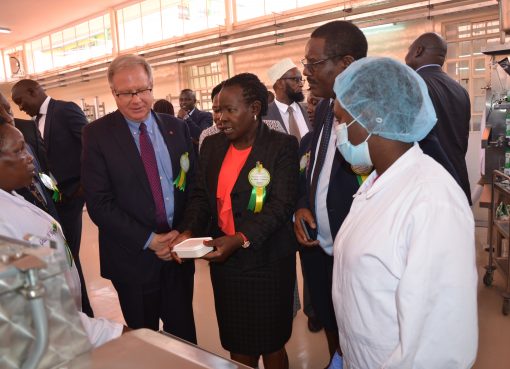
Tourism Principal Secretary (PS) Prof. Julius Bitok has said the government is targeting five million international tourists as part of efforts to increase foreign exchange earnings and accelerate economic growth.
Speaking during a courtesy call at Hill School Senior School in Eldoret, Uasin Gishu County, on Monday, Prof. Bitok said tourism remains Kenya’s leading foreign exchange earner, with the country currently receiving about 2.7 million international tourists annually.
The PS noted that every international visitor contributes an average of Sh300,000 to Kenya’s economy, adding that increasing tourist arrivals would significantly raise the country’s foreign exchange earnings.
“Tourism is the number one foreign exchange earner for our country. We currently receive 2.7 million tourists, and our target is five million,” said Prof. Bitok.
He said the tourism industry, alongside technology, continues to drive economic growth globally, making it one of the sectors with the greatest potential to transform Kenya’s economy.
Prof. Bitok further noted that each international tourist creates an estimated 11 jobs across the tourism value chain, underscoring the sector’s contribution to employment and livelihoods.
“For every tourist we receive in Kenya, the country earns about Sh300,000, which is approximately US$3,000. When you multiply that by the 2.7 million tourists we receive annually, you can see the enormous impact tourism has on our economy. Every tourist also creates about 11 jobs,” he said.
Prof. Bitok added that expanding tourism would not only strengthen Kenya’s foreign exchange earnings but also create more jobs, support small businesses and contribute to inclusive economic development.
The PS encouraged students, particularly those interested in hospitality and tourism, to pursue careers in the sector, noting that Kenya has well-established institutions offering quality training in hospitality and tourism management.
He also urged young people to seize entrepreneurial opportunities within the tourism value chain, saying even small enterprises such as food kiosks, snack vending and other visitor-oriented businesses could provide sustainable incomes with modest capital investment.
By Fredrick Maritim