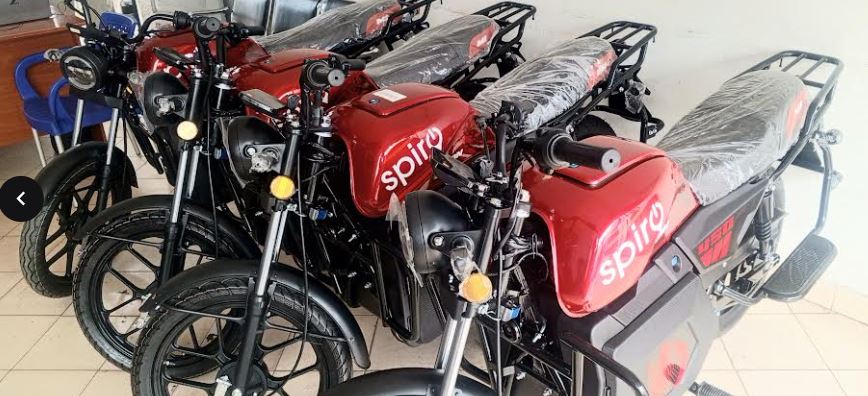
The familiar roar of petrol-powered motorcycles that has long dominated Kenya’s bodaboda industry is gradually being replaced by a quieter sound, the hum of electric motorcycles weaving through the streets of Kisumu, Nairobi and other towns across the country.
What started as a small and largely experimental shift in urban transport is steadily evolving into a significant transformation within Kenya’s transport sector, driven by rising fuel prices, high maintenance costs and increasing demand for cleaner and affordable mobility solutions.
For thousands of bodaboda riders grappling with a harsh economic environment and the high cost of living, electric motorcycles are emerging not just as a technological innovation but as a practical solution capable of reducing operating expenses and improving daily earnings.
Several companies, including Spiro Kenya, Roam Electric, Ampersand and Ecobodaa, are rapidly expanding operations across the country by establishing battery-swapping stations and introducing financing programmes specifically tailored for bodaboda riders.
In Kisumu, riders who have already embraced electric motorcycles say the transition has significantly reduced their daily operating costs and improved their livelihoods.
For six years, Frederick Wanyonyi depended on a petrol-powered motorcycle to ferry passengers around the lakeside city. However, the increasing cost of fuel gradually eroded his profits and made it difficult for him to support his family.
Today, Wanyonyi operates an electric motorcycle supplied by Spiro Kenya and says the shift has transformed his financial situation.
“Previously, I would spend more than Sh.500 every day on fuel alone. Now I spend about Sh.290 on battery swapping and I am able to save more money for rent, school fees and food,” said Wanyonyi.
He explained that maintenance expenses have also reduced considerably because electric motorcycles require fewer mechanical repairs compared to conventional petrol-powered bikes.
“With these bikes, servicing is less frequent. Most of the repairs involve tyres or minor replacements,” he added.
Unlike conventional motorcycles that rely on petrol engines, electric motorcycles use rechargeable batteries that can either be charged directly or exchanged at designated battery-swapping stations.
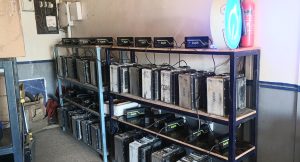
Under the battery-swapping model, riders replace depleted batteries with fully charged ones within minutes, enabling them to continue operating without long waiting hours.
The battery-swapping system is quickly becoming the backbone of Kenya’s electric mobility sector, with companies competing to establish stations in urban centres and along busy transport corridors.
At Nyamasaria in Kisumu, John Mark manages one such swapping station where dozens of riders visit daily to exchange batteries.
According to Mark, demand for electric motorcycle services has risen steadily over the last year as more riders seek affordable alternatives to petrol-powered bikes.
“We now serve many riders every day. Charging from zero to full can cost up to Sh200 depending on battery levels,” he said.
Despite the progress, the transition to electric mobility has not been without challenges.
Frequent power outages continue to disrupt operations at battery-swapping stations, affecting charging schedules and slowing business activities.
“When electricity goes off, business slows down because batteries cannot be charged. There is a need for reliable backup power systems if the sector is to grow smoothly,” Mark explained.
The rise of electric motorcycles is also transforming Kenya’s informal mechanical sector.
Traditional motorcycle mechanics, who have for years specialised in repairing petrol engines, oil systems and fuel pumps, are now being forced to adapt to new technologies involving battery systems, electrical wiring and software diagnostics.
Jackson Otieno, a motorcycle mechanic based in Kisumu, says many local technicians are still struggling to cope with the technological shift.
“These bikes are very different because they rely more on electronics than engines. Mechanics are learning gradually, but many still lack specialised training,” he said.
Otieno noted that while some electric mobility companies occasionally offer technical training sessions, many independent mechanics continue learning through experience and experimentation.
According to him, the most common repairs involve brakes, chains and electrical wiring systems.
Industry players say the growing popularity of electric motorcycles is largely being driven by the rising cost of petrol and the promise of lower operational expenses.
Spiro Kenya’s Sales Manager for Nyanza and Western regions, Stephen Ford Nyaoko, said environmental conservation is another key factor motivating the shift toward electric transport.
“The goal is to reduce pollution and promote cleaner transport while helping riders save money,” said Nyaoko.
He added that the company has continued expanding its battery-swapping network in major towns and rural trading centres to improve accessibility for riders.
According to Nyaoko, electric mobility is expected to dominate Kenya’s transport industry within the next few years.
“In five years, electric vehicles will be everywhere on our roads,” he predicted.
However, industry stakeholders acknowledge that several challenges still hinder faster adoption of electric motorcycles in some parts of the country.
Among the major obstacles are limited spare parts, inadequate charging infrastructure and public skepticism regarding the durability and performance of electric motorcycles.
Some riders have also complained about delays at battery-swapping stations and inadequate technical support whenever motorcycles develop faults.
Others remain unconvinced about the strength and reliability of electric motorcycles, especially when operating on rough roads and in remote rural areas.
But riders like Wanyonyi believe such fears are slowly disappearing as more Kenyans witness the motorcycles in operation.
“People initially thought these bikes were weak, but they perform very well even on rough roads,” he said.
Most electric motorcycles are sold through flexible financing programmes that allow riders to pay a deposit before completing the balance through daily or monthly instalments.
According to Spiro Kenya, a motorcycle currently retails at approximately Sh130,000 for cash buyers, while customers using financing plans pay an initial deposit of about Sh25,000 before commencing structured repayments.
Industry stakeholders are now urging the government to increase investment in charging infrastructure, stabilise electricity supply and create supportive policies that will accelerate the growth of electric mobility.
As Kenya continues pursuing greener and more sustainable transport solutions, electric motorcycles are increasingly becoming the next frontier in the country’s booming bodaboda economy — quietly transforming livelihoods, reshaping business models and redefining the future of urban mobility.
By Obed Atinga and Mary Aoro