Peacebuilding stakeholders in Marsabit County have agreed to strengthen coordination to tackle insecurity, curb livestock theft and prevent election-related violence ahead of the 2027 General Election, seeking to prevent the county’s hard-won peace and promote cohesion among its diverse communities.
The commitment emerged from a three-day multi-stakeholder meeting held at Saku Town in Marsabit County. The forum was organized by the National Steering Committee on Peacebuilding and Conflict Management (NSC) under the State Department for Internal Security and National Administration, with support from the German Agency for International Cooperation (GIZ) through its Civil Peace Service Programme.
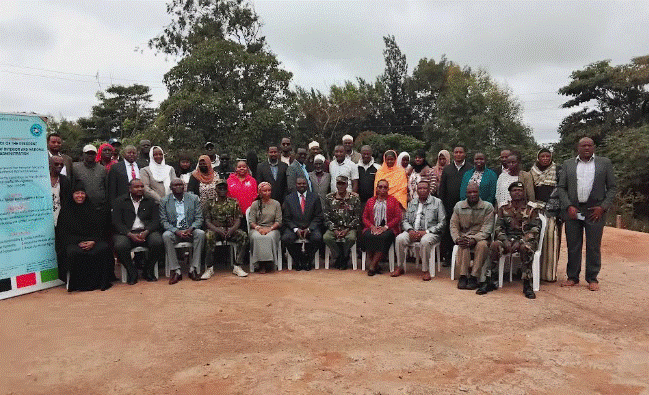
The meeting brought together government administration, security officials, peace committees, civil society organizations and community representatives to discuss strategies for addressing conflict and strengthening collaboration.
Hassan Omar, a peacebuilding and conflict management consultant and Deputy Director for Cohesion in the Marsabit County Government, said poor coordination among peace actors had resulted in duplication of activities and inefficient use of resources.
“We took it upon ourselves, with the County department of Cohesion and the Office of the County Commissioner, to create a platform for coordination of peace activities in the county,” Omar said.
Participants agreed to establish a coordinated platform, including a WhatsApp group, to improve information sharing, joint planning and responses to emerging security threats.
Marsabit County Commissioner Stanley Kamande thanked the organizers and participants, expressing confidence that the discussions would strengthen the county’s existing peacebuilding efforts.
A representative of the county security leadership acknowledged improvements in security but warned that livestock theft and cattle rustling remained challenged, particularly along the Marsabit-Samburu border.
He urged communities to abandon harmful traditional practices and embrace peaceful and lawful ways of acquiring livestock.
The official also credited police officers, National Government Administration Officers and community peace committees for their contribution to improved security across the county.
Lilian Taabu, an official from the Department of Peacebuilding and Conflict Management under the Ministry of Interior and National Administration, said the meeting also addressed mental health, intergenerational dialogue and mapping of peacebuilding stakeholders.
She said participants agreed that the county’s peacebuilding department should take a leading role in coordinating activities, with the Office of the County Commissioner kept informed of planned interventions.
Representing GIZ, Nelly Waiya emphasized the importance of inclusive peacebuilding, calling for women, youth, persons with disabilities and minority groups to participate in decisions affecting peace and security.
She said collective action was particularly important as the country approached the 2027 elections, urging stakeholders to identify potential threats early and resolve conflicts through non-violent means.
Meanwhile, Habiba Mohamed, a psychologist and mental health advocate, called for an end to community conflicts, warning that violence, stigma and limited access to mental health service continue to affect survivors.
She highlighted the lasting psychological effects of the 2021 Saku communal clashes, noting that approximately 1,000 people were reported to remain psychologically affected.
Stakeholders expressed optimism that improved coordination, inclusive dialogue and community participation would help sustain peace, strengthen social cohesion and create a secure environment for investment and development across Marsabit County ahead of the 2027 General Election.
by Anthony Melly