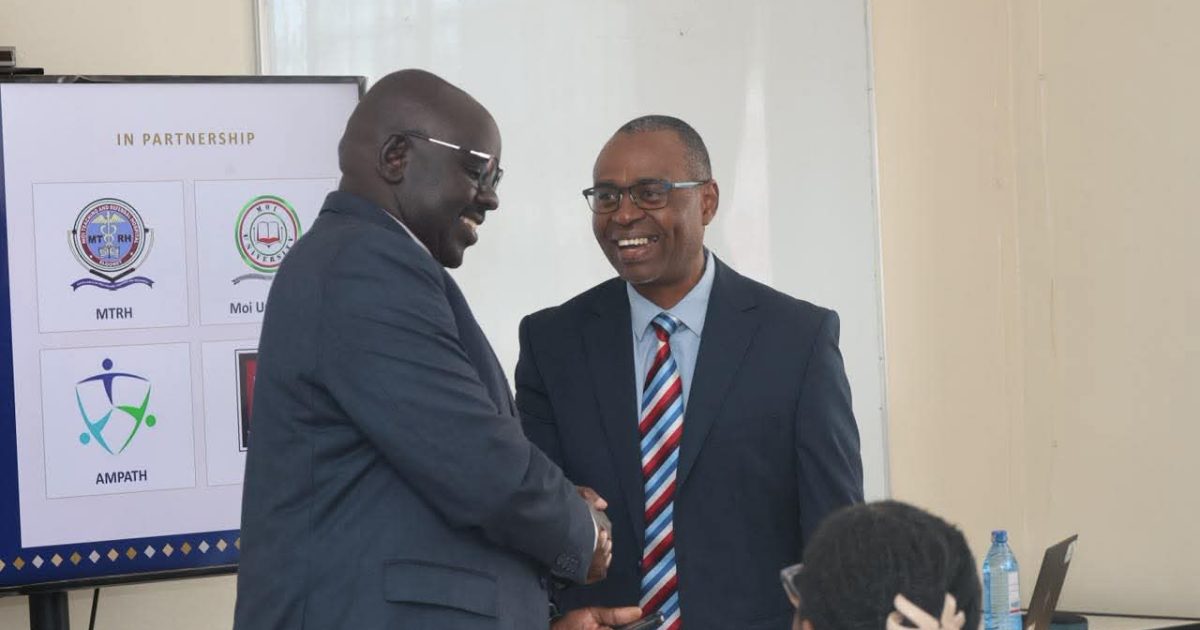
Moi Teaching and Referral Hospital (MTRH), in partnership with IU Health, Moi University and AMPATH, has launched an expanded leadership development initiative aimed at strengthening institutional performance and improving patient care.
The initiative, known as Pamoja Tustawi (Together We Thrive), marks the evolution of the Women in Leadership Programme into a more inclusive platform bringing together leaders from MTRH, Moi University and AMPATH, with IU Health providing expertise in leadership development and organisational learning.
The launch reaffirmed the partners’ commitment to developing effective leadership as a foundation for sustainable institutional transformation and better healthcare delivery.
Dr. Andrew Wandera, Chair of the Programme Steering Committee, said improving healthcare required more than modern facilities and clinical expertise, emphasising the importance of strong leadership, accountability and a positive organisational culture.
“Healthcare transformation is not only about buildings and clinical skills,” Wandera said.
“It demands effective leadership, a positive organisational culture, accountable systems and a shared vision so that we can consistently deliver safe, responsive, high-quality and patient-centred care,” he added.
Through mentorship, shared learning and knowledge exchange, Pamoja Tustawi seeks to develop ethical, accountable, innovative and transformative leaders capable of responding to the changing needs of healthcare institutions.
Organisers said the programme would also promote staff engagement, strengthen organisational performance and build institutional resilience through continuous professional development and collaboration.
Dr. Kipchumba B. Tarus, Senior Director of Administration and Finance at MTRH, speaking on behalf of the Chief Executive Officer, said the institutions were committed to translating lessons from the programme into measurable improvements.
“We are fully committed to translating what we learn through Pamoja Tustawi into measurable improvements in leadership effectiveness, staff engagement and the quality of care our patients receive,” Tarus said.
He added that continuous learning, open communication, evidence-based decision-making and accountability would guide the implementation of lessons gained through the initiative.
The partners noted that the programme’s success would ultimately be measured by its impact on institutional effectiveness, staff development and the quality of healthcare provided to communities.
MTRH will contribute specialised clinical expertise, while Moi University will provide leadership in medical education and research. AMPATH will draw on its experience in collaborative health systems development, with IU Health supporting leadership training and organisational learning.
The partners expressed confidence that the initiative would strengthen cooperation across the institutions and create a sustainable foundation for improved healthcare services.
by Maurice Aluda