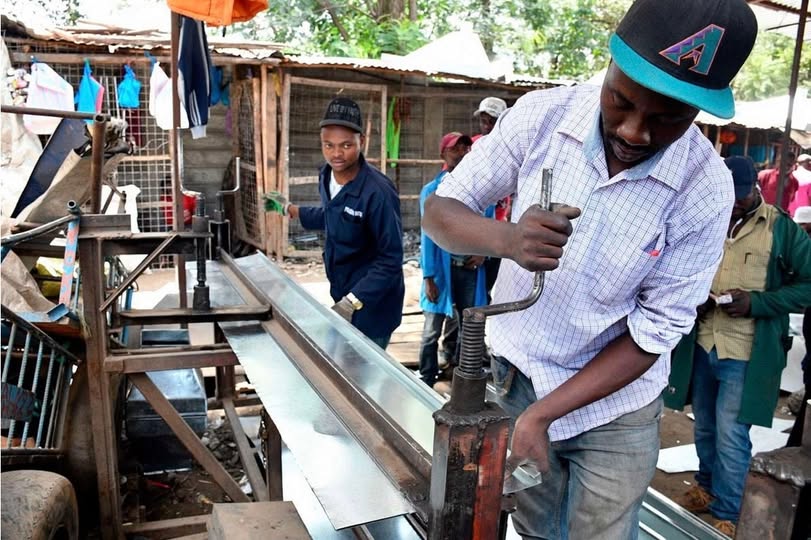
The revised Micro and Small Enterprises policy is designed to accelerate enterprise growth, create jobs, generate wealth and drive inclusive economic transformation across the country.
Senior Assistant Director in charge of Manufacturing and Agribusiness at the Micro and Small Enterprises Authority (MSEA), Tabitha Gicheru, affirmed that the Micro and Small Enterprises (MSMEs) Policy 2026 provides a comprehensive framework for creating an integrated and enabling business environment that will support a productive, competitive, resilient and sustainable MSME sector.
Ms. Gicheru pointed out that the new policy is crafted to strengthen coordination across institutions, improve access to finance and markets, promote innovation and technology adoption and sharpen the competitiveness of Kenyan enterprises at home and abroad.
“The document is a guide towards creating an MSME sector that is capable of generating wealth, creating decent jobs and driving inclusive economic growth. The Revised MSMEs Policy 2026 will help eliminate barriers that have long constrained business growth,” she stated.
Speaking in Nakuru during a business awareness forum organized by MSEA in partnership with SNV Netherlands aimed at strengthening policy uptake and improving support services among MSMEs, the Senior Assistant Director highlighted the Authority’s role in supporting enterprise development, noting the importance of formalization and targeted capacity building initiatives.
The Authority is running a two-year initiative aimed at strengthening the micro and small enterprises ecosystem in Kenya.
The project, being offered in collaboration with Investing in Young Business in Africa – Supporting Entrepreneurial Ecosystem Development (IYBS-SEED) focuses on improving policy implementation and raising awareness among young men and women entrepreneurs about existing business support needed to thrive.
The project aims to ensure that the policies supporting entrepreneurship are well implemented, monitored and responsive to the needs of young and women entrepreneurs.
The focus sectors are agriculture, blue economy, infrastructure development, digital economy, manufacturing and financial services.
The project targets out of school youths between the ages of 18 to 29, and up to 35 years for People (youths) Living Disability (PWDs) and seeks to empower MSMEs with knowledge to access funding, training and networking opportunities.
Ms. Gicheru explained that the proposed MSME Amendment Bill 2025 seeks to improve access to finance, enhance competitiveness and formalize informal businesses to drive job creation.
At the centre of the discussions is the proposed MSME Amendment Bill 2025, which seeks to overhaul the policy framework governing small businesses.
The MSME Amendment Bill 2025 is expected to introduce measures to expand access to affordable credit, improve market access and create incentives for informal enterprises to formalize.
Formalization has emerged as a key policy priority, with authorities arguing that bringing more businesses into the formal fold would widen the tax base, improve access to government support programmes and enhance enterprise sustainability.
President William Ruto launched the revised MSME policy last month at the Kenyatta International Convention Centre (KICC) during celebrations to mark the World Micro, Small and Medium Day.
Ms. Gicheru noted that MSMEs remain the backbone of Kenya’s economy accounting for 98 percent of all businesses in the country, creating more than 90 percent of non-farm jobs and contributing over 40 percent of the Gross Domestic Product (GDP).
She said that the revised policy outlines a broader framework for expanding credit, improving financial inclusion and reducing barriers that have limited the growth of micro, small and medium enterprises.
“Rather than introducing a single financing programme, the revised MSMEs Policy 2026 brings together several reforms intended to make business finance more accessible across different stages of enterprise development.
A central theme of the policy is the role of commercial banks. The government wants lenders to develop financing models that extend beyond traditional collateral requirements and serve businesses that have historically struggled to obtain credit,” observed the official.
Another notable feature of the policy is the proposed National Credit Score.The government intends to build a system that places greater weight on repayment behaviour and financial history when assessing borrowers, complementing conventional security such as land titles and vehicle logbooks.
Ms. Gicheru added that if implemented as outlined, the approach could broaden financing options for entrepreneurs with strong repayment records but limited assets.
She said financing products should be tailored to businesses at different stages of growth, while mature firms should gradually transition from concessional development finance to commercial bank lending. That Ms. Gicheru elaborated would free up capital for younger enterprises seeking affordable financing.
“The Revised MSMEs Policy 2026 outlines an approach that combines public funding, commercial lending and development finance rather than relying on a single source of capital,” stated Ms Gicheru.
Stakeholders present at the sensitization forum included Kenya Revenue Authority (KRA), the Kenya National Federation of Jua Kali Associations (KNFJ) and the Kenya National Chamber of Commerce and Industries (KNCCI).
Ms Gicheru pointed to ongoing programs such as National Youths Opportunities Towards Advancement (NYOTA) and the Kenya Jobs and Economic Transformation (Kjet) Fund as key interventions supporting MSMEs alongside continued investments in jua kali worksites and Constituency Industrial Development Centres (CIDC).
“We are creating an enabling environment for MSME by providing workspaces through jua kali worksites and CIDC while also implementing projects like NYOTA and KJET to accelerate business growth,” she said.
Ms Gicheru reaffirmed the Authority’s commitment to working collaboratively across Government and with the private sector and development partners to implement progressive policies and programmes that enable MSMEs to start, grow and scale their businesses.
SNV-Investing in Young Business in Africa – Supporting Entrepreneurial Ecosystem Development (IYBS-SEED) Project Manager Ms Nduta Ndirangu on her part stated that many of the youth in Kenya were not aware of the policies governing the MSMEs in the country and that they were sensitizing them and seeking their views as we plan to review these policies to serve them better.
“The sector has faced challenges since 2020 when the Covid -19 pandemic set-in including lack of funding, so we are also creating linkages to financial institutions,” she said.
She noted that the revised MSME policy is meant to encourage entrepreneurial culture, noting that the MSME sector is very key to the economy as it employs many people.
“Our business awareness programme is meant to create awareness on these policies and get to know the challenges facing the sector and inform them about the opportunities available for them and the role of government in this sector,” Ms Ndirangu said.
She said they are creating a tool to evaluate these policies to see their impact on the MSMEs sector. She added that the revised policy will strengthen Kenya’s entrepreneurial ecosystem and enhance the sector’s contribution to economic growth, employment creation and shared prosperity.
A representative of the County Government of Nakuru, Jennifer Nyambura, stated that the devolved unit’s administration had rolled out the Wezesha Fund, a Sh100 million loan initiative aimed at empowering small-scale businesspeople and farmers through affordable credit.
The fund has already disbursed Sh76 million to cooperative societies and registered groups with the Governor emphasizing that the fund is part of her broader commitment to fulfil her manifesto pledge of supporting grassroots economic growth.
“Wezesha is about empowering our people to access credit, scale their enterprises, and improve livelihoods,” she said.
The fund is being distributed through KCB Bank under two components: the County Enterprise Fund, which targets registered self-help groups, and the Cooperative Revolving Fund, designed for cooperative societies.
Under the current structure, registered groups can access loans ranging from Sh50,000 to Sh200,000, while cooperative societies can receive between Sh200,000 and Sh5 million.
Ms Nyambura encouraged small traders, boda boda riders, Community Health Promoters (CHPs), women, and youth to join Saccos or registered groups to qualify for the funding.
She noted that 2,762 out of 3,300 CHPs have already joined the Nakuru CHP Sacco.
Importantly, she reminded beneficiaries that the Wezesha Fund is a loan, not a grant. “Timely repayment is essential to allow others to benefit and to enable access to larger credit amounts in future disbursements,” she stated.
She further called for collaboration with donors, financial institutions, and the private sector to expand the fund through grants and co-financing opportunities.
By Jane Ngugi and Dennis Rasto