The Office of the Director of Public Prosecutions (ODPP) has urged Kenyans to cooperate with investigators to ensure strong, evidence-based legal cases and a transparent justice system.
The ODPP said it relies on timely and credible evidence from the Directorate of Criminal Investigations (DCI), the Independent Policing Oversight Authority (IPOA), public testimonies and volunteered statements to prevent cases from collapsing in court.
Officer in charge of Narok County ODPP, Mr Gitonga Muranga, said public cooperation remains a critical tool in prosecuting complex cases ranging from transnational organised crime to local unrest and corruption.
Muranga described witnesses as individuals with firsthand knowledge of a crime based on what they have seen or heard, noting that their role is vital in helping law enforcement agencies and courts identify and hold offenders accountable.
Speaking during a law enforcement and prosecutorial strategy meeting in Narok, he said investigators often conduct thorough inquiries, but cases are sometimes weakened by lack of cooperation, interference and attempts to bypass legal procedures.
He said the ODPP continues to work closely with key agencies such as the Directorate of Criminal Investigations (DCI) and the Ethics and Anti-Corruption Commission (EACC) in handling criminal, financial and safety-related investigations.
Muranga urged Kenyans to avoid shortcuts in seeking justice, warning that such actions often undermine investigations and weaken criminal cases before they reach court.
“Kenyans should not fear appearing as witnesses in court because the law provides robust safeguards, including the State-backed Witness Protection Agency. The programme ensures that witnesses whose lives or livelihoods are at risk are shielded from intimidation and reprisals,” he said.
He noted that failure by witnesses to cooperate creates gaps in investigations, forcing officers to restart inquiries or abandon cases due to insufficient evidence.
Muranga assured residents that the justice system is guided by fairness and urged full cooperation with investigators and prosecutors, saying adherence to the law remains the surest path to justice.
He revealed that land-related disputes account for the highest number of criminal cases in Narok County, many of which escalate into serious offences such as murder, assault, theft and robbery with violence.
“Even where we register assault cases, many of them can be traced back to land disputes,” he said, adding that competition over land continues to fuel criminal activity in the county.
Muranga also raised concern over increasing defilement cases, noting that the county records at least one case every week. He said prosecutions are often affected when victims or families relocate after suspects have been charged, making court processes difficult to sustain.
He further highlighted a rise in cases of obtaining money by false pretence, often linked to fraudulent land leasing arrangements, as well as incidents of forcible detention arising from land disputes.
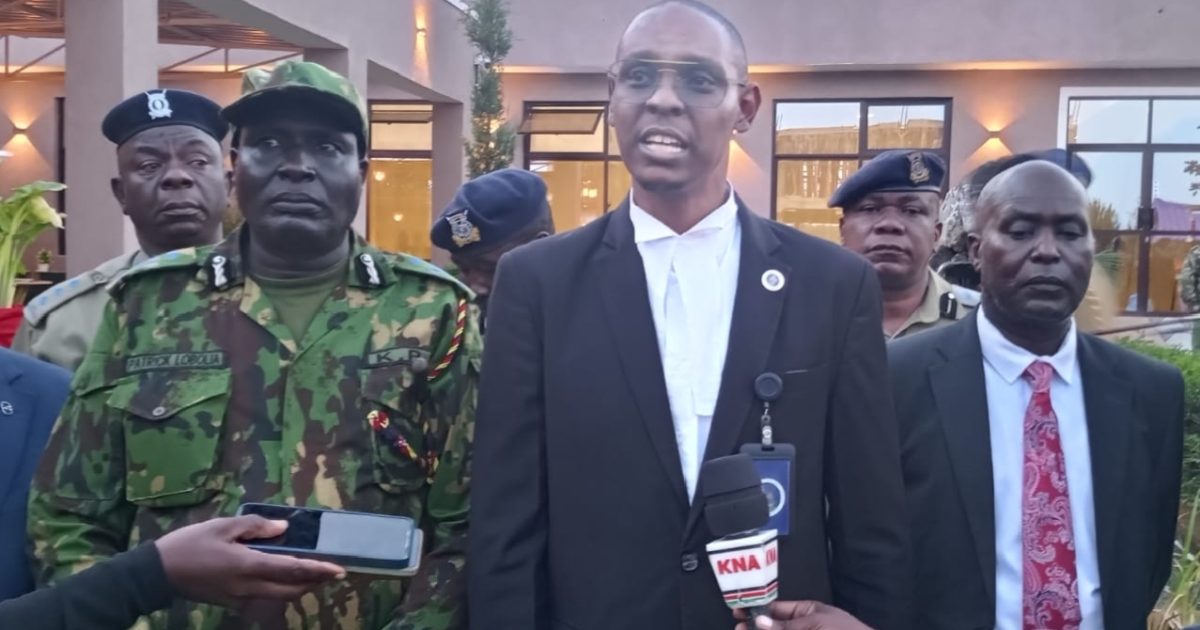
The meeting brought together prosecutors and senior officers from the National Police Service and was convened by the ODPP to strengthen collaboration between investigators and prosecutors in improving case outcomes.
Muranga said the forum reviewed factors contributing to successful prosecutions, identified gaps in investigations and explored ways of streamlining cooperation between institutions to enhance justice delivery.
He described the engagement as the beginning of a stronger partnership between police and prosecutors aimed at addressing crime more effectively while responding to challenges unique to Narok County.
The meeting was co-chaired by Narok County Police Commander Patrick Lobolia and attended by senior police officers from various sub-counties.
By Emily Kadzo and Jeremiah Juma