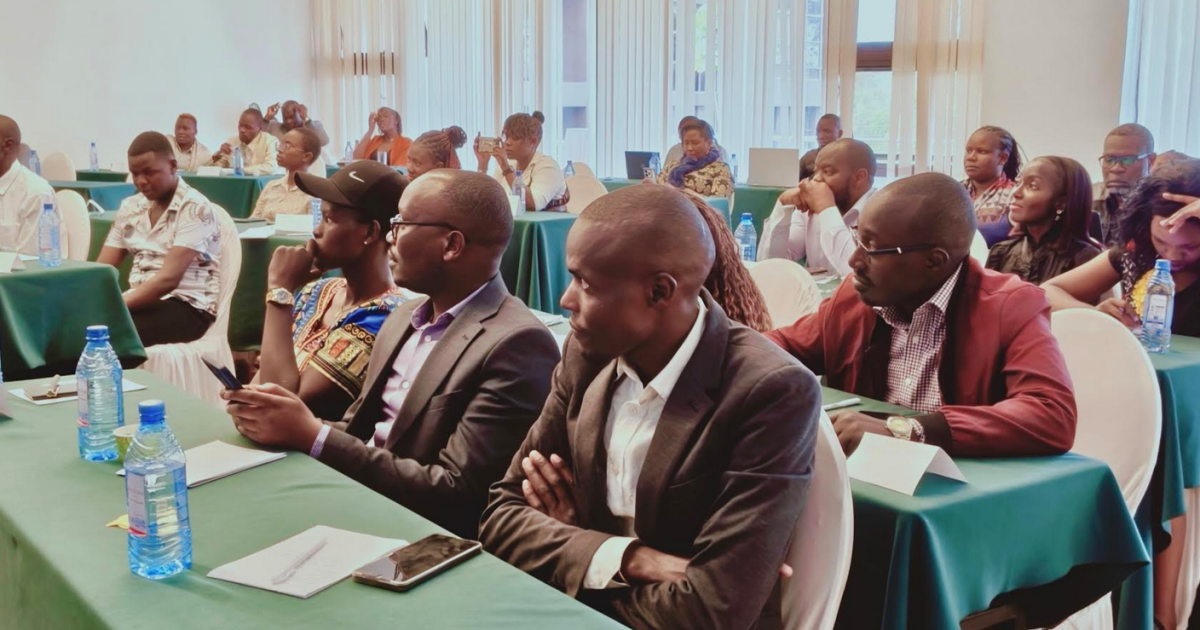
Civil society organisations (CSOs) and human rights defenders(HRDs) in Uasin Gishu County have been urged to strengthen digital resilience and promote responsible use of online platforms ahead of the 2027 General Elections.
The call was made during a two-day training workshop held in Eldoret, Uasin Gishu County, organised by Kenya ICT Action Network (KICTANet) under the Kenya Safe and Inclusive Digital Space (KenSafeSpace) Project in collaboration with Tatua Digital Resilience Centre.
The workshop brought together over 40 participants, including CSOs, human rights defenders and community-based organisations (CBOs), to build capacity on addressing emerging digital threats such as misinformation, cyberbullying, online exploitation and technology-facilitated gender-based violence.
Speaking during the training, John Gathii, Programme Advisor on Digital Resilience at the Tatua Digital Resilience Centre, said the engagement was timely in equipping stakeholders with skills to safeguard civic and democratic spaces.
“We explored ways in which organisations can protect themselves and their communities from digital threats, while also contributing to a more secure and inclusive civic space,” he said.
Gathii noted that the training focused on combating misinformation and disinformation, particularly as the country approaches the election period, while also enhancing cyber hygiene among participants.
He added that vulnerable groups, including women, youth, children and persons with disabilities, remain most at risk in the digital space and require targeted protection.
Nicodemus Nyakundi, Programme Assistant for Digital Rights and Accessibility at KICTANet, said the training is part of a nationwide initiative being implemented across key cities including Nairobi, Mombasa, Kisumu, Nakuru and Eldoret.
He said the programme focuses on empowering community-based organisations and human rights defenders to identify digital threats and develop practical solutions through collaboration and knowledge-sharing.
“The rise of emerging technologies such as artificial intelligence has increased the risk of misinformation and online manipulation, especially during politically sensitive periods,” Nyakundi said.
Cindy Wanini, Gender Programme Officer at KICTANet, highlighted concerns around Technology-Facilitated Gender-Based Violence (TFGBV), noting that women, persons with disabilities and members of the LGBTQ community are among the most affected.
She said cases of online abuse, including cyberstalking, doxxing and hate speech, are prevalent in highly connected urban areas such as Nairobi and emerging towns like Eldoret, particularly on social media platforms.
Participants welcomed the training, terming it impactful in strengthening their capacity to engage safely online.
Benson Akumu, a human rights defender and founder of the Eldoret Social Justice Center, said the workshop had equipped CSOs with practical knowledge on responsible social media use.
“Social media is a powerful tool for driving change, but it is increasingly being misused for abuse and harmful content. We must promote respectful and constructive engagement, especially during the election period,” he said.
Akumu also raised concerns over digital threats facing human rights defenders, including online profiling, cyberbullying and misuse of legal frameworks to suppress dissenting voices.
On her part, Noeline Maru, founder of the Tujitume Youth and Women CBO, said the training addressed key challenges affecting vulnerable groups in the digital space.
“Young people, women and persons with disabilities continue to face cyberbullying, data breaches and limited access to digital safety tools. If not addressed, these challenges will limit participation and weaken democratic engagement,” she said.
She called on stakeholders, including government, civil society, technology companies and communities to work together in promoting safe, inclusive and secure digital spaces.
The training forms part of the KenSafeSpace Project, a 30-month initiative funded by the European Union and implemented by KICTANet in partnership with other stakeholders.
The initiative focuses on strengthening digital rights, online safety and inclusive participation in Kenya’s digital ecosystem ahead of the 2027 polls.
KICTANet is a multi-stakeholder platform that brings together government, private sector, civil society and the technical community to support policy development, research and capacity building in the country’s ICT sector.
By Fredrick Maritim