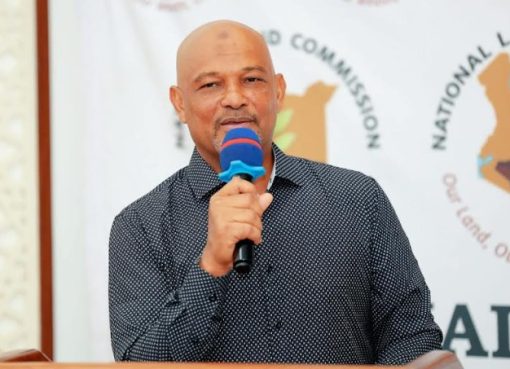
Cabinet Secretary (CS) for Health, Aden Duale, has reaffirmed the government’s commitment to strengthening Kenya’s health system through structured partnership with private and faith-based providers.
Speaking at the Kenya Healthcare Federation (KHF) CEO Forum in Nairobi, the CS said the private sector remains central to delivering Universal Health Coverage, noting that no meaningful progress can be achieved without sustained collaboration.
He pointed to the Forum’s focus on global geopolitical shifts and commodity security as timely, aligning with priorities under the Bottom-Up Economic Transformation Agenda (BETA).
Notably, Duale outlined four pillars guiding the sector including sustainable financing through the Social Health Authority (SHA), expanded investment in primary healthcare and the health workforce, strengthening commodity security and local manufacturing, and accelerated digital transformation.
The CS further noted that SHA has disbursed Sh137.4 billion, with a significant share supporting private and faith-based facilities, enabling millions of Kenyans to access primary and specialised care.
While commending providers for adopting the SHA digital platform, the CS issued a firm warning against overcharging and fraudulent practices, stressing that accountability remains non-negotiable and enforcement action will be taken against non-compliant facilities.
On commodity security, he observed that Kenya imports about 70 percent of its health products, exposing the country to global supply shocks.
“The government is addressing this through integrated digital supply chain systems, strengthening the capacity of KEMSA, and promoting local manufacturing,” Duale assured.
Equally, the CS also addressed regulatory concerns, affirming ongoing reforms at the Pharmacy and Poisons Board (PPB) to improve efficiency, reduce approval timelines, and resolve delays in import permits.
“Efforts are also underway to streamline licensing requirements and create a more enabling environment for investment,” he added.
On the other hand, Duale highlighted upcoming legislative and institutional reforms, including the Quality of Healthcare and Patient Safety Bill and the establishment of a unified national emergency medical service.
To deepen engagement, the CS announced plans to institutionalize a biannual Ministerial Stakeholders Forum, supported by structured workstreams and a quarterly accountability framework.
He also called on all stakeholders to remain candid, solutions-oriented, and committed to delivering equitable, high-quality healthcare for all Kenyans.
By Michael Omondi