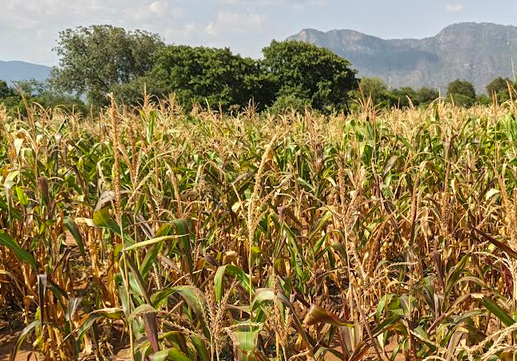
A prolonged dry spell that has persisted for the last two months has dealt a major blow to agricultural production in West Pokot County, raising fears of widespread crop failure, livestock losses and increased food insecurity if urgent interventions are not undertaken.
The county’s Director of Agriculture, Philip Ting’aa, said the region has experienced an abnormal rainfall pattern this year, with the long rains ending in the first week of May, instead of continuing through the traditional April-May rainy season.
“The scarcity of rainfall for the past two months has negatively affected agricultural activities across the county. This is not normal and has largely been caused by the climatic changes being experienced globally,” Ting’aa said.
He noted that maize, the county’s staple food crop, has already suffered complete crop failure in the lower parts of the county after prolonged moisture stress.
“Maize in the lowland areas has already dried up, resulting in 100 percent crop failure. This calls for the necessary interventions to ensure affected families receive food assistance to prevent hunger,” he said.
According to the agriculture director, crops in the highland areas are also at risk, particularly maize that is approaching the flowering stage, which requires adequate moisture for successful pollination and grain formation.
He explained that continued lack of rainfall is likely to significantly reduce yields even in areas where crops have not completely failed.
The dry conditions have further encouraged the spread of destructive crop pests, including fall armyworms and aphids, while bean crops have experienced flower abortion due to water stress, a situation expected to reduce bean production considerably.
Other food crops such as sorghum and millet have also been adversely affected, prompting concerns over the county’s overall food production this season.
“If these conditions persist, food production across the county will be significantly reduced,” Ting’aa warned.
The prolonged drought has equally affected the livestock sector, with declining water levels in rivers, dams and other water sources forcing animals to travel longer distances in search of water and pasture.
He added that livestock diseases, including Lumpy Skin Disease, have become more prevalent during the dry spell, negatively affecting animal productivity.
Ting’aa, however, said the government was working closely with farmers to contain livestock diseases through vaccination programmes and other disease control measures.
He encouraged farmers with access to water sources to irrigate their crops and apply foliar fertilizers instead of conventional top-dressing fertilizers such as Calcium Ammonium Nitrate (CAN), whose effectiveness depends on adequate rainfall.
“Foliar feeds should be applied early in the morning or late in the evening when crop leaves are able to absorb nutrients effectively,” he advised.
The director further attributed the worsening climate situation partly to environmental degradation, including deforestation and cultivation near water catchment areas, urging residents to intensify tree planting initiatives to help restore ecological balance.
Meanwhile, West Pokot County Director of Meteorological Services Wilson Lonyang’ole said weather forecasts indicate that the county is likely to continue experiencing below-normal rainfall, both in amount and distribution, until the beginning of August.
“There will be scarcity of rainfall. The expected rainfall is below normal, and both the spatial and temporal distribution will be poor,” Lonyang’ole said.
He observed that crops in the lower parts of the county had already withered due to prolonged water stress, leaving many farmers worried about the fate of the current planting season.
Lonyang’ole advised farmers with access to water to embrace irrigation while encouraging others to diversify their livelihoods through mixed farming and livestock keeping instead of depending solely on crop production.
He further urged farmers to prepare their land in readiness for the anticipated October to December rains and consult agricultural extension officers on suitable short-season crop varieties for the second planting season.
The meteorological director noted that the expected October-December rains associated with the El Niño season could provide an opportunity for farmers to recover, provided they prepare adequately.
He added that the changing weather patterns are part of the broader effects of climate change and called on communities to adopt environmentally sustainable practices to enhance resilience.
The continued dry spell has heightened concerns over food security in West Pokot, with agricultural experts warning that timely government support, investment in irrigation, climate-smart agriculture and environmental conservation will be critical in cushioning vulnerable farming households from the effects of the unfolding drought.
By Parklea Ivor