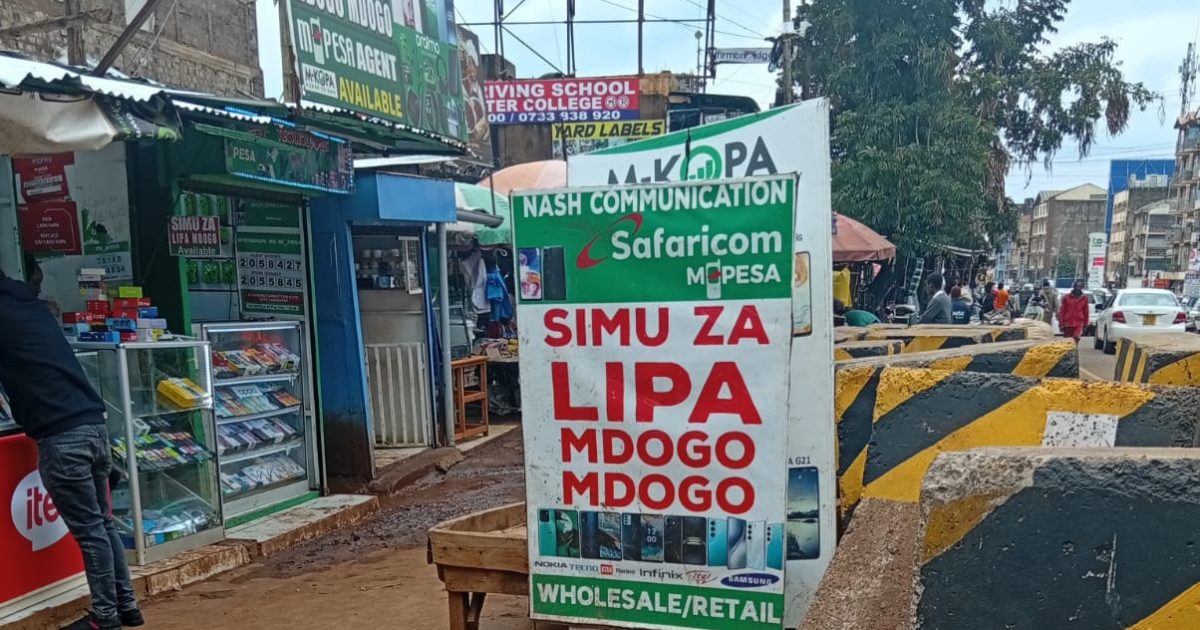
The growing demand for affordable smartphones in Kiambu County has seen more low-income earners embrace the “Lipa Mdogo Mdogo” financing model, enabling them to access digital services through flexible installment payments.
The model, which allows customers to pay a small deposit before completing the remaining balance through daily or weekly installments, is increasingly becoming popular among campus students, boda boda riders, mama mbogas, and small-scale business owners.
In Kiambu, phone dealers say the installment payment system has opened opportunities for many people who previously struggled to afford smartphones through one-time payments.
According to John Njuguna, a smartphone dealer in Kiambu Town, the financing model has helped bridge the digital access gap among low-income earners.
“Many people, especially students, boda boda riders, and small traders, are now able to own smartphones through manageable installments,” said Njuguna.
Customers are required to make an initial deposit before continuing with affordable repayment plans until the phone is fully paid for.
Apparently, many of his clients say the model is more convenient compared to saving for months or taking loans to purchase a smartphone.
For campus students, smartphones have become essential in accessing online classes, research materials, assignments, and communication with lecturers and fellow students.
Boda boda riders and small-scale traders are also using smartphones for mobile money transactions, customer communication, and online marketing of their businesses.
However, despite its growing success, the ‘Lipa Mdogo Mdogo’ model also faces criticism from some consumers.
“Some users complain that the final repayment amount is often higher than the original cost of the phone due to additional service charges.”
“Others say daily repayment schedules can become difficult during harsh economic periods, leading to delayed payments,” Njuguna explained.
In some cases, financed phones are temporarily locked when customers fail to make payments on time, limiting access to communication and other services until repayment resumes.
Despite these challenges, Njuguna is pleased to be part of this model, which continues to transform digital access among low-income earners by connecting more people to internet services and social media platforms.
Meanwhile, the pricing model of smartphones is now hanging in the balance, following a proposal by the Finance Bill 2026 to introduce a 25 percent excise duty on smartphones and other mobile communication devices.
Under the proposal, the tax would be charged when a phone is activated for use rather than at the point of importation.
However, Treasury Cabinet Secretary John Mbadi has defended the proposal, saying the new structure is intended to simplify taxation and reduce the overall tax burden on imported phones.
“When you combine all the taxes, they total about 55 per cent. We are now reducing that to 25 per cent and calling it excise duty,” Mbadi said. He further insisted that smartphone prices would not rise under the new system, adding that, “Phone prices will not go up because we have removed all the other taxes and replaced them with one single tax.”
by Monicah Mukami