The South Sudan Government is seeking to operationalise its logistics hub at the expansive Mai Mahiu Special Economic Zone to ease and improve cargo handling and transport from the Port of Mombasa to Juba.
This comes after its officials broke ground for the construction of the hub on its allocated land within the 6,000-acre zone, which will be an alternative cargo clearance centre for its growing cargo volumes for both import and export markets.
The planned hub will also help ease congestion at the port of Mombasa, where cargo handling at the port is expected to increase from the current 15 million metric tonnes annually to 40 million metric tonnes in the next five years.
Equally, the current forecast projects cargo volume growth, with inland consolidation facilities becoming critical to reduce transit time and logistics costs for the rising cargo volumes and operations.
According to Cabinet Secretary for Public Service and Human Capital Development Geoffrey Ruku, the government will fully support the operations at the zones to boost regional trade.
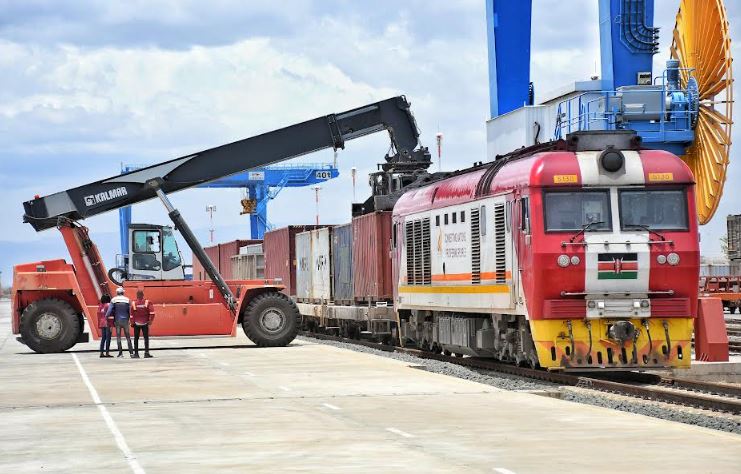
Ruku, who represented the Transport CS, said the Kenyan government was expanding the Standard Gauge Railway from Naivasha to Malaba, as well as dualling the Rironi-Mau Summit to Malaba border road, all geared towards easing the transport of goods.
According to SEZ Authority CEO, Dr Kenneth Chelule, Kenya allocated a free 10-acre piece of land to regional countries of Uganda, Rwanda, South Sudan, Burundi, Democratic Republic of Congo and South Sudan to establish logistics hubs within the 6,000-acre zone.
Chelule said the zone has so far attracted 24 investors and is expected to register major operations in the next two years, which will create hundreds of jobs, noting that South Sudan is the first to break ground.
Chelule lauded the South Sudan government for breaking ground for its logistics hub, adding that Rwanda and Burundi were on course to kickstart their operations at the zone for cargo handling and evacuation.
He added that there was a vast range of investment incentives, ranging from corporate tax, which is around 10 per cent for the first 10 years, 15 per cent for the next 10 years, and then 30 per cent after 10 years.
Chelule said the authority had received Sh600 million from the exchequer to facilitate the construction of key supporting infrastructure, including water and power connections and link roads.
He said the zone will be a key investment hub in the next two years, with planned housing units, commercial centres, schools, and health centres that will drive economic growth in the region, creating tens of thousands of jobs for youths and locals.
According to Paul Dhel Gum, the undersecretary for transport in South Sudan, they were seeking extra land within the Mombasa and Malaba Special Economic Zones to ease cargo handling and remove barriers in the transportation of goods in and out of Juba.
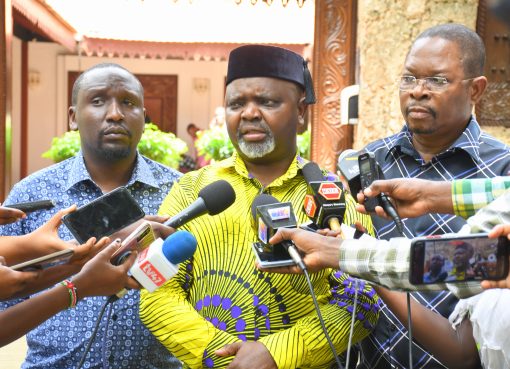
Speaking in Mai Mahiu during the groundbreaking ceremony of its logistical hub, Gum termed the zone a key economic gateway which will boost regional trade and improve imports and exports of its goods and a win for traders.
Gum added that Juba was also seeking additional land within the Special Economic Zones in Mombasa and Malaba, Busia, to ease cargo handling and evacuation from the Port of Mombasa to Juba.
He said the move is part of plans to improve the seamless movement of goods, boost cargo-handling efficiency, and ensure timely transport for import and export markets.
South Sudan ambassador to Kenya, Simon Deng, said the logistical hub, once it starts operations by 2028, will ensure timely and seamless movement of goods from the Port of Mombasa to Juba and vice versa.
Deng added that the zone, which will serve as an alternative dry port for cargo clearance, will support an affordable and predictable transport system and deepen trade in the region.
“Once this logistical hub starts operations, it will offer timely cargo transport and efficient goods haulage from Kenya to Juba, which will be a win for traders and businesses,” said Deng.
On his part, Dr John Diir, the Executive Director for Northern Corridor, said that feasibility studies undertaken have indicated that the region will see huge growth in cargo transport.
He said once countries establish their zones for cargo handling, it will ease congestion and pressure at the port of Mombasa, which continues to record increased cargo volumes.
Diir noted that cargo handling at the port of Mombasa is expected to increase from the current 15 million metric tonnes annually to 40 million metric tonnes in the next five years.
According to the Minister for Trade and Foreign Affairs in Rwanda, Dr Usta Kayitesi, the logistics hub would facilitate trade involvement in an effective way.
Speaking during a visit to the SEZ, she said that the Northern Corridor had been key in enabling the process and ease of doing business.
“We are grateful to the Government of Kenya, which donated to the logistics hub, and it’s going to ease and facilitate our trade that leads to the impact that we are looking for,” she said.
Kayitesi further noted that the facility was going to shorten the distance and ease the moving of cargo from the port of Mombasa through the SEZ and to Rwanda directly.
By Erastus Gichohi