The British High Commission Nairobi together with partners including the African Centre for Women, Information and Communications Technology (ACWICT), County Governments of Elgeyo Marakwet, Busia and Siaya have celebrated the remarkable achievements made by the UK Digital Access Programme’s Inclusive Digital Futures Project (UKDAP-IDF) in terms of supporting young people with market relevant digital skills.
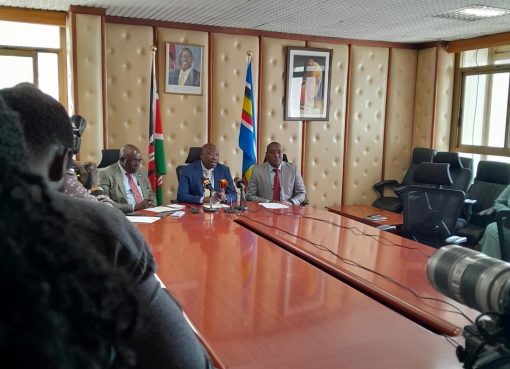
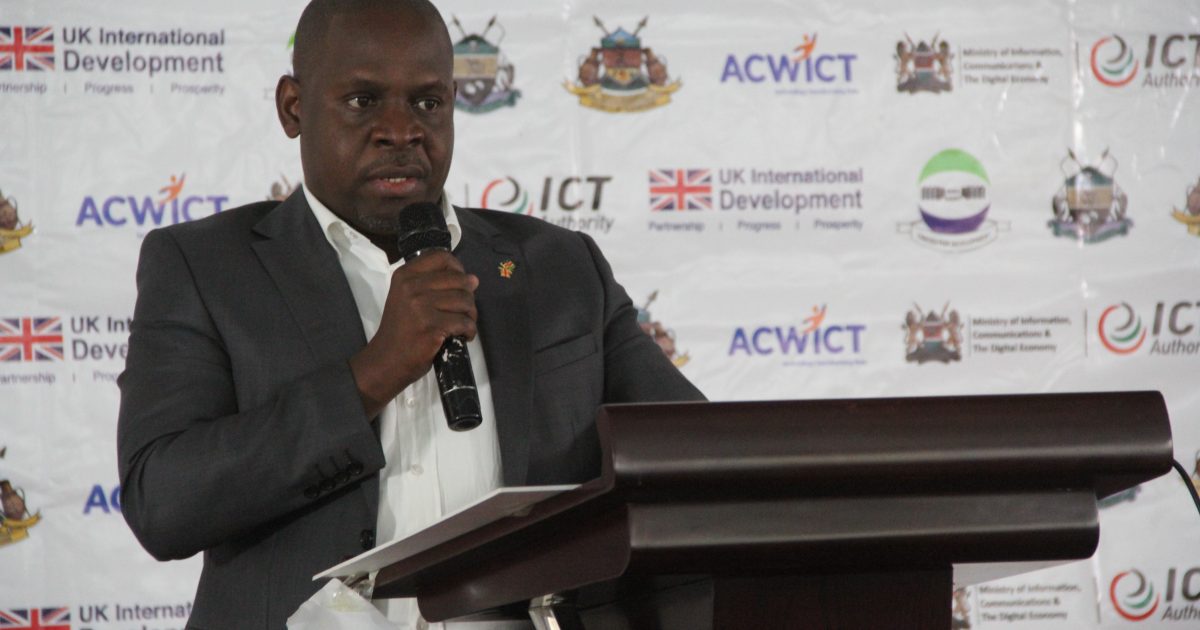
Speaking during the close-out ceremony of the UK DAP-Inclusive Digital Futures (IDF) held in Eldoret, marking close to a year since the project’s implementation in the region, the British High Commission Representative, Western Region Advisor, John Manyolo, said they have worked with partners through the project to support young people with market-relevant digital skills and pathways into digitally enabled work.
The project has focused on areas that matter for livelihoods and local economies — including digital entrepreneurship, online work, creative opportunities, AI literacy, climate-smart agriculture, and IT and device repair.
“These are not abstract skills; they are tools for income, enterprise, dignity and resilience. I want to sincerely thank the county governments of Busia, Siaya and Elgeyo Marakwet for their collaboration and leadership,” he noted.
The British High Commission Representative, emphasized that County ownership is essential if digital inclusion is to move from pilot activity to lasting impact.
He commended the work of the implementing partner, African Centre for Women, Information and Communications Technology (ACWICT) and other partners who have supported mobilization, training and community engagement.
Implemented from November 2025 to June 2026 , IDF leverages these proven models to further advance inclusion. The project equips rural youth with digital skills, entrepreneurship training, AI literacy, and climate-smart technologies, enabling them to seize opportunities across digital agriculture, the creative economy, gig work, and IT services.
Through this approach, IDF strengthens livelihoods, expands rural economic participation, and builds on the successful foundations laid by the Digitally Enabled Gender Equity and Social Inclusion (DEGESI) and the Digital Services in Agriculture (DSA) projects to drive sustainable, dignified growth.
The IDF aims to increase digital employment and entrepreneurship among young people (majority women and PWDs) in Busia, Siaya, and Elgeyo Marakwet, contributing to a decline in youth engagement in harmful coping mechanisms by June 2026.
Elgeyo Marakwet County Governor, Wesley Rotich, commended the British High Commission for the impactful project that saw young people acquire digital skills that will help them earn employment.
He appealed for the programme’s extension in order to benefit more youth, women and Persons with Disabilities who have had no access to digital skills across the region.
“UKDAP-IDF has done a lot of impact in driving Growth and Resilience through Digital Employability for the youth, women, and persons with disabilities, in Busia, Siaya, Elgeyo Marakwet) in Kenya,” he said.
In his speech, Siaya Governor, James Orengo celebrated the successful conclusion of the UK Digital Access Programme — Inclusive Digital Futures Project noting it is not merely a closing ceremony but moment of reckoning with what is possible when governments, communities, and international partners commit to a shared purpose.
“Science and technology are playing a major role in economies across the world. It is the economies that are adopting science, technology, and now Artificial Intelligence that are transforming neighbourhoods, communities, and nations. Siaya County has chosen to be on the right side of that transformation,” he noted.
The Siaya Governor revealed that the partnership with ACWICT and the UK Government has seen mobilization of over 700 youth across the county, trained 494 graduates, and achieved 50.2% female participation. They built the capacity of the participants across four specialized digital pathways — Digital Agriculture, Creative Economy, Gig Work, and IT & Device Repair — and introduced AI learning through two dedicated tracks: AI Fluency and AI for SMEs.
“Importantly, Siaya did not inherit a ready pipeline. We built one from scratch. Our trainees did not just become graduates — they became Community Digital Entrepreneurs, connected to markets, linked to employers, and equipped to create their own opportunities,” Read the speech in part.
Statistics by UKDAP revealed that Rural counties in Kenya continue to face deep and persistent digital exclusion, with young people, particularly women and persons with disabilities, lacking the digital literacy, market linkages, and entrepreneurial pathways needed to participate meaningfully in the digital economy. Youth unemployment in Busia, Siaya, and Elgeyo Marakwet ranges between 18–25 percent, compounded by high poverty levels (49–63 percent).
The Inclusive Digital Futures (IDF) project, funded by the UK Digital Access Programme (DAP), directly addresses these barriers. Implemented by the African Centre for Women in ICT (ACWICT), IDF is intentionally designed to continue and deepen the impact of earlier UKDAP-supported initiatives, notably the Digitally Enabled Gender Equity and Social Inclusion (DEGESI) and the Digital Services in Agriculture (DSA) projects.
These initiatives demonstrated the transformative potential of inclusive digital skilling by training over 100,000 farmers and young women and achieving a 72 percent job placement rate for digitally skilled women and youth.
ACWICT CEO Constantine Obuya emphasized that access to digital technology is a broader concern and that has several aspects that should need to be looked into before it can fully be achieved
She explained that digital access is about digital skills. People need to have digital skills for them to be able to access the digital environments and work within the digital spaces. In addition, people need to be able to have an affordable internet because access to the internet is very important in supporting access to the digital economy.
She called for key focus by counties on building partnerships and enhancing stakeholder engagement with the private sector to see that digital access is achieved.
“Private sector are providers of the internet and so those partnerships are able to enhance access to the internet. County governments also need to leverage on existing opportunities that are in place by the national government infrastructure programs, like the last mile internet connectivity to just be able to bring this closer to the people and enhance access,” noted the CEO.
By Ekuwam Sylvester