The State Department for Youth Affairs and Creative Economy has reaffirmed its commitment to promoting gender-responsive policies and programmes that empower young women in the creative economy.
This is a culmination of a presentation of findings from a research study, ‘Behind the Scenes: Young Women and Gender-Based Inequities in Africa’s Creative Sector,’ done by the International Center for Research on Women (ICRW).
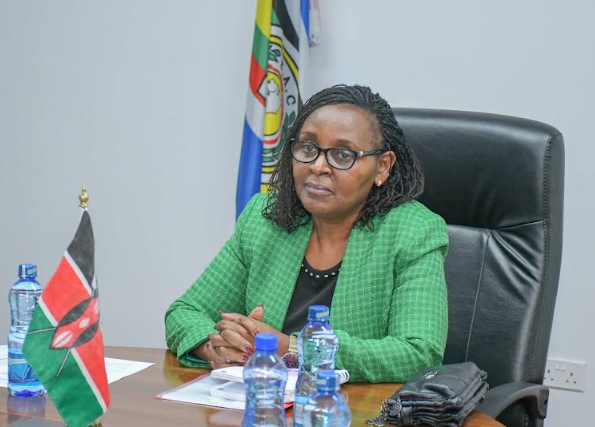
Secretary for Youth Development Dr. Josephine Etenyi led senior officials from the State Department in receiving a policy brief on the study, which was undertaken by the International Center for Research on Women (ICRW).
The research explores the experiences of young women across Africa’s creative industries and identifies the structural and systemic barriers that hinder their participation, growth, and leadership within the sector.
The briefing provided an opportunity for the State Department to engage with researchers on evidence-based recommendations aimed at strengthening policy and programming to create a more inclusive and equitable creative economy.
Speaking during the session, Secretary Etenyi underscored the importance of research in informing public policy and programme implementation.
“The creative economy remains one of the most promising sectors for youth employment, innovation, and economic transformation. Research such as this provides critical evidence that enables us to design policies and interventions that ensure young women are not only participating in the sector but are also thriving as creators, entrepreneurs, and industry leaders,” the secretary said.
She further observed that the creative economy currently contributes 5.2 per cent to Kenya’s gross domestic product (GDP) and that with increased investment, innovation, and strategic support, the sector has the potential to significantly increase its contribution to the country’s economic growth.
Additionally, the secretary affirmed the State Department’s commitment to integrating research findings into ongoing and future initiatives geared towards strengthening youth development and expanding opportunities within the creative economy.
Meanwhile, the study highlights key challenges affecting young women in the sector, including unequal access to employment opportunities, limited access to finance, workplace discrimination and harassment, underrepresentation in leadership positions, and inadequate professional networks.
It also presents practical recommendations for governments, industry stakeholders, and development partners to foster safer, more inclusive, and economically rewarding creative industries.
The findings were presented by Dr. Linet Arisa, Senior Research Scientist for Women and Youth Economic Opportunity and Security at the International Center for Research on Women (ICRW), who emphasized the need for stronger institutional support, improved access to finance, enhanced protection of intellectual property rights, and greater investment in young creatives to address gender-based inequities within the sector
The presentation was attended by senior management and technical officers from the State Department, who engaged the research team in discussions on the study’s findings and their implications for Kenya’s policy landscape. Participants explored opportunities for integrating the recommendations into programmes that support youth employment, creative entrepreneurship, and gender equality.
By Michael Omondi