Taita Taveta County is undergoing a large-scale economic transformation, driven by coordinated state investments in rail, roads, markets, housing and institutional infrastructure, positioning the region as an emerging hub for trade, logistics and grassroots enterprise under the Bottom-Up Economic Transformation Agenda (BETA).
The multi-billion-shilling programmes, spread across Voi, Mwatate, Taveta and Wundanyi, is reshaping livelihoods by improving connectivity, expanding market access and supporting urban growth.
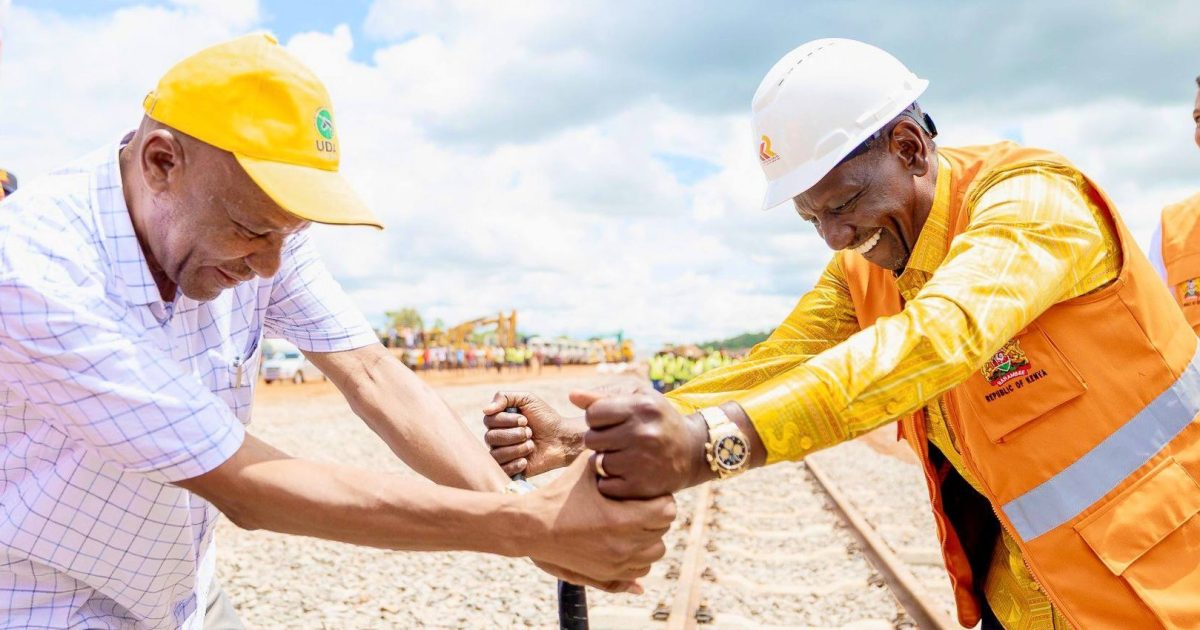
At the centre of this transformation is the Sh5.5 billion revival of the Voi–Mwatate–Taveta metre gauge railway, launched by President Dr. William Ruto, which is expected to reconnect Kenya to northern Tanzania and restore a key regional trade corridor.
The railway is projected to lower the cost of doing business, ease pressure on roads and position Voi as a logistics hub linking the Port of Mombasa to the Taveta-Holili border.
“This railway is about unlocking economic potential and connecting our people to markets,” President Ruto said during the launch.
Taita Taveta Governor Andrew Mwadime said the project will catalyse growth across key sectors.
“It will transform how our farmers, traders and investors access markets both locally and across the border,” he said.
The rail project is being complemented by an expanding road network designed to open up agricultural areas and improve access to markets and services.
The 55-kilometre Mto Mwagodi–Dawida–Mbale–Wundanyi–Bura Junction Road in Mwatate Constituency is under construction, with about 10 kilometres already complete and full completion expected early next year.
The Illasit–Rombo–Njukini–Taveta road is also progressing steadily, with 20 kilometres of the 60-kilometre stretch already completed, enhancing connectivity between Taita Taveta and Kajiado counties.
Additional works include the ongoing construction of the Cess–Lake Jipe Road, while the Maungu–Kasigau road has been advertised with funding secured. Financing has also been confirmed for the 18-kilometre Voi–Sagalla road.
A senior official from the Kenya National Highways Authority (KeNHA) said the projects are designed to reduce transport costs and integrate rural economies into national and regional markets.
A major pillar of the transformation is the rollout of seven markets across the county, aimed at formalizing trade, improving value chains and easing congestion in existing urban markets.
In Voi town, the government has broken ground for a Sh278 million modern market equipped with cold storage and structured trading spaces to reduce post-harvest losses and improve food handling.
The Maungu market, valued at Sh49 million, is 96 per cent complete, while the Sh55 million Mwatunge Economic Stimulus Programme (ESP) Market in Mwatate stands at 98 per cent completion.
Unlike conventional markets, the Mwatunge facility is specifically designed to host large-scale and wholesale traders, allowing retail traders to remain at the existing Mwatate Modern Market.
The arrangement is expected to significantly decongest the town centre while improving efficiency in the movement and distribution of goods.
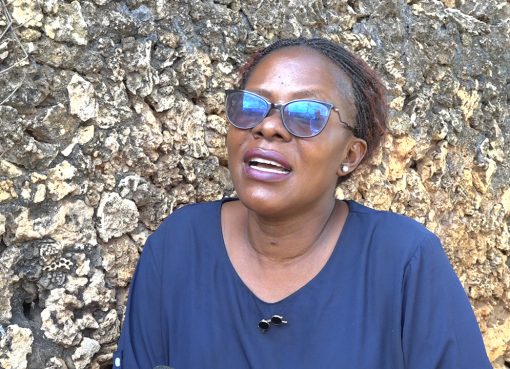
“At the moment, congestion affects both traders and customers. Separating wholesale and retail operations will improve business flow and increase earnings,” said Grace Mghanga, a trader in Mwatate.
At Bura Ndogo, a Sh70 million market project is at the final stages of contractual processes following the issuance of a notification of award earlier this year.
Three additional markets, Njukini, Wundanyi ESP and Mghange ESP are in the procurement pipeline, with plans already submitted to the State Department for Housing.
Principal Secretary for Housing and Urban Development Charles Hinga said the market programme is designed to strengthen the MSME sector.
“These markets will ensure traders operate in dignified environments while improving storage, reducing losses and enhancing access to structured trading systems,” he said.
Governor Mwadime said the projects will directly uplift livelihoods across the county.
“This is where real economic transformation happens; at the level of traders and small businesses,” he said.
Housing development is also accelerating, with multiple Affordable Housing Projects (AHPs) at different stages of implementation.
The Voi AHP, comprising 458 units, is currently at 60 per cent completion with an investment of Sh1.4 billion.
In Taveta, an 831-unit AHP valued at Sh2.3 billion is at 14 per cent completion, while the Wundanyi AHP, which will deliver 385 units at a cost of Sh930 million, has been awarded and is awaiting site handover.
In Mwatate, a larger integrated AHP project comprising 580 housing units alongside a Level 4 hospital and supporting facilities has been advertised at an estimated cost of Sh1.7 billion.

Hinga said the housing programme is central to economic growth, adding, “We are delivering homes while at the same time creating jobs, supporting local industries and improving urban infrastructure.”
Institutional accommodation is also expanding to support education and skills development. At Taita Taveta University, two hostel blocks with a combined capacity of 1,680 beds are under construction at a cost of Sh736 million.
At the Voi campus of Kenya Medical Training College, a 580-bed hostel valued at Sh206 million is planned, alongside a similar 580-bed facility in Taveta costing Sh220 million.
In Wumingu, a Technical and Vocational College hostel with a capacity of 340 students is being developed at a cost of Sh149 million.
Indeed, the projects represent a coordinated development strategy linking transport, trade, housing and human capital to drive inclusive growth.
From the revival of rail transport to the restructuring of market systems, from roads opening up rural production zones to housing stabilising urban growth, the investments are steadily transforming Taita Taveta’s economic landscape.
For a county long seen as a transit corridor, the scale and integration of these projects signal a decisive shift toward becoming a regional hub for trade, logistics and grassroots enterprise.
Meanwhile, as implementation progresses, the foundation for long-term economic transformation in Taita-Taveta is firmly taking shape.
By Arnold Linga Masila