The Taita Taveta County government has renewed its commitment to expanding access to clean water and sanitation services as Kenya intensifies efforts to bridge longstanding gaps in water coverage and public hygiene.
Taita Taveta Governor Andrew Mwadime said the County will leverage on the Kenya Water, Sanitation and Hygiene (K-WASH) Programme to strengthen water service delivery and improve sanitation standards, particularly in underserved and drought-prone communities.
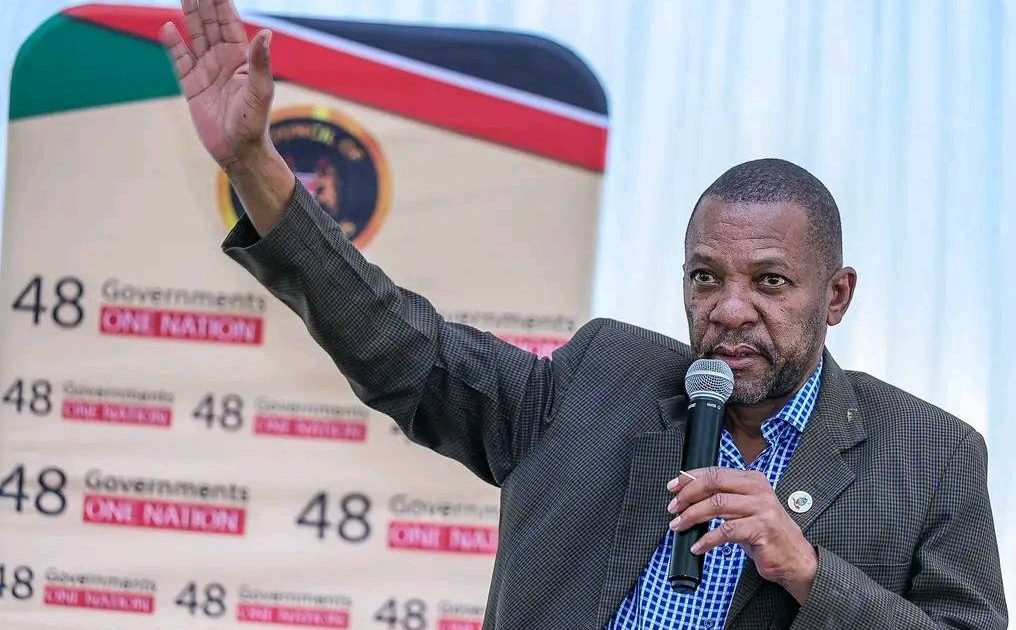
Speaking during a high-level governors’ sensitisation meeting in Naivasha, Mwadime said counties have a critical role in supporting the country’s push towards universal access to safe water and sanitation services.
“The engagement provides practical and useful insights that will support Taita Taveta County’s efforts to expand access to clean water and sanitation services for our residents,” said the Governor.
The meeting, convened by the Council of Governors in collaboration with the Ministry of Water, Sanitation and Irrigation, brought together county leaders and water sector stakeholders to discuss reforms aimed at improving governance, financing, and operational efficiency within Water Service Providers.
Water Cabinet Secretary Eric Mugaa chaired the session, which focused on improving financial management systems, strengthening institutional governance, professionalising staffing in water utilities, and enhancing cooperation between county and national governments in implementing bulk water infrastructure projects.
The discussions come at a time when Kenya continues to face major challenges in access to clean water and safe sanitation despite ongoing investments in the sector.
According to UNICEF Kenya, only 59 per cent of Kenyans currently have access to safe drinking water, while access to basic sanitation stands at 29 per cent.
Additionally, an estimated 9.9 million Kenyans still rely on contaminated surface water sources, while about five million people continue to practise open defecation.
The statistics underscore the scale of the challenge facing both national and county governments as they work toward achieving Sustainable Development Goal Six on clean water and sanitation by 2030.
For Arid and Semi-arid counties such as Taita Taveta County, unreliable rainfall, prolonged droughts, and inadequate infrastructure continue to affect access to clean and safe water, particularly in remote rural communities.
Experts say improved access to water and sanitation has a direct impact on public health, school attendance, food security, and local economic productivity by reducing water-borne diseases and easing the burden on households forced to travel long distances in search of water.
Through K-WASH, the national government is piloting reforms in 19 counties before scaling up the programme to the remaining counties across the country.
The initiative seeks to strengthen county water systems, improve sanitation investments, and build climate-resilient water infrastructure.
The programme is also expected to support Kenya’s broader development agenda by improving hygiene standards and reducing preventable diseases linked to unsafe water and poor sanitation, especially among children and vulnerable communities.
By Arnold Linga Masila