Stakeholders in Kenya’s tea industry have backed the newly introduced tea levy, describing it as a critical step towards strengthening market access, value addition, research and the long-term sustainability of the country’s leading export crop.
The Tea Board of Kenya (TBK) defended the Tea (Levy) Regulations, 2026, clarifying that the export levy imposed on tea exports is 0.8 per cent, not 8 per cent as previously reported in sections of the media.
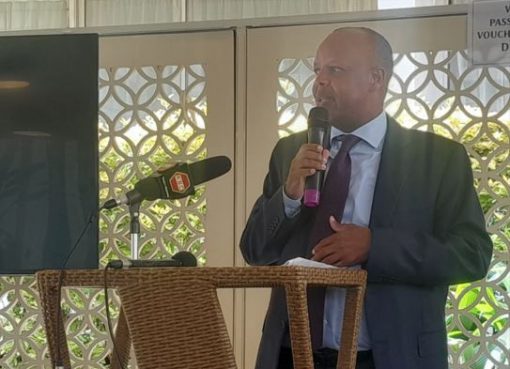
Speaking during a media briefing at Tea House in Nairobi on Thursday, Tea Board of Kenya Chairman Ndung’u Gathinji said the levy is intended to support the long-term competitiveness of the tea industry rather than burden consumers or exporters.
“The levy is not intended to be a punitive tax measure to the consumer. Rather, it is a strategic investment mechanism, aimed at supporting the long-term sustainability and competitiveness of the tea industry,” Gathinji said.
The regulations, developed under Section 53 of the Tea Act Cap 343, were published through Legal Notice No. 56 in the Kenya Gazette Supplement No. 82 on April 1, 2026, and officially took effect on May 1, 2026.
Under the new framework, exporters will pay a levy equivalent to 0.8 percent of the auction value or customs value for direct tea sales.
However, several tea products have been exempted from the levy, including value-added teas packed in containers not exceeding 10 kilograms, tea extracts and tea aroma, and teas processed within Export Processing Zones and Special Economic Zones for local consumption.
According to TBK, the exemptions are aimed at promoting local value addition, branding and export diversification in line with the government’s Bottom-Up Economic Transformation Agenda (BETA).
Gathinji noted that the tea sector remains one of Kenya’s most important economic pillars, supporting millions of livelihoods, while serving as a major source of foreign exchange earnings.
He said sustainable financing and regulatory support were essential in protecting the sector from global economic shocks and maintaining competitiveness in international markets.
The Tea Board said funds collected through the levy will support infrastructure development, market expansion, research and innovation, quality assurance systems, sustainability compliance, value addition initiatives, farmer support programs and global marketing of Kenyan tea.
Part of the infrastructure funds will be transferred to tea-growing county governments as conditional grants based on production levels.
At the same time, County administrations, in consultation with tea stakeholders, are expected to identify priority projects including feeder roads, tea buying centres and other infrastructure supporting tea farming communities.
TBK also defended the process used to formulate the regulations, saying extensive stakeholder consultations and public participation forums were conducted between 2021 and 2025. Participants included tea farmers, factory operators, exporters, brokers, packers, warehouse operators, county governments and industry associations.
“We remain committed to continued stakeholder engagement to ensure smooth implementation and responsive administration of the levy framework,” Gathinji said.
The chairman acknowledged concerns raised by some stakeholders, including international buyers, but assured the industry that the Board would continue consultations, sensitization forums, and technical support to address operational challenges.
Kenya remains one of the world’s leading tea exporters, with the Mombasa Tea Auction continuing to serve as the world’s largest tea auction and a key regional trading hub.
During the stakeholders’ briefing, Tea Board of Kenya representative for traders William Koyosi said the industry had embraced the levy because of its expected benefits to the sector.
“We took the levy positively because we are sure it is going to be used for the intended purposes,” Koyosi said.
He added that the levy would support market diversification efforts and help establish a common user facility in Mombasa to consolidate, package, and value-add Kenyan tea for export markets.
He also noted that tea research would benefit from the funds collected, describing the levy as a milestone in the modernization of Kenya’s tea industry.
Government officials also defended the levy, arguing that it would help unlock global opportunities for Kenyan tea exporters.
Michael Mandu, representing the Principal Secretary for Trade in the Ministry of Investment, Trade and Industry, said Kenya had negotiated trade frameworks worth approximately USD 48 trillion across key international markets, including the European Union, the United Kingdom, the United Arab Emirates, China, the United States and the African Continental Free Trade Area.
Mandu said the main challenge had not been market access, but inadequate funding to support trade missions, participation in trade fairs and efforts to connect buyers and sellers globally.
“One of the leading products we are pushing into those markets globally is tea,” he said, adding, “Every time tea is consumed in those destinations, the tea farmer becomes the ultimate beneficiary through foreign exchange earnings.”
Officials also revealed that Kenya is pursuing tariff negotiations with major tea destinations, including Pakistan and South Africa.
Consequently, a Joint Trade Committee mission involving the Kenya Revenue Authority, the Tea Board of Kenya, and several ministries is expected to travel to Karachi for talks with Pakistan, one of Kenya’s largest tea buyers.
The government further confirmed that China’s zero-tariff arrangement for Kenyan tea is already in effect, with the first consignment having reached the Chinese market.
Addressing concerns over management of the levy funds, officials assured stakeholders that the revenue would remain under government oversight through the National Treasury and would only be allocated for legally approved purposes.
Tea sector representatives dismissed criticism surrounding the levy, noting that similar levies already exist in other sectors managed by state agencies.
County governments from the 21 tea-growing areas also supported the initiative, saying it would help improve tea productivity, expand market access and increase farmers’ earnings.
Officials described tea as Kenya’s “green gold” and urged farmers and investors to support the reforms to ensure long-term growth of the sector.
Factory representative Mwangi Kiregwe also endorsed the levy, saying it would strengthen value addition and international marketing efforts for Kenyan tea.
Meanwhile, even as concerns emerged over the possibility of importing countries imposing retaliatory levies on Kenyan tea exports, Tea Board officials said any arising issues would be addressed diplomatically through Government-to-Government negotiations.
By Joseph Ng’ang’a