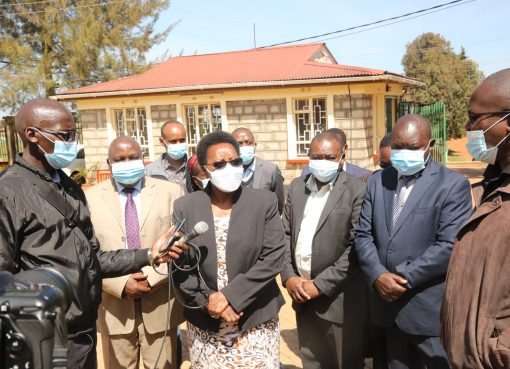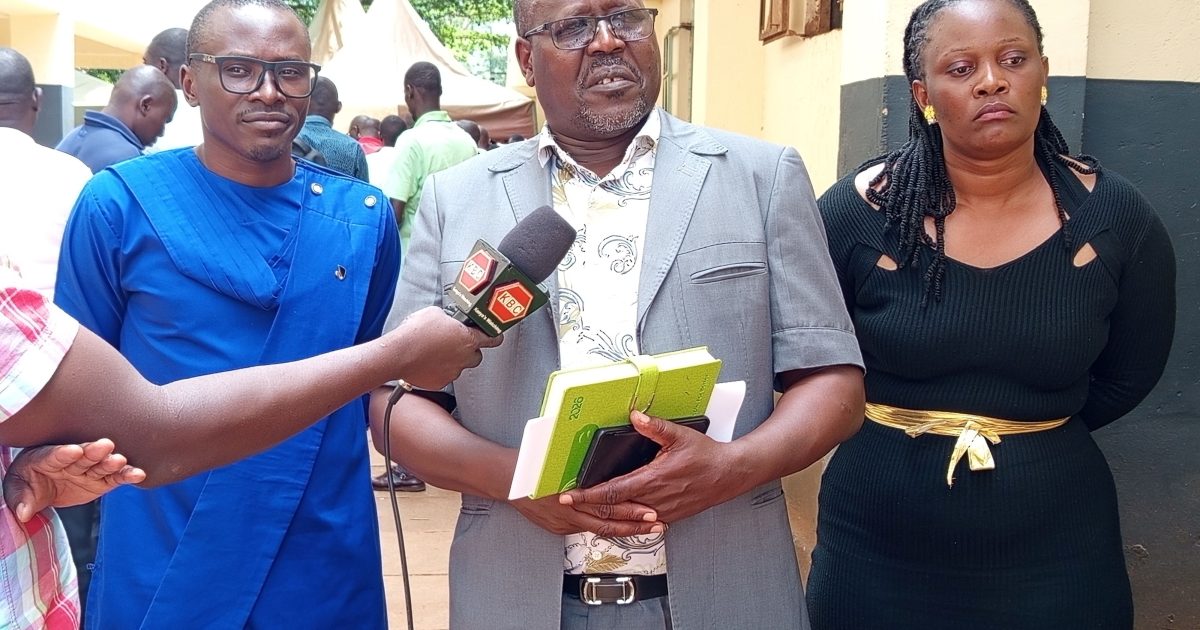
Education officials and trainers have raised concern over data security risks in schools as Artificial Intelligence (AI) becomes increasingly integrated into teaching and learning.
Teachers Service Commission, Rachuonyo South Sub-County Director, Kiprono Maritim described AI as critical for modern teaching but at the same time cautioned that it can pose risks if used without proper safeguards.
“Artificial Intelligence is powerful, but it must be handled carefully. Teachers must always verify information and ensure that no sensitive data is exposed,” Maritim said.
The Director was speaking at Agoro Sare High School in Oyugis after a three-day capacity-building training on AI and ICT integration that targeted educators across five sub-counties in Homa Bay.
Data protection, however, emerged as a central theme throughout the training, where teachers were cautioned against sharing sensitive personal or student information when using digital tools.
The programme that brought together more than 80 senior school teachers, primarily from STEM subjects was facilitated by the Centre for Mathematics, Science and Technology Education in Africa (CEMESTEA).
The Director noted that global developments, including modern conflicts, have demonstrated the growing role of AI technologies such as drones and underscored the need for educators to stay informed and prepared.
However, Maritim warned that the same technologies could be misused if not handled ethically.
“AI is artificial, but natural intelligence remains the human being. Teachers must verify information generated by AI to avoid bias or manipulation and ensure accuracy in the classroom,” he said.
The participants were urged to remain vigilant about misinformation, with Maritim pointing to recent instances of manipulated digital content circulating online as evidence of AI’s potential risks.
While the sessions focused on equipping teachers with AI skills to strengthen their digital competencies under the Competency-Based Curriculum (CBC) where ICT integration is a core pillar, facilitators emphasized that protecting learners’ personal information must remain a top priority.
The trainers noted that many AI platforms rely on user input to generate responses, meaning that any personal data entered could be stored or reused. This raises privacy concerns, especially when teachers input real student details while preparing lesson materials or assessments.
According to Michael Teter, an official from CEMESTEA, the training was informed by a needs assessment that revealed gaps in how teachers were using AI tools.
“Some teachers were using AI outputs without refining them to meet curriculum standards, often taking outputs at face value. We trained them on proper prompting techniques and how to tailor AI-generated content to suit the Kenya Institute of Curriculum Development (KICD) guidelines,” he explained.
The teachers were taken through practical sessions on using AI tools such as ChatGPT, Copilot, and Gemini for lesson planning, including generating specific learning outcomes and improving instructional delivery.
Teter highlighted that the training was part of a broader national effort to build teachers’ capacity in digital literacy and align classroom practices with evolving technological trends, noting that data security was key to protecting learners while enhancing teaching outcomes.
A trainer, Orwa Collins, emphasized that AI has existed for decades but is now more accessible, making it essential for teachers to understand both its benefits and ethical implications.
“AI has been evolving for years now. Our role is to equip teachers with the skills to leverage it ethically and effectively. We must guide students on best practices, including understanding data protection laws and responsible usage,” he said.
He also called for a balanced approach in allowing students access to digital devices in schools, stressing the importance of supervision and adherence to guidelines.
A participant, Oginga Clayford from Nyahera Girls High School, described the training as transformative, noting that teachers had gained skills to create and refine digital teaching resources. “We can now develop our own tools using AI, but we have also learned that these tools must be carefully modified to suit specific learning objectives,” he said.
by Sitna Omar