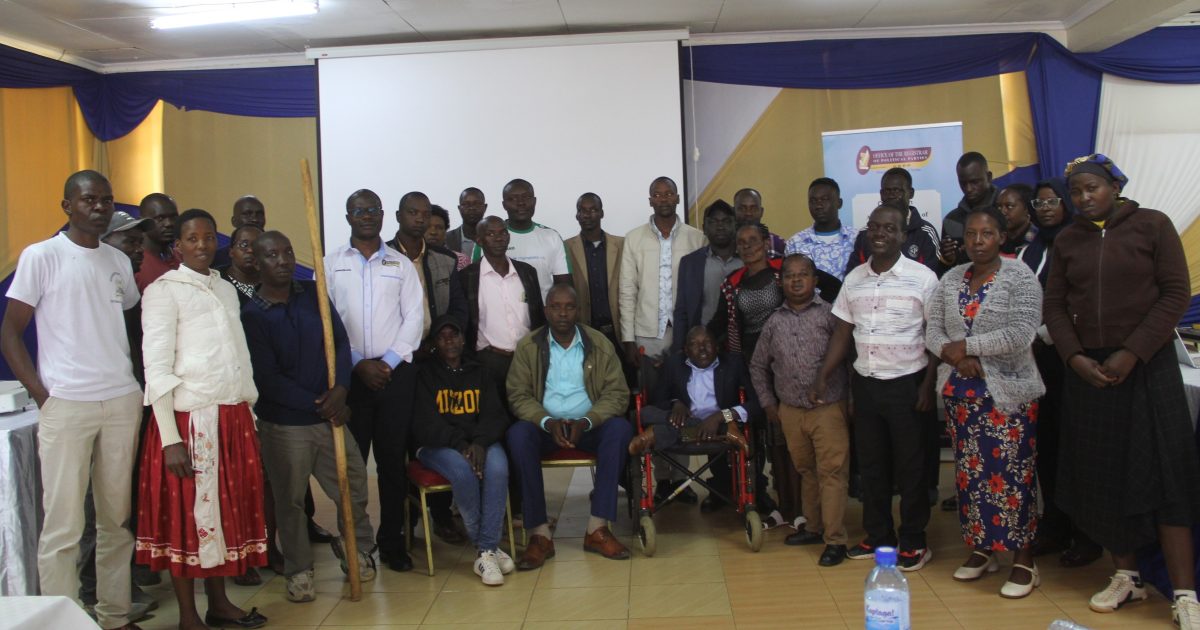
Persons with Disabilities (PWDs) groups in Uasin Gishu County have been sensitized on inclusivity and participation in electoral processes, as well as the role played by political parties in promoting their representation ahead of the 2027 General Elections.
The training, conducted by the Office of the Registrar of Political Parties (ORPP), aims to equip PWDs with knowledge and understanding of their rights on matters related to political parties and electoral processes as part of preparations for the upcoming polls.
Speaking during the Electoral Preparedness Training forum held at RVTTI in Eldoret, ORPP Regional Coordinator for the North Rift, Hassan Maloba, emphasized the need for political parties to ensure inclusivity of PWDs in leadership structures to guarantee democratic and fair representation.
He noted that ORPP is committed to the inclusion of Persons with Disabilities through capacity building, legal reforms, and internal compliance checks. He added that key commitments include integrating PWDs into party leadership structures and enforcing a minimum inclusion framework across all registered political parties.
Maloba urged political parties to uphold the code of conduct, including peaceful and fair campaigning, tolerance and free expression, integrity, and democratic practices, noting that adherence to these principles helps safeguard democracy by preventing electoral violence, eliminating corruption, and ensuring fair competition ahead of the elections.
He warned that violations of the code may attract strict consequences ranging from public warnings, campaign restrictions, and fines to disqualification of candidates or deregistration of political parties.
Independent Electoral and Boundaries Commission (IEBC) Returning Officer for Kesses Constituency, Mathew Chenger, lauded the forum, saying it plays a key role in educating Persons with Disabilities on their democratic rights. He confirmed that voter registration is ongoing at IEBC offices and encouraged eligible PWDs who have not yet registered to do so.
Chenger further assured participants that the Commission remains committed to ensuring accessible, free, fair, transparent, and verifiable elections in line with its constitutional mandate.
The PWD groups were also trained on the legal and regulatory framework governing political parties in Kenya, the electoral code of conduct, political party regulations, and emerging electoral threats such as AI-generated deepfakes targeting candidates, misinformation spread through WhatsApp groups, and online harassment targeting PWDs.
The training also covered the use of technology in enhancing electoral preparedness and promoting electoral integrity.
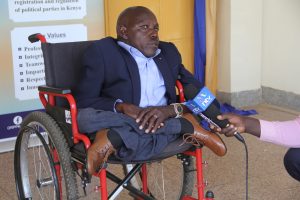
Speaking during an interview, Wilson Mulwa, a PWD representative from Uasin Gishu, said the training was helpful, especially in understanding their rights to vote and the freedom to join any political party.
He highlighted challenges faced by PWDs, including societal pity and sympathy that often undermine their capabilities, and misconceptions that persons with disabilities should not vie for elective positions because of reserved nomination slots.
“Disability is not inability. We can be leaders too. Leadership is not about strength but about a strategic mind, vision, and a goal to achieve,” he said.
Mulwa further noted that the training had clarified issues surrounding PWD nominations during elections. He said they had previously blamed the IEBC, but now understood that political party representatives are often responsible for failing to nominate qualified PWD candidates.
He cited concerns that in some cases within Uasin Gishu County, able-bodied individuals had been nominated for positions meant for PWD representation, undermining inclusivity.
By Ekuwam Sylvester and Shaline Jeruto