More than 150 Junior School teachers in Kisumu County have been trained on the use of virtual laboratories in Mathematics and Integrated Science as part of a nationwide programme targeting 7,000 teachers aimed at improving STEM learning under the Competency-Based Curriculum (CBC).
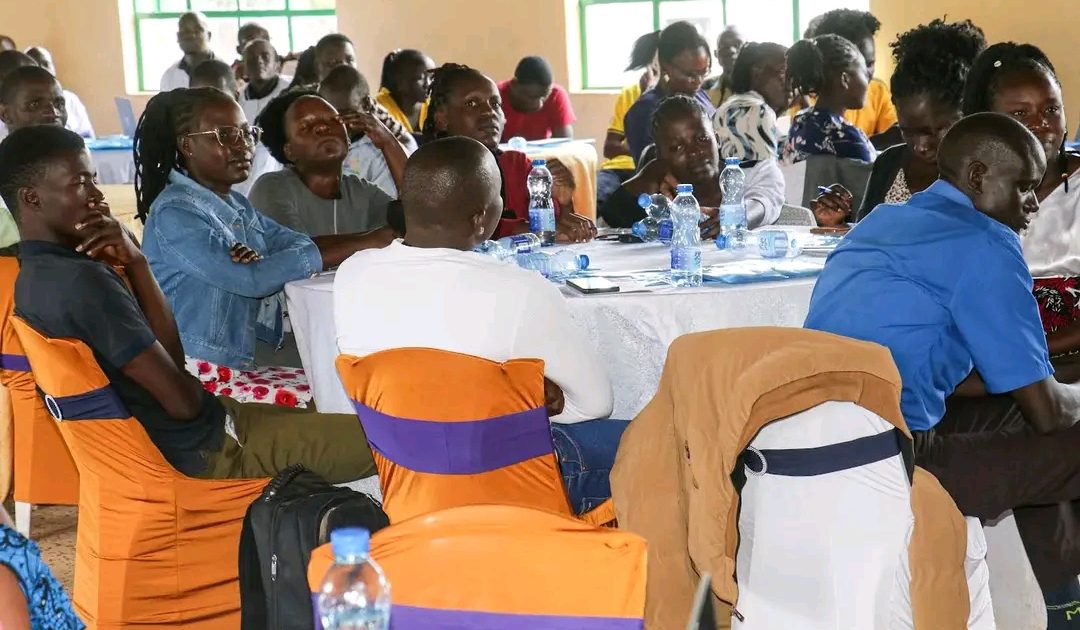
The three-day training, coordinated by the Centre for Mathematics, Science and Technology Education in Africa (CEMASTEA), brought together teachers drawn from the county’s eight sub-counties and focused on equipping them with skills to conduct practical lessons using digital simulations where physical laboratories and equipment are unavailable.
According to Kisumu County Trainers Representative Chadwick Ajwang, the programme seeks to help teachers harness virtual laboratories to enhance the teaching and learning of Science, Technology, Engineering and Mathematics (STEM) subjects in Junior Schools.
“The training was about harnessing virtual labs for effective STEM learning in junior schools. We explored what virtual laboratories are and trained teachers on how to use them in classroom instruction,” said Ajwang.
Addressing the media during the training at Nyakach Girls Senior School, Ajwang explained that virtual laboratories use simulations to replicate real-life experiments, enabling learners to undertake practical activities digitally without necessarily requiring physical apparatus or laboratory facilities.
“We took teachers through how to plan and conduct virtual experiments with learners. Virtual labs are about simulating actual experiments so that learners can still acquire practical skills even when the necessary equipment is not available,” he said.
The initiative comes at a time when many Junior Schools across the country continue to grapple with inadequate laboratory infrastructure and shortages of science equipment, challenges that have complicated the implementation of practical lessons under CBC.
Ajwang noted that the digital platform could provide a timely solution to the persistent struggle by teachers to access laboratory apparatus in their schools.
“What we gathered from participants is that they were very positive about the training because it has opened another window for teaching science. Junior school teachers have often faced challenges accessing laboratory equipment and facilities. Virtual labs offer an opportunity to address that problem,” he said.
He added that the technology would enable learners to continue exploring scientific concepts beyond the classroom through smartphones and other digital devices.
“Since we are living in the digital age, learners can access their parents’ smartphones at home. Once teachers introduce them to the simulations, they can continue exploring experiments and learning independently,” he said.
Ajwang further observed that the programme could strengthen parental involvement in education by encouraging parents and guardians to support learners as they interact with digital learning tools outside school hours.
The training in Kisumu was part of a national rollout following the preparation of 240 county trainers by CEMASTEA in June. The county trainers were subsequently tasked with cascading the programme to Junior School Mathematics and Integrated Science teachers across the country.
Education stakeholders hope the adoption of virtual laboratories will help bridge resource gaps in schools while expanding access to practical STEM learning, particularly in institutions that lack fully equipped science laboratories.
By Faith Lumumba