Residents across West Pokot County have called for increased investment in water, education, healthcare, roads and youth empowerment as the county government collects views to guide preparation of the 2027/2028 County Annual Development Plan (C-ADP).
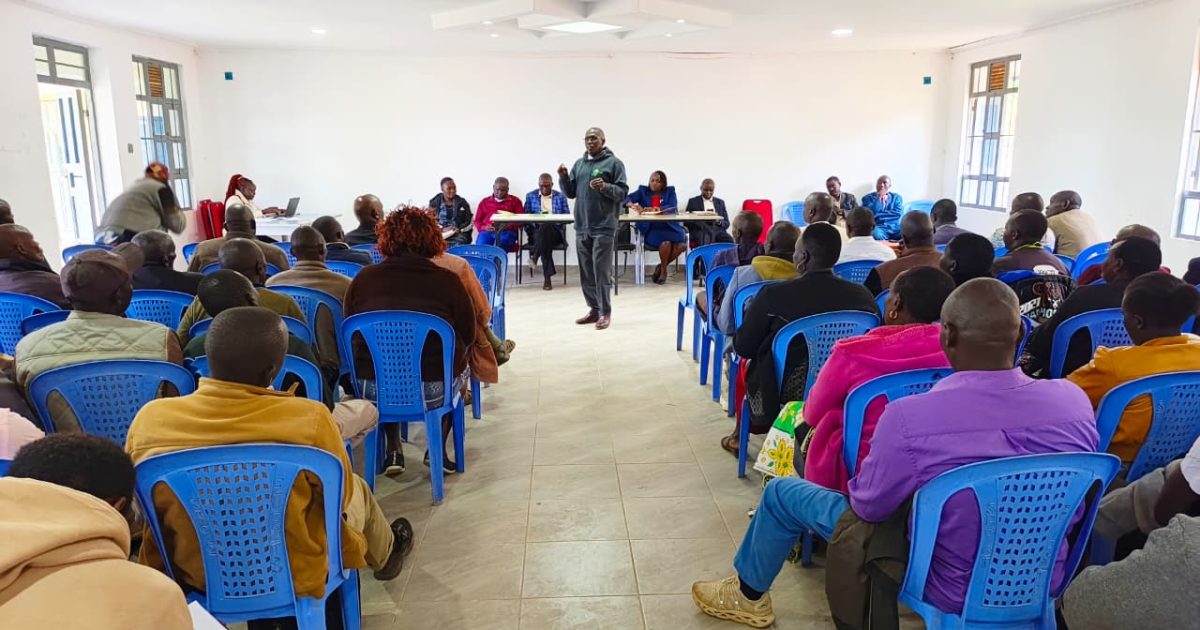
The residents made the proposals during public participation forums held across the county’s six sub-counties of Pokot Central, Pokot North, Pokot South, Kacheliba, Kipkomo and West Pokot, where communities identified and prioritised projects they want implemented in the next financial year.
Water emerged as one of the major priorities, with residents in the largely arid and semi-arid county calling for construction of dams, wells and other water infrastructure to address shortages affecting households, livestock and agricultural activities.
Speaking during the forum at Mtelo Hall in Kapenguria, County Executive Committee Member for Agriculture Wilfred Long’uronyang urged residents to actively participate in the planning process and clearly articulate the challenges affecting their communities.
“Be proactive and give your opinions on what you want the government to do for you in your respective areas,” Long’uronyang told participants.
He said the views gathered would inform preparation of the FY 2027/2028 C-ADP and subsequently guide development planning, resource allocation and budgeting priorities in the county.
Public participation is a constitutional requirement that enables citizens to influence decisions on development priorities and allocation of public resources. The process is anchored in the Constitution of Kenya, the County Governments Act and the Public Finance Management Act.
Residents welcomed the exercise, saying it gave communities an opportunity to identify projects that directly respond to their needs before county resources are allocated.
Mark Lokoma, a resident of Mnagei Ward, said although not all proposals presented during the exercise could be implemented, priority needs should be considered when the county government prepares its development plan.
“We know that not all our views will be implemented, but those that are a priority should be taken into consideration,” Lokoma said.
He called for commitment from leaders in implementing approved projects, noting that development programmes have a direct impact on the livelihoods of residents.
Lokoma identified water as an urgent need, particularly because many parts of West Pokot experience recurrent drought.
“Water should be a priority because it supports our livelihoods. We need it for domestic use, for our animals and even for irrigation,” he said.
He called for increased investment in dams, wells and clean water infrastructure to improve access for households, livestock keepers and farmers.
Education was also highlighted as a key priority, with residents calling for construction and equipping of schools as well as deployment of adequate numbers of teachers.
“Education is an equaliser. It gives our children an opportunity to compete with other Kenyans, especially in the formal sector,” Lokoma said.
Youth representatives, meanwhile, called for greater allocation of resources to programmes targeting young people, citing unemployment, limited economic opportunities and inadequate support for innovation and skills development.
Moses Kibet, a youth representative, welcomed the participation of young people in the exercise but said youth affairs should receive greater attention in the county budget.
He observed that youth programmes are often combined with sectors such as sports, culture and tourism, which could limit resources available for initiatives specifically targeting young people.
“With the advent of technology, we need innovation hubs and well-equipped youth empowerment centres where young people can be trained and exposed to opportunities in the digital world,” Kibet said.
He also raised concern over alcohol and drug abuse among young people, linking the problem to unemployment and inadequate support systems for those experiencing social and economic challenges.
“When young people face these challenges, there are very few places to turn to for help and advice. The quickest escape sometimes becomes drug and alcohol abuse,” he said.
Kibet called for early intervention and greater investment in youth programmes, saying the description of young people as “leaders of tomorrow” should be accompanied by practical interventions today.
“If we don’t rescue them earlier, it will become a problem later,” he said.
Residents across the various forums also raised concerns about roads, bridges, healthcare facilities, agriculture, markets, water infrastructure and other basic services.
In drought-prone areas, participants placed particular emphasis on water projects, saying reliable supplies would support domestic needs, livestock production and agricultural activities.
The forums were led by County Executive Committee Members and officials from various departments, who engaged residents and explained how their views would contribute to the county’s development planning process.
County Director of Planning and Budget Isaac Ritakou, who participated in ward-level group discussions at Mtelo Hall, said residents’ contributions were critical to effective planning.
“The views of the people are very important in planning for development in their areas,” Ritakou told participants.
He said incorporating citizens’ priorities into development planning would help the county government identify projects that address the most pressing needs in different communities.
The public participation process also provided an opportunity for county officials to explain government programmes and listen to challenges experienced by residents in accessing services.
The County Government has encouraged residents to continue participating in public forums and to follow announcements from local administrations regarding subsequent sub-county and village-level engagements.
Residents may also use available county digital platforms and other designated channels to submit written feedback where applicable during subsequent stages of the planning process.
The completion of the C-ADP public participation exercise marks an important step towards preparing West Pokot’s 2027/2028 development agenda.
The views collected are expected to inform decisions on project prioritisation and allocation of county resources during the coming financial year.
For residents, the exercise provided an opportunity not only to propose projects but also to influence the direction of development in their communities.
By Parklea Ivor