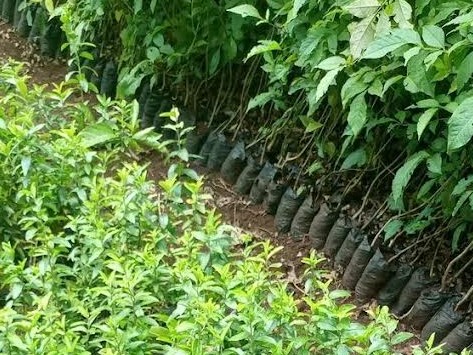
The efforts to conserve the environment in Tinderet Sub-County, Nandi County, are gaining momentum as young people take the lead in championing sustainable practices aimed at mitigating the effects of climate change and restoring degraded ecosystems.
With changing weather patterns increasingly affecting agricultural productivity and water availability, the youth have stepped in to bridge gaps through community-driven conservation initiatives.
Across the sub-county, young people are embracing a wide range of environmental conservation methods, including tree planting, agroforestry, river rehabilitation, waste management and adoption of renewable energy solutions.
These initiatives are tailored to address local environmental challenges such as deforestation, soil erosion, water scarcity and pollution, while at the same time creating economic opportunities for the youth involved.
Youth groups such as Green Champions of Tinderet, Songhor Youth for Climate Action, Chemase Eco Warriors and Kaplelach Tree Growers have been at the forefront of these initiatives, each focusing on specific activities that contribute to climate action.
Green Champions of Tinderet has specialised in tree nursery establishment and large-scale afforestation; Songhor Youth for Climate Action is leading riparian restoration and promotion of clean energy; Chemase Eco Warriors are championing waste management and recycling, while Kaplelach Tree Growers are advancing agroforestry and environmental awareness programmes.
Through tree planting initiatives, thousands of indigenous seedlings are being raised and distributed annually to farmers, schools and public institutions.
Members involved in nursery management are earning income from seedling sales, with some groups producing up to 50,000 seedlings each year.
According to Brian Kiprotich, chairperson of Green Champions of Tinderet, the initiative has not only increased tree cover but also provided employment to over 120 young people in the area.
“We are restoring our environment while also creating livelihoods for the youth,” says Kiprotich.
Agroforestry practices promoted by youth groups have seen more than 300 households integrate trees into their farms, leading to improved soil fertility and reduced land degradation.
Farmers adopting these methods have reported up to a 30 per cent increase in crop yields, attributed to better soil structure and moisture retention.
Janet Chepkemoi, coordinator of Kaplelach Tree Growers, says the shift has transformed farming practices in the area.
“Farmers are now seeing the value of combining trees with crops, and the results are better harvests and healthier soils,” says Chepkemoi.
River and wetland restoration efforts are also bearing fruit, particularly in areas prone to seasonal water shortages.
The youth have planted bamboo and indigenous trees along riverbanks, stabilising soils and enhancing water retention. Collins Kiptoo, Secretary of Songhor Youth for Climate Action, notes that some streams are now more reliable throughout the year.
“Rivers that used to dry up are now sustaining water longer because of the work we are doing,” says Kiptoo.
Waste management initiatives led by the youth are transforming trading centres in the area. Regular clean-up exercises, waste segregation campaigns and plastic collection programmes have significantly reduced pollution levels.
Mercy Chebet, a member of Chemase Eco Warriors, says community attitudes are gradually changing.
“Our clean-up campaigns have changed how people handle waste. There is more awareness and responsibility,” says Chebet.
The promotion of renewable energy solutions is further strengthening climate action in the subcounty. Youth groups are encouraging the use of energy-efficient cooking stoves and small-scale solar systems, reducing reliance on firewood and charcoal.
According to Kiptoo, more than 200 households have adopted improved cooking stoves, cutting fuel consumption by nearly half and lowering carbon emissions.
Climate-smart agriculture has also emerged as a key strategy, with youth training farmers on techniques such as mulching, crop rotation, organic farming and water harvesting.
These practices are helping farmers adapt to erratic rainfall patterns, ensuring more stable agricultural production despite changing climatic conditions.
In addition to practical conservation work, youth groups are investing in environmental education and awareness creation.
Outreach programmes in schools and community forums are equipping residents with knowledge on sustainable practices, fostering a culture of environmental stewardship among the younger generation.
The impact of these initiatives is evident in improved environmental conditions across the region.
Increased tree cover is contributing to better microclimatic regulation, while reduced soil erosion is enhancing agricultural productivity.
Restored water catchment areas are improving water availability, supporting both livelihoods and ecosystems.
Beyond environmental benefits, the initiatives are addressing social and economic challenges.
It is estimated that more than 500 young people are directly benefiting from income-generating activities linked to conservation, including seedling production and recycling ventures.
This has played a role in reducing unemployment and discouraging rural-urban migration.
Peter Tanui, the Tinderet Sub County environmental officer, says the involvement of youth has been a game changer in conservation efforts.
“Young people have brought energy, innovation and consistency in environmental management. Their efforts are visible and impactful,” he notes.
Despite the progress, challenges such as limited funding, inadequate technical support and occasional community resistance persist. However, continued collaboration with local authorities and stakeholders is helping to strengthen and expand these initiatives.
Their commitment to environmental conservation is not only safeguarding natural resources but also laying the foundation for a more resilient and sustainable future.
By Sammy Mwibanda