Youth in Kiambu County have been urged to take a leading role in promoting peace and harmony while advocating for good governance, accountability, and public trust amongst leaders as the country heads for the 2027 General Election.
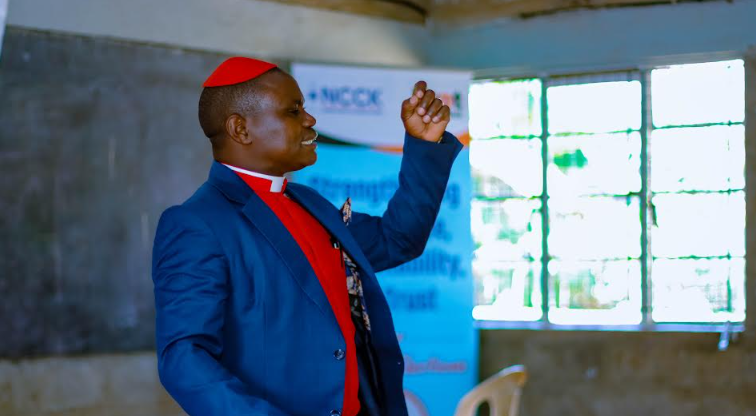
The call was made during a governance forum held at ACK St. Paul’s Church, Kirigiti, on Wednesday and organized by the National Council of Churches of Kenya (NCCK), under the theme “Strengthening Governance, Accountability, and Trust.”
Speaking during the forum, NCCK Coordinating Committee Secretary Bishop Joseph Ngigi said citizens have a constitutional responsibility to hold elected leaders accountable in order to strengthen governance and safeguard democratic values.
He reminded participants that sovereign power belongs to the people as enshrined in the Constitution and urged young people to actively participate in the democratic process by registering as voters and turning out to vote during elections.
“Our democracy can only be strengthened when citizens actively participate and hold their leaders accountable,” Bishop Ngigi said.
Discussions at the forum were informed by findings of the NCCK’s nationwide governance study, the ‘Angaza Project’, which highlighted increasing youth participation in civic affairs alongside growing social and economic vulnerabilities.
The report cites the Niko Kadi movement as an indication of the growing willingness among young people to engage in governance and accountability issues.
NCCK Monitoring and Evaluation Officer, Dennis Bosire, said young people are increasingly demanding inclusion in leadership and decision-making processes rather than waiting to become “leaders of tomorrow.”
He noted that while social media has expanded opportunities for civic engagement and public discourse among the youth, it has also increased exposure to misinformation, contributing to declining trust in information sources.
During the public participation session, some youth attributed cases of violence and criminal activities involving young people to unemployment and lack of economic opportunities.
One participant, Jane Mwende, said prolonged unemployment had left many young people vulnerable to exploitation by politicians seeking to advance their political interests.
“Idleness and lack of opportunities are pushing many young people into goonism as a means of survival, especially now that politicians are hungry for power,” she said.
Participants also discussed the role of religion in democratic governance, cautioning against the misuse of religious platforms for political gain, particularly where money and influence are involved.
The Forum heard that many young people remain vulnerable to political manipulation through financial inducements, ethnic mobilization, and recruitment into violence due to economic hardships.
To address the challenges, NCCK said it is promoting youth visioning forums and developing sermon guidelines aimed at fostering peaceful co-existence, responsible civic engagement, and ethical leadership.
The guidelines encourage churches to reject violence, hate speech, and political manipulation while empowering young people to become ambassadors of peace and champions of positive social change.
Bosire said the Council is also implementing programs such as ‘Vijana Tu Thrive’, which equips young people with mentorship, financial literacy, employability skills, job search support, and civic education to enhance their resilience and reduce vulnerability to political exploitation.
Despite the challenges facing the youth, participants said growing political awareness among young people presents an opportunity to strengthen democratic governance and accountability.
“Young people have the numbers and the energy to influence the future of this country. What we need is to remain informed, reject manipulation, and participate in building a better Kenya,” said James Kamau, a 21-year-old participant from Kiambu Sub-county.
They called for collective efforts by all stakeholders to empower young people to play a meaningful role in shaping the country’s future as Kenya prepares for the next electoral cycle.
By Winjoy Makena and Grace Naishoo