The State Department for Gender and Affirmative Action in Kiambu County has intensified efforts to combat Gender-Based Violence (GBV) and femicide through a multi-agency approach, bringing together government departments, non-state actors, faith-based organizations, and community stakeholders.
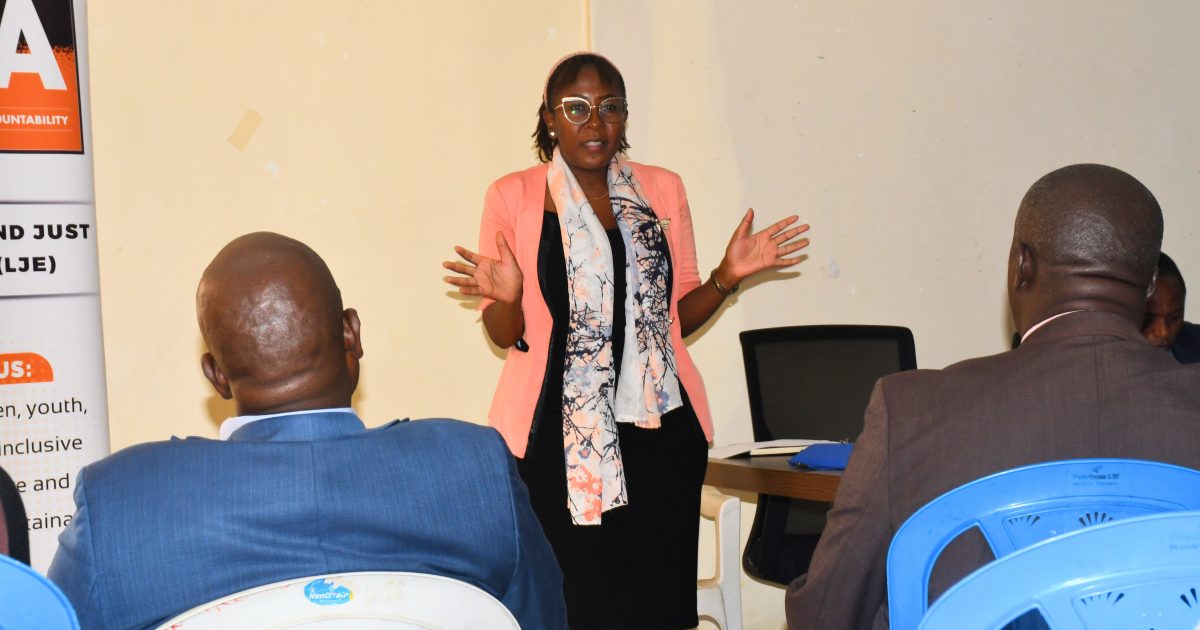
The renewed commitment emerged during a Gender Sector Working Group Committee meeting held at the County Commissioner’s Hall in Kiambu on Tuesday.
The forum focused on strengthening collaboration, improving data collection and reviewing the implementation of thematic programmes targeting women empowerment, male inclusion, and anti-SGBV interventions.
Speaking during the meeting, Kiambu Deputy County Commissioner Titus Macharia revealed that the county recorded 203 GBV cases between January and March this year, underscoring the need for coordinated interventions.
“What we need is synergy among the different departments, because when one link is missing, we cannot address GBV effectively,” Macharia emphasized.
He noted that local administrators have already been directed to conduct at least two monthly public barazas focusing on GBV awareness and prevention.
“We are supposed to give reports on this weekly at the sub-county level, every two weeks at the county level, and monthly at the regional level,” he added.
The Gender Sector Working Group meeting brought together stakeholders from the State Department for Gender and Affirmative Action, county government departments, civil society organizations, community-based organizations, and faith-based groups to discuss the implementation of six key thematic areas.
These include socio-economic empowerment of women, women in peace and security, women in political leadership, male engagement and inclusion, anti-SGBV programmes, and gender mainstreaming and climate change.
Alice Mbiyu, who oversees the State Department for Gender and Affirmative Action in Kiambu County, emphasized that gender issues affect all members of society.
“Gender touches everyone, whether male or female,” Mbiyu added.
She explained that the department is increasingly integrating gender concerns into other sectors such as agriculture, climate change, and governance to address emerging social and economic challenges affecting families.
Diana Gichengo, Executive Director of The Institute for Social Accountability (TISA), a non-state actor partnering with the department, linked economic empowerment of women to broader social stability within communities.
“We are fighting corruption in Kiambu and ensuring there is no GBV, and families are thriving, because when women are empowered, families thrive,” she explained.
Gichengo also highlighted emerging forms of discrimination against women, particularly in access to land and agricultural activities.
“We have had very many instances where women are not allowed to do farming because the man prohibits that on their land. Such are the kind of emerging cases we now have to deal with,” she noted.
She added that this informed the inclusion of agriculture and climate change stakeholders in the gender discussions.
The meeting further reviewed the implementation of the Rapid Results Initiative targeting Sexual and Gender-Based Violence (SGBV) and femicide within a 90 to 100-day intervention framework.
by Rose Muthoni