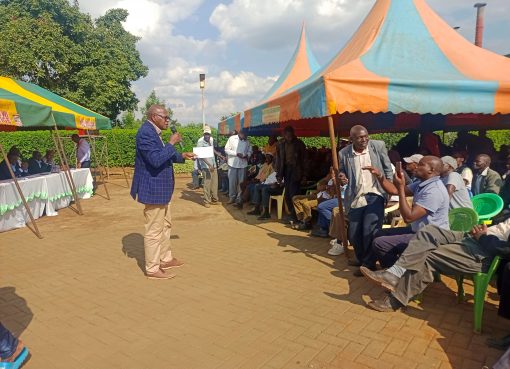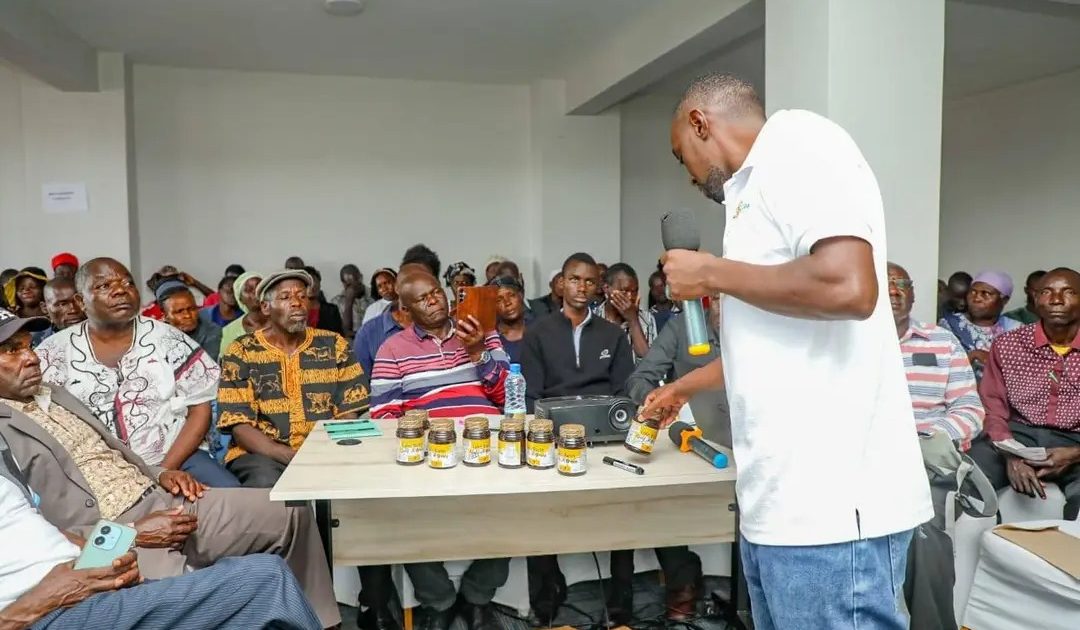
More than 350 beekeeping farmers in Kasipul Kabondo, Homa Bay County, have undergone a two-day training program aimed at improving honey production, environmental conservation, and market access.
The training, organized by the Lake Basin Development Authority (LBDA) in partnership with the Wire Forest Management Association and Hive Limited, follows a Memorandum of Understanding (MOU) signed last month to strengthen the beekeeping value chain in the region.
The initiative is expected to strengthen beekeeping value chain by improving honey production, empower communities and enhance environmental conservation efforts across the county.
Speaking after the training, LBDA Managing Director Wycliffe Ochiaga reiterated that the initiative seeks to equip farmers with modern beekeeping knowledge and practical skills that will improve both the quality and quantity of honey production.
He noted that the training focused on hive management, bee farming practices, and the beekeeping calendar to help farmers properly monitor and manage their apiaries throughout the year.
“It has been a two-day training and we have trained more than 350 farmers, directly benefiting over 350 households, while many more people will benefit indirectly. The farmers have been trained on apiaries setting and honey production,” he added.
Ochiaga emphasized that the project also promotes environmental conservation through tree planting and protection of water sources, noting that successful beekeeping depends heavily on afforestation.
“As we encourage beekeeping, we are also encouraging farmers to plant trees, especially fruit trees, and conserve streams because bee farming relies heavily on a healthy environment,” he said.
The MD revealed that the program will be expanded to all 15 counties where the authority operates, with plans to support at least one beekeeping group in every county.
In addition to training, LBDA is also addressing market access challenges by investing in honey refining and value addition.
Ochiaga said the authority has already established a refinery plant in Ndhiwa, Homa Bay County, to process crude honey produced by farmers.
“We are encouraging farmers to embrace bee farming because we already have a guaranteed market and we are ready to buy all the crude honey produced from Wire Forestry,” he said.
He encouraged the participants to apply the modern beekeeping skills acquired in the training to promote sustainable livelihoods and economic growth.
Wire Forest Management Association Chairman Crispin Osunga said the training is part of a broader effort to ensure quality honey production through capacity building and technical support.
“This training mainly focused on hive management, which will help farmers attain maximum honey yields per hive,” said Osunga.
He added that Hive Limited will provide technical officers and extension services to help farmers properly set up hives in suitable locations while adhering to quality standards.
Osunga also highlighted the importance of farmer safety during beekeeping activities, noting that many farmers lack protective harvesting gear.
“Through LBDA and Hive Limited, we have agreed that the trainers who will support farmers on the ground will be equipped with protective gear to ensure safety during field activities,” he said.
He further explained that farmers are being taught to understand bee behaviour and how climate changes affect bee activity.
“Bees are disciplined unless provoked. Farmers must understand the language of the bees and their behaviour during harvesting and honey production,” he noted.
Fredrick Ndinga, Forest Manager at Wire Station, said the beekeeping initiative is being undertaken within the gazetted Wire Forest under the Community Forest Association framework.
“We provide protection through our enforcement and compliance teams responsible for forest conservation and protection of apiary areas,” said Ndinga.
He noted that the forest management team is also promoting the planting of indigenous tree species that provide nectar for bees.
Ndinga acknowledged that tree poaching had previously interfered with bee habitats and disrupted the biological calendar of bees. However, he said community participation in forest management has significantly reduced illegal logging.
“Awareness has been enhanced and there is now a low level of tree poaching because the community is directly involved in protecting the forest,” he said.
By Sitna Omar