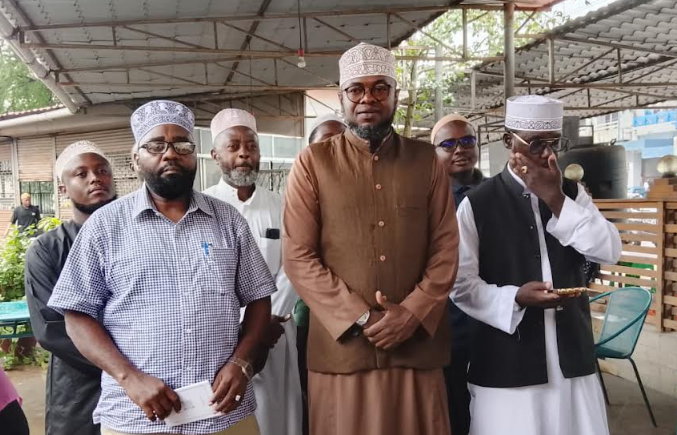
Islamic religious leaders in Mombasa have welcomed the government’s move to recognize and integrate madrasa education into Kenya’s formal education system.
The Chairperson of Islamic Religious Leaders in Mombasa, Sheikh Abuqatada Salim, described the move as a major milestone that will enhance access to education and promote moral development among learners.
Speaking in Mombasa, Sheikh Salim lauded President Ruto for announcing the recognition of Madrasa education during the Madaraka Day celebrations in Wajir, Monday.
The Sheikh said the move would ensure that learners undertaking madrassa studies receive official recognition and certification, enabling them to pursue higher levels of education just like students in other learning institutions across the country.
He noted that Madrassa education has, for many years, played a significant role in shaping the character of young people by instilling discipline, good morals, respect, and religious values.
According to Sheikh Salim, integrating the system into the national education framework will strengthen efforts aimed at nurturing responsible citizens who can positively contribute to national development.
“We appreciate the government’s willingness to listen to the concerns of the Muslim community. Madrassa education has played a vital role in promoting discipline, morality, and peaceful co-existence among learners. Recognising it within the education system will enhance inclusivity and strengthen national unity,” he said.
Sheikh Salim further urged parents and guardians to support the initiative by enrolling their children in madrassa institutions to help them acquire both religious knowledge and moral guidance from an early age.
Salim Kifaru explained that the proposed Madrassa education framework would be aligned with the Competency-Based Curriculum (CBC) and would cover learners from pre-primary education up to Grade 12.
Kifaru stated that the framework would be implemented through three levels. The first level will be guided by the Basic Education Act of 2013 and will cover education from pre-primary to Grade 12.
The second level will be offered under the TVET SIDAQ programme, where learners will advance through different qualification levels.
He explained that Level Three qualifications will be equivalent to KCPE standards, while Levels Four, Five, and Six will enable learners to obtain recognised certifications, certificates, and diploma qualifications.
According to Kifaru, the third level will focus on higher education, allowing qualified Madrassa graduates to join universities and colleges and pursue further studies.
He emphasised that certificates obtained under the new framework will be recognised by the government, enhancing employment opportunities for graduates in both education and other sectors.
Kifaru appealed to the government and the Ministry of Education to involve Islamic education stakeholders in the implementation process to ensure the successful rollout of the programme.
Mubarak Hassan, Chairperson of Imams and Madrassa Teachers in Kilifi South Constituency, said the initiative would increase access to quality and recognised education for learners interested in religious studies.
Hassan expressed optimism that government support and sponsorship would enable more students to benefit from the programme regardless of their background.
He noted that the recognition of Madrassa education would help bridge existing gaps in educational opportunities and promote inclusivity within the country’s education system.
He added that Islamic leaders and teachers are praying for the successful implementation of the programme and pledged their support in ensuring its objectives are achieved.
By Lillian Kasyoka and Joshua Peter