Persons with disabilities (PWDs) have unveiled a strong 10-point political agenda ahead of the 2027 General Election, calling for greater representation in leadership, full implementation of disability laws, and enhanced economic empowerment to address decades of exclusion.
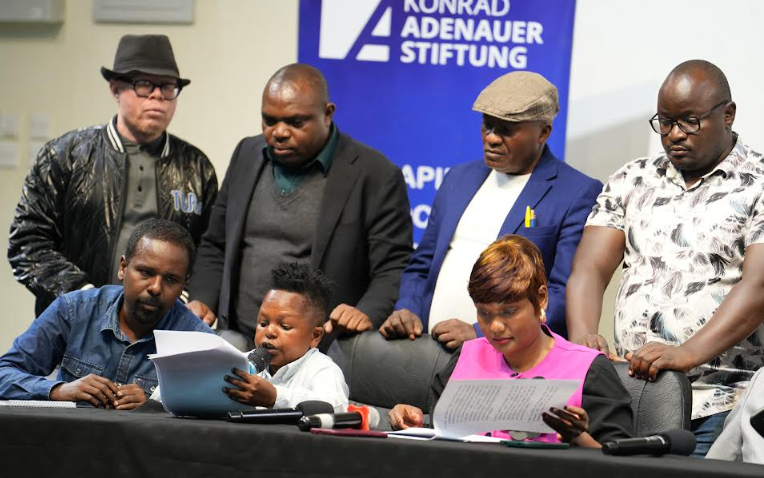
The agenda was launched during a Persons with Disabilities Breakfast Forum held at the Kenya Institute of Special Education (KISE) in Nairobi, bringing together disability rights advocates, elected leaders, and representatives of disability organizations.
Speaking during the forum, Consortium of Disabled Persons Organizations in Kenya (CDPOK) Executive Director Joseph Atella said persons with disabilities continue to face significant barriers to participation in political and civic processes despite constitutional protections and years of advocacy.
“Persons with disabilities remain among the most marginalized groups in political and civic spaces due to structural, institutional, and attitudinal barriers,” said Atella.
He cited inaccessible polling stations, limited civic education materials in accessible formats, communication challenges, and persistent societal stigma as some of the obstacles preventing many PWDs from fully participating in democratic processes.
Atella noted that the Constitution of Kenya 2010 provides a strong legal foundation for disability inclusion through Articles 27, 54, 99, and 100, which guarantee equality, non-discrimination, dignity, education, communication, and political participation.
He called on the government to fully implement constitutional provisions and existing disability laws, arguing that legal protections must translate into tangible benefits for millions of Kenyans living with disabilities.
The disability rights advocate also urged the government to operationalize the Kenya Kwanza Disability Economic Charter and integrate it into the Bottom-Up Economic Transformation Agenda (BETA) to ensure meaningful economic participation of persons with disabilities.
According to Atella, PWDs should be actively involved in entrepreneurship, trade, farming, and other economic activities through targeted training, business development support, and access to affordable financing.
He further emphasized the need for improved access to assistive technologies, healthcare services, inclusive education, and social protection programmes.
Atella described the enactment of the Persons with Disabilities Act, 2025, as a major milestone in advancing disability rights and called for the urgent development of regulations to facilitate its full implementation.
The forum also outlined a set of minimum demands that disability leaders want addressed before the 2027 General Election, including increased representation in leadership positions at both national and county levels.
Nandi County Nominated MCA representing Persons with Disabilities, Bridgit Songok, called for the appointment of more persons with disabilities to senior government positions, including Cabinet Secretaries, Principal Secretaries, Ambassadors, and other key leadership roles.
“We need representation at the highest levels of decision-making to ensure that the concerns of persons with disabilities are adequately addressed,” she said.
Songok noted that despite Kenya’s progress in disability rights, no person with a disability has ever been appointed to serve as a Cabinet Secretary since independence.
She also called for comprehensive and up-to-date disability data to improve planning, budgeting, and service delivery, noting that gaps in existing statistics continue to affect policy formulation and resource allocation.
On employment, Songok urged the government to fully enforce the constitutional requirement reserving at least five per cent of opportunities in public institutions for persons with disabilities.
She described employment as a critical pathway to economic independence and dignity and called for the expansion of affirmative action funds and targeted business support programmes for entrepreneurs with disabilities.
The MCA further advocated for enhanced support for parents and caregivers of children with disabilities through tax incentives and strengthened social protection measures.
At the county level, she proposed the appointment of at least one County Executive Committee Member, two Chief Officers, and a dedicated director responsible for coordinating disability programmes and services.
Songok also called for increased funding for disability sports, noting that many para-athletes continue to face challenges related to training, equipment, and participation in international competitions despite their impressive achievements.
The leaders further demanded the reinstatement of the IEBC Disability Inclusion Coordinating Committee to strengthen disability participation in electoral processes and improve accessibility throughout the election cycle.
Veteran disability rights advocate and former member of the United Nations Committee on the Rights of Persons with Disabilities, Dr. Samuel Kabue, said Kenya possesses one of the strongest disability rights legal frameworks in Africa but continues to struggle with implementation.
Kabue observed that disability advocacy in Kenya has gradually shifted from a charity-based approach to a rights-based model that recognizes persons with disabilities as equal citizens entitled to full participation in society.
“This meeting demonstrates the importance of bringing together experienced disability rights champions and young leaders to strengthen the movement’s collective voice ahead of the 2027 elections,” he said.
He urged the Independent Electoral and Boundaries Commission (IEBC) to reinstate the Disability Inclusion Coordinating Committee to oversee accessibility measures, civic education, and participation of persons with disabilities in electoral processes.
Kabue also challenged political parties to formally recognize disability caucuses within their structures and ensure the concerns of persons with disabilities are reflected in party policies and nomination processes.
Expressing concern over continued underrepresentation, he noted that more than 20 counties failed to nominate disability representatives in previous elections and called for legal reforms to guarantee minimum representation thresholds for persons with disabilities in Parliament and county assemblies.
The disability leaders announced plans to intensify engagement with the IEBC, the Office of the Registrar of Political Parties, political parties, and other stakeholders as they push for implementation of the agenda ahead of the 2027 General Election.
The leaders maintained that disability inclusion is not a matter of charity but a constitutional right rooted in dignity, equality, and social justice.
By Anita Kariuki