The government has intensified efforts to secure land ownership for public schools in Homa Bay County through an accelerated land titling program aimed at protecting educational institutions from encroachment and boundary disputes.
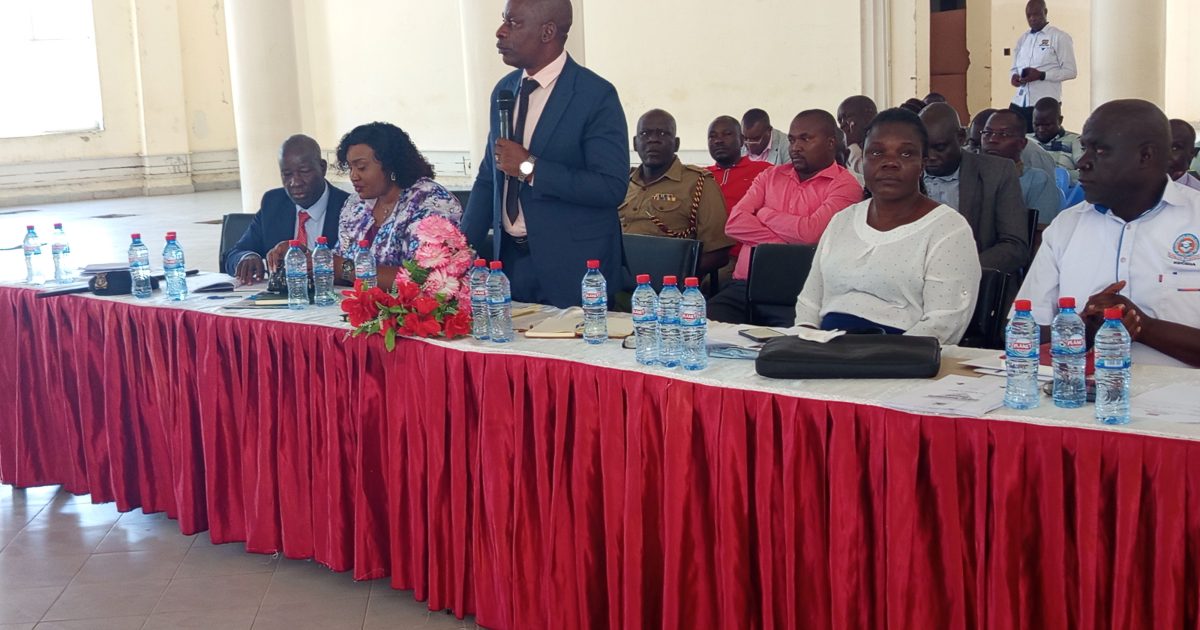
Speaking during a sensitization meeting of school heads on title deeds acquisition held at Ogande Girls High School, Homa Bay County Commissioner Ronald Mwiwawi said the initiative seeks to accelerate the titling of public school land and simplify access to land services.
The meeting brought together more than 100 school principals and Boards of Management (BOMs) with officials from the Ministry of Lands, National Land Commission (NLC), Ministry of Education and local administration. The meeting also aimed at addressing challenges in accessing land services.
According to the County Commissioner, the meeting was prompted by widespread concerns from school administrators and members of the public who view the process of acquiring title deeds as lengthy, expensive and difficult to navigate, a misconception the government is working to address through public sensitization.
“We wanted them to interact directly with land officials because many people have been complaining that obtaining title deeds is a tedious process and that accessing land offices can be a challenge. That is the reason why most schools lack that crucial document,” said Mwiwawi.
He added that bringing onboard officers from the Ministry of Lands, the National Land Commission and other government agencies was aimed at improving service delivery and ensuring that accurate information reaches schools across the county.
“As government, we are committed to bringing services closer to the people. Today, land officials explained the procedures involved, the offices that need to be visited and the documents required. School heads can now engage directly with the responsible officers and even invite them to their areas for further assistance,” he added.
Mwiwawi noted that the government’s long-term objective was to ensure all public schools in Homa Bay eventually obtain title deeds, with the immediate target being 80 percent coverage by the end of the year.
“We want by the end of the year, if not all public schools, then at least 80 percent of them to have this document. The objective is to secure public land from encroachment and ensure schools have properly defined boundaries,” he said.
According to Mwiwawi, cases of schools operating on land with unclear boundaries have contributed to disputes and encroachment, threatening the security of educational institutions.
The County Commissioner emphasized that securing title deeds is critical in protecting public educational institutions from land grabbing and boundary disputes that have become increasingly common in some parts of the county.
“The idea is to secure public land from encroachment and ensure schools have properly defined boundaries. We have schools whose boundaries are not clearly marked, and in some cases the land does not have proper survey dimensions, indicating possible encroachment. This is why we must act now to secure these institutions,” he said.
Homa Bay County Land Registrar Edward Bosire on the other hand revealed that only 27 percent of schools in Homa Bay County currently have title deeds, but expressed confidence that the county could achieve full coverage through continued awareness campaigns and support from government agencies.
Bosire cited lack of information as a major reason behind the low number of titled school lands, noting that many institutions mistakenly believe the process is costly and complicated.
The director stated that it is a government policy that all public institutions and schools obtain land ownership documents to secure and justify their ownership.
The meeting also highlighted challenges facing schools established on land donated by individuals who are now deceased. In some cases, descendants of the original donors have demanded compensation before supporting title processing.
Bosire said the government is exploring policy interventions, including compulsory acquisition through the National Land Commission (NLC), to explore legal mechanisms that would allow faster acquisition and registration of such land for public institutions.
He noted that title deeds can be processed within one to three days where ownership records are already clear.
Bosire further explained that acquiring title deeds involves a straightforward process that includes submitting an application, obtaining an official land search, and conducting ground verification.
He however warned school administrators against brokers and asked them to instead seek services directly from the relevant government offices when seeking the precious documents.
“So many concerns have emerged, including claims about land cartels in land offices. We have advised school heads to avoid middlemen and seek services directly from the appropriate departments,” he added.
National Land Commission Homa Bay County Coordinator Violet Odawa reaffirmed the Commission’s commitment to protecting public school land and facilitating title deed processing.
The Coordinator underscored the Commission’s constitutional mandate to manage public land and safeguard public school property.
“Public schools are important public assets that support the constitutional right to education. Securing title deeds is one of the most effective ways of protecting these institutions for current and future generations,” she said.
She emphasized that public participation remains crucial particularly in resolving disputes involving donated land, boundary disagreements and changes in land use.
“Successful school titling requires collaboration among all stakeholders, including the Ministry of Education, the Ministry of Lands, the National Land Commission, county governments, school boards, and local communities,” she said.
School land titling process requires one to send an application to the National Land Commission accompanied by supporting documents, including a letter from the area chief, Board of Management resolutions, school registration certificates, and official land searches.
The process also includes ownership verification, ground inspections, boundary confirmation, dispute resolution and where necessary, land surveys and subdivisions before title deeds are issued.
NLC is expected to roll out a countywide data collection exercise and school land titling program at the sub-county level to accelerate registration efforts.
Quality Assurance and Standards Officer at the county department of education, Willis Owiti emphasized that land registration is critical for the registration of schools under the National Education Management Information System (NEMIS).
“We are working with all stakeholders to ensure schools obtain title deeds, enabling them to be registered on NEMIS. This is important because the platform helps the government capture learner data and allocate resources such as capitation funds accurately,” said Owiti.
He noted that proper registration would support infrastructure development and improve learning environments in schools across the county.
By Sitna Omar