Mombasa County Government and the Kenya National Highways Authority (KeNHA) have joined forces with Bloomberg Philanthropies to launch the third phase of a road safety mass media campaign aimed at reducing traffic-related deaths and injuries across the coastal city, with a key focus on curbing speeding within urban centres.
The campaign illustrates the stopping distances needed at different speeds, emphasizing that drivers often underestimate how long it takes a vehicle to come to a complete stop.
The campaign was developed with the support of global health organisation Vital Strategies within the framework of the Bloomberg Philanthropies Initiative for Global Road Safety (BIGRS).
The four-week campaign will utilise a multi-channel communication strategy including television, radio, billboards, digital platforms, public transport branding, and targeted outreach activities in high-risk areas across Mombasa.
The campaign comes at a critical time as Mombasa experiences increased traffic volumes during the June tourism and conference season, a period historically associated with a spike in road crashes.
Recent observational data show that 20- 27 percent of drivers exceed speed limits, with median speeds rising from 39 km/h to 44 km/h.
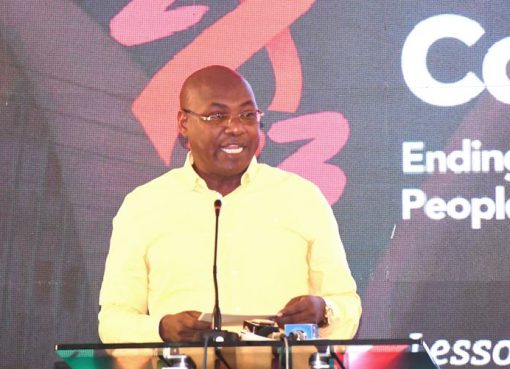
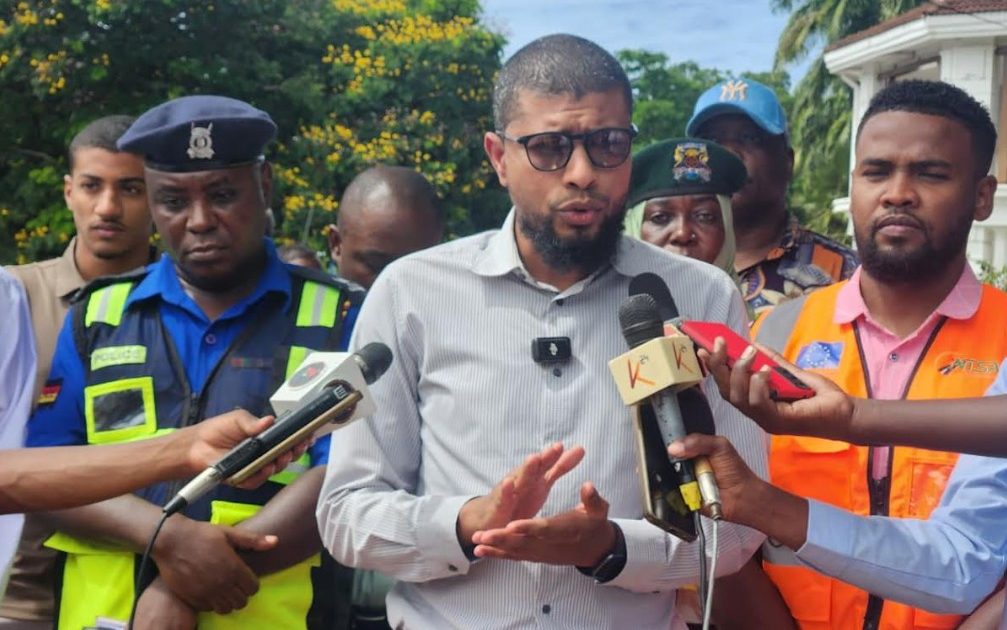
Speaking during the launch, Mombasa County’s Chief Officer for Transport and Infrastructure, Eng. Ali Sharif, said the county was recommending that all drivers within the city limits observe a maximum speed of 30 kilometres per hour, warning that even a difference of 30 kilometres per hour could mean the difference between life and death.
“Speeding continues to be a leading risk factor on our roads, and this campaign will help drivers better understand the real dangers associated with excessive speed.
Through strategic enforcement, public awareness, and safer road design, we aim to create a transport system that prioritises people and protects vulnerable road users,” Eng. Sharif said.
The campaign is anchored on a partnership that Mombasa County first signed with Bloomberg Philanthropies in 2022 and has since been extended through to 2030.
Among the initiatives already underway, the county is nearing completion of Mombasa’s first dedicated cycling lane along Nyali Links Road. Road signs, markings, and speed bumps have also been installed on roads adjacent to schools, starting with Kisauni Road and Koinange Road in Tudor. Traffic lights have additionally been installed at the Buxton and Sabasaba junctions.
Governor Abdulswamad Sharif Nassir further directed that 1500 bodaboda riders would undergo a Recognition of Prior Learning (RPL) programme, attend refresher courses at driving schools, and be issued valid licences in partnership with the National Transport and Safety Authority (NTSA), with the process expected to commence this week.
KeNHA Coast Region Director Eng. Michael Orege said the authority was moving beyond its traditional focus on motorists to prioritize all road users, adding that speed bumps alone were not a sufficient solution to speeding.
Mombasa County Chief Traffic Officer Tony Nyongesa said the 30 km/h limit was not only about saving lives but also about protecting drivers themselves.
“When a vehicle travels at 30 kilometres per hour, it becomes easier to control, and when you control the vehicle, you save lives. I urge all matatu and motorcycle operators in Mombasa to heed this call; reducing your speed protects the people on the road and even the very vehicle you are driving,” Nyongesa said.
Marcin Flieger of the Global Road Safety Partnership emphasised that the campaign’s success would depend on combining public communication with active law enforcement, noting that Mombasa police had been receiving training and equipment, including laser speed detection devices, under the Bloomberg initiative since 2022.
“This campaign is critical in changing how road users behave in Mombasa, and I am confident that combining public awareness with enforcement will bring down the number of crashes on our roads,” Flieger said.
Tsion Kiros, Vital Strategies Communication Manager for Kenya, said mass media campaigns paired with enforcement were critical to changing risky driving behaviours.
“Everyone deserves safe streets. Speeding is particularly risky because it influences both the likelihood of a crash and the severity of its consequences. We applaud Mombasa County on the launch of their ‘You control the speed. Speed controls the outcome’ campaign and their continued efforts to reduce speeds and save lives,” Kiros said.
By Ramadhan Nassib and Mary Mtawa