The government has announced a number of measures to address rising cases of unrest in secondary schools, including the formation of a multi-stakeholder team to investigate the causes of the disturbances and recommend lasting solutions.
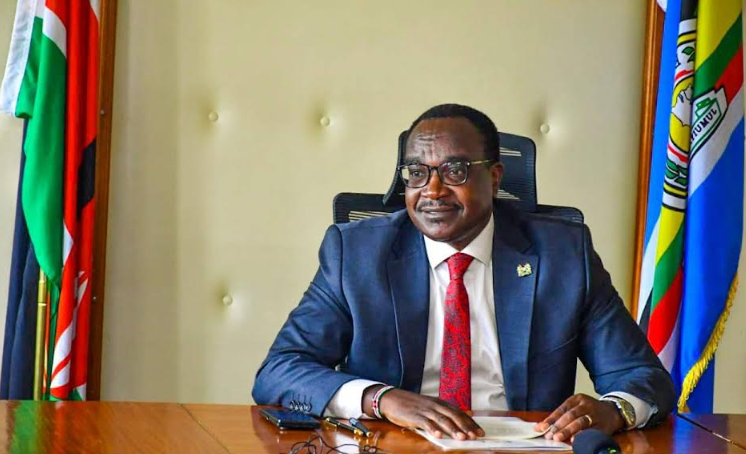
Education Cabinet Secretary Julius Ogamba said the government was treating the matter with utmost seriousness following a recent wave of unrest that has disrupted learning, caused destruction of school property, and resulted in loss of lives.
Speaking during a media briefing in Nairobi on Wednesday, Ogamba said investigations into the tragic fire at Utumishi Girls Academy in Nakuru County, which claimed the lives of 16 learners, had established that the incident was a criminal act orchestrated by some students.
Nine suspects have already been arraigned and are in custody awaiting trial. We condole with the families of those who lost their loved ones and continue to wish those who were injured a quick recovery,” he said.
The cabinet secretary emphasized that while learners may have legitimate grievances, violence and destruction of property could never be justified.
“Any grievances must only be addressed through appropriate channels without resorting to unlawful actions or violence. All perpetrators found to be involved in such actions will be dealt with firmly and in accordance with the law,” he stated.
According to the ministry, unrest has so far been reported in 204 senior schools across the country, most of them boarding institutions.
However, Ogamba noted that the affected schools account for less than two per cent of all Senior Schools, adding that the vast majority of institutions remain stable and operational.
“Most of our schools, around 98 per cent, remain stable and continue with their normal operations,” he said, adding that 59 of the affected schools had already resumed learning while others were in the process of reopening.
He noted that learners in Grades 1 to 9 had not experienced any disruptions, with the basic education system continuing to function normally apart from challenges reported in some boarding secondary schools.
The ministry attributed the unrest to several factors, including leadership challenges in schools, examination-related anxiety, poor boarding conditions, alcohol and drug abuse, strenuous school routines, peer influence and copycat behaviour, as well as demands by some learners for early closure of schools.
Ogamba reminded school heads of their responsibility to safeguard learners and promptly address emerging concerns within their institutions.
“Heads of institutions have a statutory and moral responsibility to ensure challenges are addressed in good time and that the safety and security of our learners are guaranteed,” he said.
To tackle the problem, the government will establish a multi-stakeholder team to review the root causes of student unrest and propose interventions.
Schools have also been directed to urgently convene parents’ association meetings to discuss learners’ welfare, strengthen safety measures, and address concerns raised by students.
In addition, institutions will be required to enhance guidance and counselling programmes and improve grievance-handling mechanisms. County and sub-county education officers will conduct targeted safety assessments and monitor schools deemed to be at risk.
The ministry also confirmed that the second-term midterm break will proceed as scheduled from June 24 to June 28, 2026. Ogamba urged parents and guardians to use the break to spend time with their children and provide guidance and support.
Looking ahead, the government plans to review the school calendar from next year to create more balanced academic terms and reduce learner fatigue.
“We shall rationalise the school calendar to ensure the terms are balanced and that the second term is not as long as it has been,” the CS said.
By Zipporah Odionyi