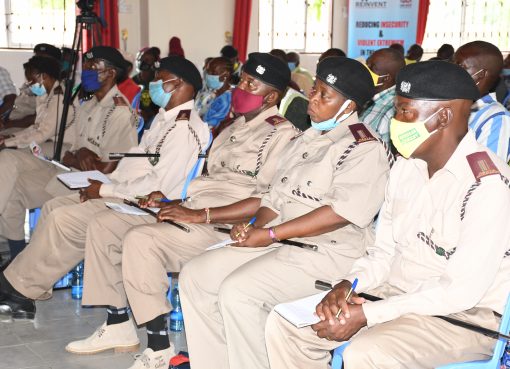
Parliament will advocate for the expansion of the fertilizer subsidy programme to include Aflasafe as a measure to enhance food safety and reduce the risk of chronic diseases linked to aflatoxin contamination.
National Assembly Departmental Committee on Agriculture and Livestock Chairperson John Mutunga said Parliament will fast-track the inclusion of Aflasafe in government support programmes to help farmers control aflatoxin, a naturally occurring toxin that contaminates key staple crops such as maize, sorghum, and groundnuts.
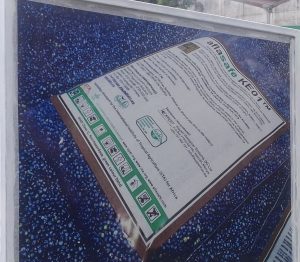
Mutunga noted that Aflasafe, developed locally by the Kenya Agricultural and Livestock Research Organization (KALRO) in 2019, provides a practical farm-level solution to aflatoxin contamination.
Speaking today on the third day of the second Kenya Agricultural Livestock Research Organization (KALRO) Scientific Conference and Innovation Expo, Dr. Mutunga noted Parliament’s role in supporting agriculture as a driver of economic development.
“Aflatoxin is classified as a carcinogenic substance linked to cancer, making its control a public health priority. Aflasafe is currently the only preventive farm-level intervention against aflatoxin, offering protection levels of between 80 percent and 100 percent when properly applied,” he said.
He urged the government to integrate Aflasafe into the fertilizer subsidy programme and distribute it through the National Cereals and Produce Board (NCPB) network to improve accessibility by farmers.
Kenya has previously suffered severe aflatoxin-related tragedies, including the 2004/2005 outbreak in Eastern Kenya that claimed 125 lives due to contaminated maize.
Despite its effectiveness, concerns have been raised over limited production and availability of Aflasafe in Kenya compared to neighboring countries such as Uganda, where uptake is higher.
Kenya’s safe aflatoxin threshold is set at 10 parts per billion (ppb). However, KALRO data shows persistent contamination challenges with more than 3,000 maize samples collected between 2020 and 2026, revealing levels exceeding the safe limit and some reaching up to 4,000 ppb in 2026 compared to 154 ppb recorded in 2020.
KALRO Board Chair Thuo Mathenge reiterated that some samples indicated contamination levels as high as 50 percent above acceptable standards.
Mathenge noted that the presence of aflatoxin in food and related products, including animal feeds, has led to significant livestock losses among farmers.
“Many millers are also selling feeds contaminated with aflatoxin, resulting in major animal losses and contributing to the emergence of serious diseases in humans,” the board chair said.
Millions of Kenyans remain exposed to aflatoxins through daily consumption of maize, a staple food in most households. Health studies link long-term exposure to liver cancer, stunted growth in children, and weakened immunity.
Advocating for the expansion of the fertilizer subsidy programme to include aflasafe comes even as, beginning this week, Agriculture Principal Secretary Kipronoh Ronoh announced that researchers in government will carry out a three-month study on safety of country’s food with a view to finding the connection between emergence of chronic diseases such as cancer and food consumed.
Last week the National Treasury and Planning Cabinet Secretary John Mbadi announced the fertilizer subsidy programme allocation of Sh18 billion, during the 2026/27 national budget.
By Wangari Ndirangu