Kwale County is adopting a community-led approach to Preventing and Countering Violent Extremism (PCVE), with stakeholders placing greater emphasis on empowering young people as peace champions rather than viewing them as potential security threats.
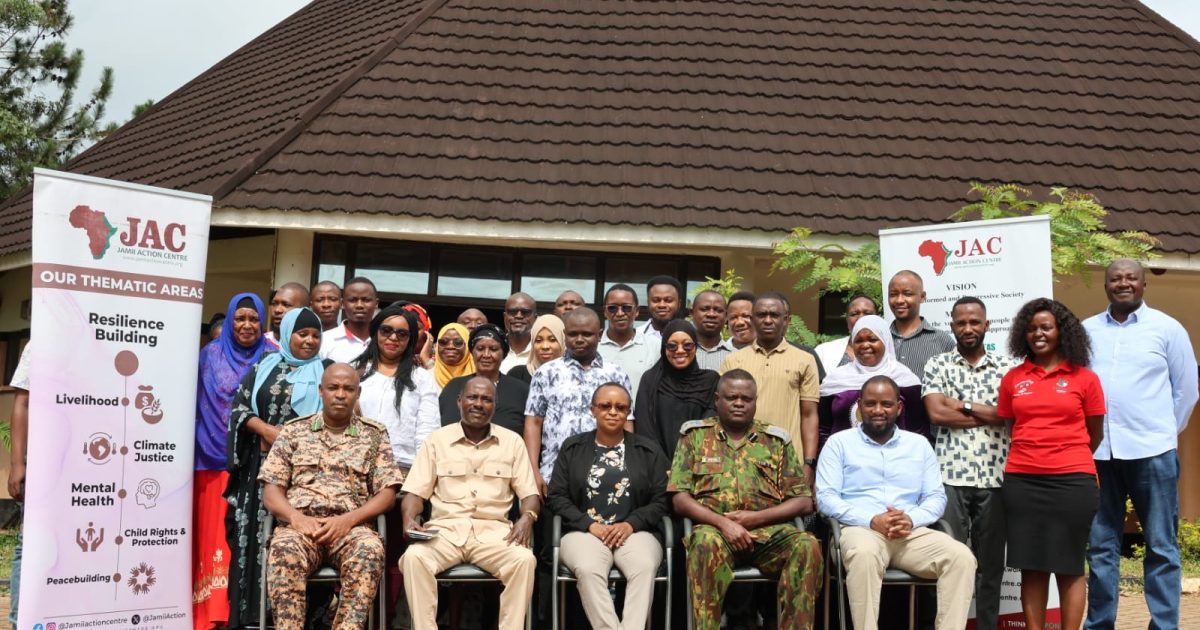
The new approach was outlined during a stakeholders’ forum convened under the County Engagement Forum (CEF), where participants discussed the implementation of the 2025–2029 National Strategy for Preventing and Countering Violent Extremism.
The forum heard that the new framework seeks to strengthen community ownership of peace building initiatives and enhance early prevention efforts through collaboration between government agencies, civil society organizations, religious leaders, youth groups and local communities.
Executive Director of Jamii Action Center, Omar Chala, said Kwale had made notable progress in reducing recruitment opportunities for extremist groups in areas that were previously considered vulnerable including Bongwe.
“Extremist groups have changed their strategies and are now using a soft approach. The religious narratives they previously relied on have largely been countered because people are more informed today. They are now operating quietly and subtly, but the threat has not disappeared,” said Chala.
He said stakeholders were advocating for the enactment of the Kwale County Prevention and Countering of Violent Extremism (PCVE) Bill to provide a legal framework that would enable the county government to finance programmes targeting youth and women, who remain vulnerable to radicalization.
According to Chala, the proposed legislation is undergoing harmonization with the Public Finance Management (PFM) Act and the National Strategy for Preventing and Countering Violent Extremism 2025–2029 before it is tabled before the County Assembly.
“We want a legal framework that will enable the county government to sustainably invest in prevention programmes, especially those focusing on youth and women empowerment,” he said.
Youth Advisory Champions for Health (YACH) Youth Champion, Mwanakombo Ali Gonga, said young people should be actively involved in designing and implementing peace initiatives because they constitute the largest segment of the county’s population and are the primary targets of extremist recruiters.
She noted that approximately 79.5 per cent of Kwale County’s population comprises young people, making their participation critical in preventing radicalization.
“Youth are the primary targets for violent extremism. If you want to solve this problem, you must involve those most affected. We are saying no to idleness and exploitation. Young people should be recognized as peace champions, not portrayed as destroyers,” said Gonga.
Chala urged residents, business owners, religious leaders and community institutions to work together in promoting peace and preventing violent extremism.
“Security is everyone’s responsibility. Sustainable peace will only be achieved when communities take ownership of protecting one another and addressing the conditions that extremists seek to exploit,” he said.
Stakeholders expressed optimism that the implementation of the new national strategy, coupled with the proposed county legislation, will strengthen community resilience and enhance long-term peace and security across Kwale County.
by Chari Suche