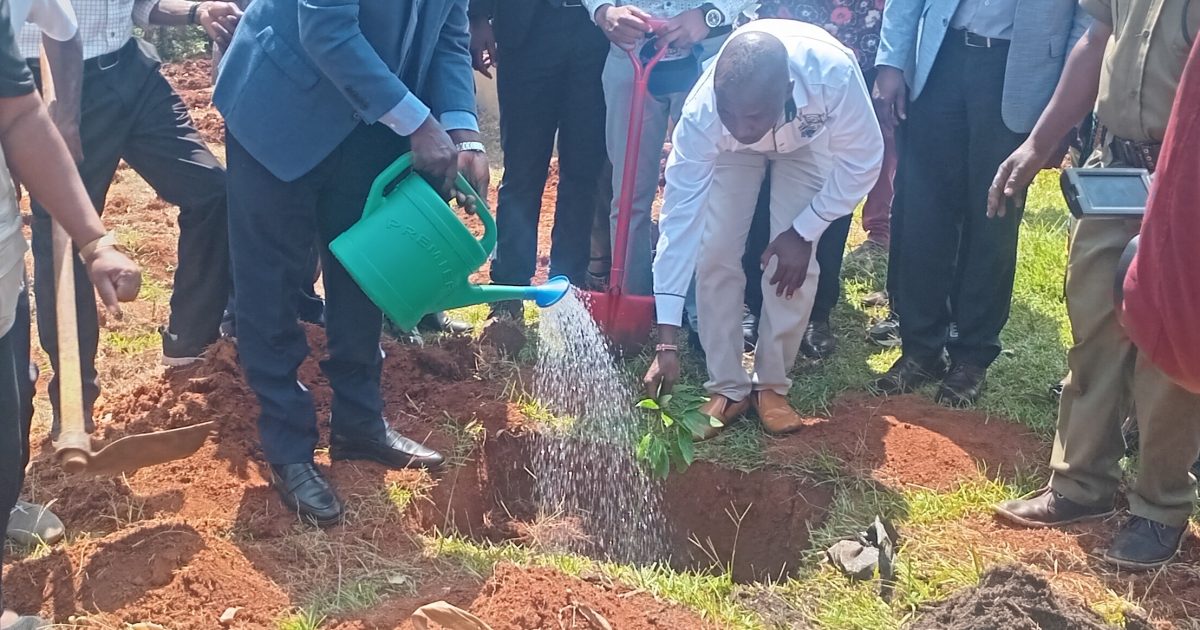
Vihiga governor Dr.Wilber Ottichilo has officially launched the county’s coffee sector revitalization programme, marking a renewed push to restore the region’s once-thriving coffee industry.
The initiative aims to empower farmers, strengthen cooperatives, and increase household incomes through sustainable coffee farming.
The launch held at Wamondo Coffee Cooperative Grounds brought together key leaders and stakeholders, including Central Maragoli MCA Pauline Amwata, Deputy Governor Wilberforce Kitiezo, alongside representatives from Wamondo, Bunyore and Lunyerere cooperative societies.
The programme is expected to benefit thousands of farmers across the county. Dr. Ottichilo announced that over 12,000 coffee seedlings of Ruiru 11 and Batian varieties would be distributed to farmers as part of the first phase of the initiative and another 20,000 seedlings in the second phase.
He emphasized that reviving coffee farming is central to improving livelihoods and boosting the county’s economy.
Vihiga’s economy depended heavily on coffee in the past, and with proper management and renewed focus, we can restore it to its former glory,” said Ottichilo.
The governor further noted that coffee prices have improved globally, making it a viable cash crop once again. He urged farmers to take advantage of the opportunity and return to coffee farming.
“Coffee demand in the market has grown, and farmers now have better avenues to sell their produce through liberalized marketing systems,” he added.
The governor also urged farmers to embrace modern farming techniques and irrigation to reduce reliance on rainfall.
“We are committed to supporting farmers through seedlings, training, and infrastructure, but the success of this programme depends on your willingness to take coffee farming seriously,” he said.
Pamella Anita, the chairperson of Gisambai Farmers Sacco, hailed the initiative saying the ward-based cooperative model was already yielding positive results.
“Farmers are now profiting from ward-based cooperatives, and this initiative by the governor is transforming lives at the grassroots,” she said.
She encouraged more farmers to register with cooperatives to benefit from government support and collective marketing.
The Central Maragoli MCA underscored the importance of strengthening local processing through cooperative societies.
“We want to bring coffee factories closer to our farmers so that they can reduce post-harvest losses and maximize their earnings,” she said.
Amwata also highlighted the need for financial support to cooperatives to ensure sustainability and farmer confidence.
The MCA further noted that farmers planting coffee across the country should be remunerated equally regardless of their respective region.
On his part, the Deputy Governor echoed the county’s commitment to agriculture as a key driver of economic growth. “The county has prioritized farming initiatives because our economy is largely driven by agriculture,” he stated.
Kitiezo also acknowledged the role of partners such as the New Kenya Planters Cooperative Union in supporting coffee farmers, adding that they must work together with farmers to ensure they get better returns from their produce.
The programme will also focus on improving infrastructure within cooperative societies including the acquisition of modern pulping machines, renovation of facilities and expansion of electricity access.
Farmers will also receive training on best agricultural practices to enhance productivity and quality.
Additionally, the county is investing in value addition through the establishment of a Sh500 million Agricultural Industrial Park in Luanda.
The facility will handle coffee processing, honey production, vegetable packaging, and poultry products, enabling farmers to access better markets and earn higher incomes.
By Winstar Jaika and Crispinus Ivan