Kiambu County has launched the second phase of the Maji Nyumbani Program, a major water connectivity initiative that will see more than 120 kilometers of water supply pipelines laid across the county to improve access to clean and reliable water.
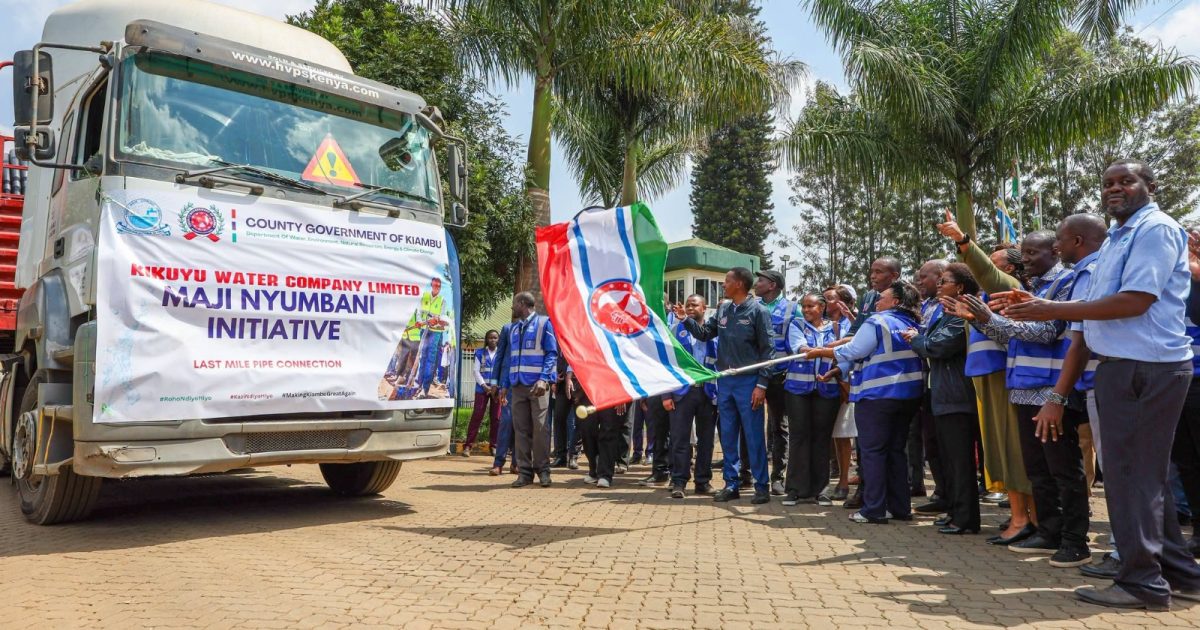
On Thursday, July 16, Governor Kimani Wamatangi, flagged off trucks transporting water pipes to various project sites, marking the commencement of the countywide infrastructure program. The function was held at the county headquarters.
The Governor said the second phase will be implemented through the county’s water service companies, with projects distributed equitably across all sub-counties to ensure every region benefits from the initiative.
“The program targets the connection of 100,000 new households to the water supply network, significantly expanding access to safe and affordable water for residents,” Wamatangi noted.
The Maji Nyumbani Program was launched as part of the county government’s plan to address water scarcity by expanding water infrastructure and extending piped water to households.
Since its inception, the program has seen the installation of more than 150 kilometers of water distribution pipelines, procurement of over 60 water tanks and thousands of new household water connections across the county.
The initiative has also included the drilling of boreholes and construction of water storage facilities to improve the reliability of supply in underserved areas.
The county government has secured funding to expand the Karemenu Dam, a Sh5.7 billion project expected to increase water availability for Kiambu as well as neighboring towns including Ruiru, Juja and Thika.
Kiambu County Executive Committee Member for Water, Environment and Natural Resources, David Kuria, lauded the commitment of the Governor for ensuring that the eight water companies in Kiambu county have an active board of directors, who are upholding quality work standards.
By Collins Esike and Grace Naishoo