By L, KNA
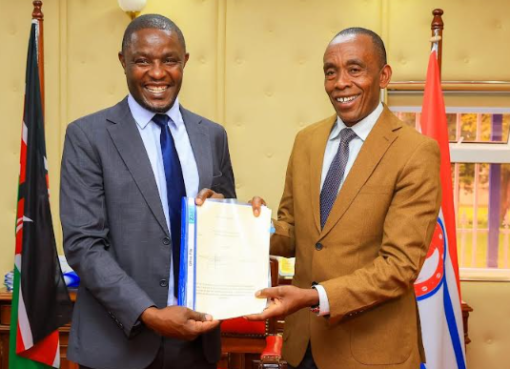
The Government, through the State Department for Public Service and Human Capital Development, has launched the Training Needs Assessment (TNA) Guidelines for the Public Service, a move aimed at strengthening human capital and accelerating national development in line with Kenya Vision 2030.
The guidelines are designed to develop a highly skilled, agile, and responsive public service by providing management with reliable information for decision-making, identifying knowledge, skills, and competency gaps, and redefining organizational targets through relevant training interventions. They will also systematically identify and prioritize performance gaps and design targeted interventions to bridge them.
The programme focuses on key areas including long-term institutional knowledge, human capital development, performance management, and alignment with national development priorities. It targets all public officers working in national government ministries, county governments, state corporations, and other government agencies.
Speaking during the launch at the Kenya School of Government (KSG) in Nairobi, Acting Secretary for Human Resource Development Stephen Kakulu said the TNA will act as a performance audit tool within the public service.
“The Training Needs Assessment will act as a performance audit measure by identifying performance gaps, knowledge deficiencies, skills gaps, competency needs, and areas that require attitude development,” Mr. Kakulu said.
He added: “These guidelines have been re-engineered to harmonize and standardize TNA procedures across the public service while providing guidance on ethical and moral principles as enshrined in Articles 10 and 232 of the Constitution. They will enhance the attraction and retention of competent talent by ensuring training is structured, fair, and aligned to institutional and national priorities.”
Principal Secretary for the State Department for Public Service, Dr. Jane Kere Imbunya, emphasized the government’s commitment to building a modern and effective public service.
“In Kenya, we continue to pursue a public service that is citizen-centred, digitally enabled, future-oriented, and capable of driving our national development agenda,” Dr. Imbunya said. “This aspiration requires a workforce equipped not only with the right qualifications but also with relevant skills, competencies, and attitudes that respond to the evolving needs of our society, governance systems, and economy.”
She noted that successful implementation of the guidelines will transform the public service by improving efficiency, accountability, and service delivery.
“When fully implemented, these guidelines will help build a public service that is more competent and responsive to citizen and stakeholder needs, more efficient through better utilization of training budgets, and more accountable by linking training to measurable improvements in performance,” she said.
Dr. Imbunya further added: “The guidelines will also promote equity by ensuring fair and transparent access to training opportunities while preparing public officers to be future-ready. We are positioning our officers to leverage digital advancements, emerging technologies, and innovative service delivery models.”
The Training Needs Assessment Guidelines apply to all Government Ministries, Departments, and Agencies, with other public institutions able to adopt them under guidance from the State Department for Public Service and Human Capital Development.