By J, KNA
The Government has intensified efforts to strengthen coordination across ministries, departments and agencies to accelerate the delivery of high-impact reforms and development initiatives.
Deputy Head of the Public Service (DHOPS), Amos Gathecha, said disciplined institutions, predictable policies and clean governance are key to building investor confidence and sustaining rapid transformation in a country.
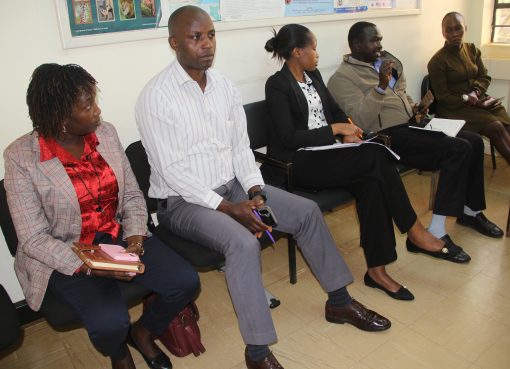
He spoke while addressing participants of the Leadership Programme for National Transformation (LPNT) at the Kenya School of Government (KSG) Kabete.
Gathecha said flagship interventions require integrated planning to ensure services reach citizens efficiently and without duplication. He added that all departments and professions must work together in a seamless chain of delivery.
He cited the Affordable Housing Programme as an example of an initiative that must be supported through coordinated delivery of enabling infrastructure, noting that housing projects cannot succeed without access roads, electricity, water and sanitation.
Gathecha said the same integrated approach is required for the implementation of Social Health Authority (SHA) reforms and other key interventions to ensure citizens can access services efficiently.
“A programme is not implemented in isolation. It must be supported by roads, water and power. All departments and professions must work together and support each other for citizens to benefit,” he said.
Gathecha said institutions must align planning, budgeting and execution to deliver timely services, adding that Kenya’s heavy investment in human capital should now translate into institutional efficiency, disciplined implementation and measurable results.
He said regular performance reporting would strengthen oversight and ensure public resources deliver value to citizens.
Gathechasaid Kenya must be realistic and deliberate in pursuing radical industrialization driven by technocrats, anchored on integrity, political unity and shared national values.
The DHOPS stressed that value addition remains central to building a competitive economy, particularly in agriculture, which he described as the backbone of the country. He added that gains in production, including coffee, should be matched with stronger local processing to increase earnings, create jobs and reduce reliance on imports.
He further said Kenya should expand opportunities for investment by improving the business environment and ensuring public sector coordination supports investors through predictable infrastructure planning and efficient public service systems.
Gathecha also highlighted the Blue Economy as a major growth frontier, saying Kenya can unlock significant wealth from marine resources through expanded fisheries, shipping, coastal tourism and regional cooperation within the Indian Ocean region.
On governance, he said corruption remains a global challenge and warned that it undermines development by weakening institutions and delaying service delivery.
He added that Kenya has the capacity to defeat graft through strong systems, law enforcement and upholding crucial values at national, institutional and individual levels.
LPNT is a KSG programme designed to equip policymakers and development strategists in the public service with knowledge and competencies to provide stewardship of the public policy agenda and support national transformation using a whole-of-government approach.