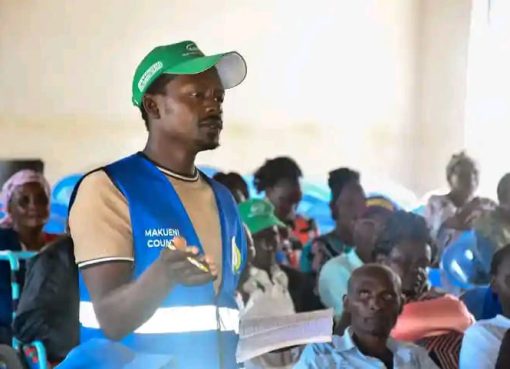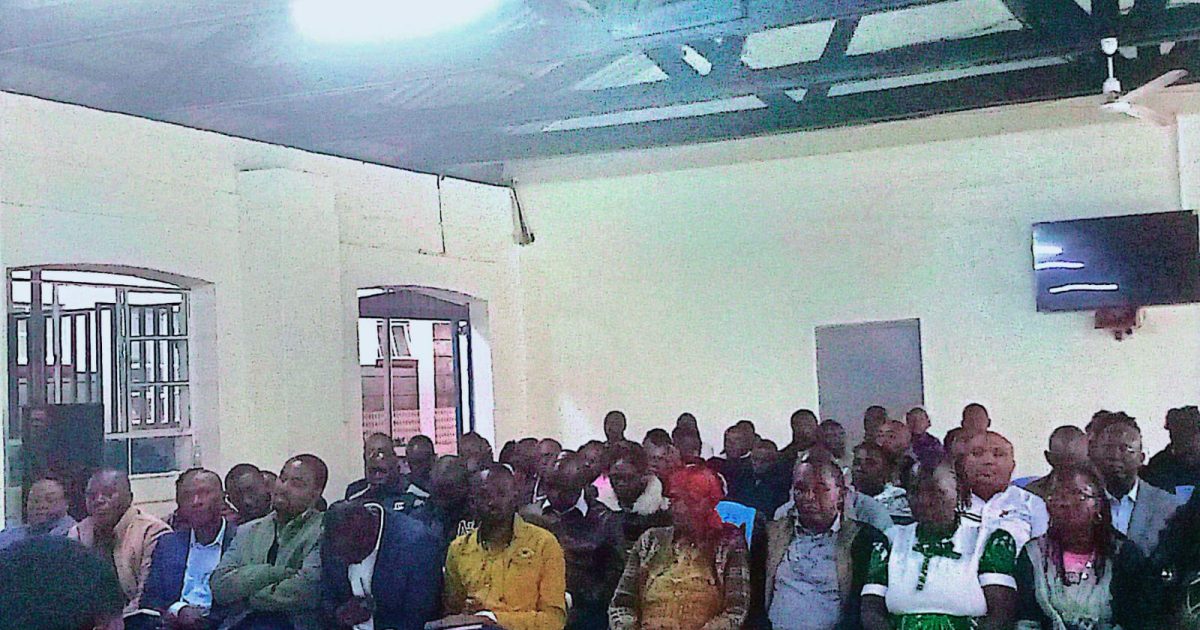
The National Assembly Education Committee has held a public participation exercise in Makueni County to gather views from stakeholders on six Education Bills.
The stakeholders called for timely disbursement of capitation funds to enable schools to settle debts and operate smoothly, while divergent views emerged on the proposed structure of Junior Secondary School (JSS).
Some participants proposed that JSS should be made fully autonomous with its own structures, while others opposed the proposal, arguing that Junior Secondary and Senior Secondary should be merged.
The stakeholders spoke during a public participation exercise held at Wote Technical Training Institute (WTTI) in Wote town, Makueni Sub-County.
“The Ministry of Education, together with the Ministry of Finance, should liaise to ensure timely disbursement of school funds and prevent delays in funding, which will allow smooth running of schools,” said Kenya Secondary School Heads Association (KESHA) representative Salome Maundu.
The six Bills include the Basic Education Bill, 2026; Tertiary Education, Placement and Funding Bill, 2026; and Kenya National Education Assessments Council Bill, 2026.
Others are the Pre-service Education and In-Service Training Bill, 2026; Kenya National Qualifications Framework (Amendment) Bill, 2026; and Kenya Institute of Curriculum Development (Amendment) Bill, 2026.
The meeting was chaired by Kitutu Masaba Member of Parliament Clive Ombane Gisairo, who was accompanied by Siaya County Woman Representative Christine Ombaka and officials from the Ministry of Education, among others.
Participants also proposed that the minimum qualification for primary school teachers seeking to join teacher training colleges should remain a mean grade of C (plain) in the Kenya Certificate of Secondary Education (KCSE).
They called for schools to be provided with adequate infrastructure and learning facilities, while others proposed the establishment of sub-county education boards and urged that the boards be anchored in law.
On the Centre for Mathematics, Science and Technology Education in Africa (CEMASTEA), stakeholders proposed that the institution be anchored in law as the national body responsible for in-service teacher training.
They also called for an extension of the Higher Education Loans Board (HELB) loan repayment period from one year to between two and three years.
The participants argued that many graduates take more than a year to secure employment, making it difficult for them to begin repaying their loans within the current period.
On Technical and Vocational Education and Training (TVET), stakeholders proposed that TVET institutions be represented in the Kenya Universities and Colleges Central Placement Service (KUCCPS) and HELB.
They also called for self-sponsored students to be included in the higher education funding model.
Gisairo thanked members of the public, education professionals and organisations that participated in the exercise and shared their views on the proposed legislation.
Among the organisations represented were the Kenya National Union of Teachers (KNUT), Kenya Union of Post Primary Education Teachers (KUPPET), KESHA, Kenya Primary School Heads Association (KEPSHA), private schools and religious organisations.
Mwaani Girls High School Chief Principal Elizabeth Mutinda was also among those who presented views.
by Patrick Nyakundi/James Muindi