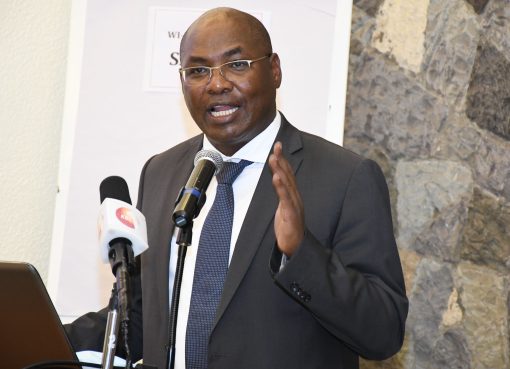
Cabinet Secretary (CS) for Agriculture and Livestock Development, Mutahi Kagwe, has reaffirmed the government’s commitment to promoting sustainable, inclusive, and climate-resilient agriculture as a pathway to food security and economic growth.
Kagwe reaffirmed the government’s commitment to supporting sustainable agricultural practices that improve farmers’ livelihoods while ensuring national food security.
The CS gave the assurance in a speech read on his behalf by State Department of Agriculture Agriculture Secretary Peter Owoko during the official opening of the 3rd National Agroecology Symposium at the Kenya School of Monetary Studies in Nairobi.
“The government remains fully committed to supporting sustainable, inclusive, and climate-resilient agriculture that delivers prosperity for our farmers and food security for all Kenyans,” he said.
Participatory Ecological Land Use Management (PELUM) Kenya in collaboration with Ministry of Agriculture and Livestock Development and organizing Partners’ Committee held the 3rd National Agroecology Symposium on July 22-23 under the theme ‘Transforming Agrifood Systems through Agroecology: A One Health Approach for Inclusive, Sustainable, and Resilient Futures.’
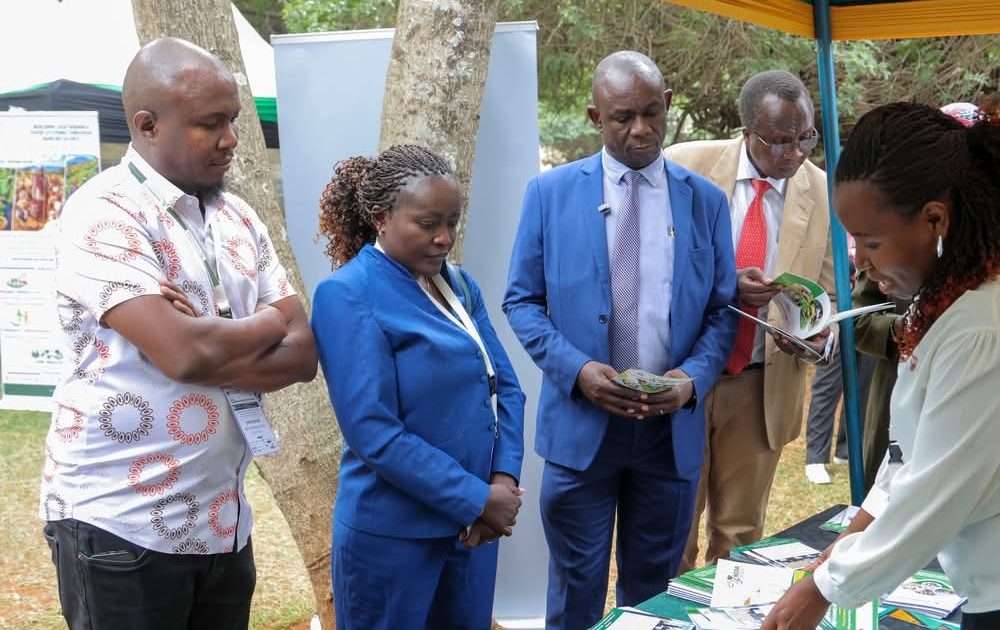
The event brought together policymakers, county governments, farmers, researchers, development partners, civil society organizations, the private sector, academia, and other key stakeholders to advance dialogue and action towards sustainable agrifood systems.
Kagwe said this year’s forum builds on the momentum created by the National Agroecology Strategy for Food Systems Transformation (2024–2033), which provides Kenya with a clear roadmap towards resilient, inclusive, and sustainable food systems.
“It is encouraging to see government, development partners, the private sector, researchers, innovators, civil society, and, most importantly, our farmers coming together to review progress, exchange knowledge, and strengthen partnerships,” he said.
The CS said the government has taken decisive steps to promote safer and more sustainable agriculture by strengthening pesticide regulations in 2025.
“In line with this commitment, the government restricted and banned a number of highly hazardous pesticides that pose risks to human health, biodiversity, and the environment. This decision reflects Kenya’s commitment to safer and more sustainable agricultural production while protecting both people and ecosystems,” he said.
Kagwe noted that this year’s symposium holds global significance as it coincides with the International Year of the Woman Farmer and the International Year of Rangelands and Pastoralists.
He said the occasion provides an opportunity to recognize the invaluable contribution of women farmers, pastoralists, and Indigenous communities in enhancing food security, conserving natural resources, and strengthening resilience, particularly in Kenya’s Arid and Semi-Arid Lands (ASALs).
The CS noted that as Kenya positions agriculture as a major driver of economic growth, contributing over 23 percent of GDP and more than 70 percent of rural employment, we must capitalize on emerging opportunities, including strengthening partnerships for resilient and inclusive food systems.
He urged stakeholders to capitalize on emerging opportunities by strengthening partnerships for resilient and inclusive food systems; promoting innovation, investment, and technology adoption; enhancing knowledge sharing among researchers, policymakers, the private sector, and farmers; and generating practical policy recommendations to guide the implementation of Kenya’s agroecology agenda.
Kagwe thanked the partners for their continued support and emphasized that achieving Kenya’s food systems transformation will require stronger partnerships, accelerated innovation, increased investment, and the wider adoption of climate-smart and agroecological farming practices.
PELUM Kenya Country Coordinator Rosinah Mbenya said that the event marks an important milestone in accelerating the implementation of the National Agroecology Strategy for Food Systems Transformation (NAS-FST) 2024–2033.
She said that goal is to position agroecology at the center of Kenya’s agrifood systems transformation by catalyzing action towards resilient, inclusive, and sustainable food systems through strengthened partnerships, knowledge exchange, and policy engagement environment.
Mbenya said agroecology offers practical solutions to climate change, emerging pests and diseases, rising production costs, and disruptions in global agricultural supply chains.
“Agroecology enables farmers to become more resilient and less dependent on costly external inputs while protecting the environment,” she said.
She noted that although funding for agroecology is increasing, more investment is needed to translate policies into action. “Partners are increasingly supporting agroecology initiatives, but greater investments are required to reach smallholder farmers and integrate agriculture with health, climate, and environmental programmes,” she said.
Mbenya noted that PELUM Kenya works with approximately 1.5 million farmers, but this represents only a fraction of the country’s estimated 7.5 million smallholder farmers, underscoring the need for wider adoption of agroecological practices.
She observed that several counties, including Murang’a, Makueni, Vihiga, Nakuru, West Pokot, and Kiambu, have already developed agroecology strategies, while others such as Trans Nzoia, Turkana, Laikipia, Kirinyaga, and Machakos are in the process of finalizing theirs.
“We must work together with farmers, pastoralists, and fisherfolk. Agroecology is about co-learning, where communities and scientists share knowledge to develop better farming practices,” she said.
Rockefeller Foundation Director of Food Initiative, Betty Kibara, highlighted the role of regenerative agriculture in strengthening school feeding programmes.
She said the organization is supporting initiatives that connect farmers practicing agroecological farming with schools, creating reliable markets while improving children’s nutrition.
Kibara said the foundation is supporting PELUM Kenya in Murang’a County, the first county to develop an agroecology policy, by linking local farmers to approximately 30 schools. “The school feeding programme delivers multiple benefits. Every dollar invested generates about nine dollars in social and economic returns through improved nutrition, better school attendance, and stronger local food systems,” she said.
“The objective is to ensure that agroecologically produced food reaches schools while providing farmers with dependable institutional markets,” she said.
Kibara acknowledged that financing remains a major challenge in scaling up regenerative agriculture across Kenya.
“Achieving this transformation will require a combination of public investment, private sector participation, concessional financing, and grant support,” she said.
VSF-Suisse Country Director Davis Ikiror said agroecology integrates ecological principles into farming to guarantee long-term food security, nutrition, and sustainable livelihoods.
He observed that many traditional African farming methods, including intercropping, livestock integration, and organic manure application, have long embodied agroecological principles.
“Our grandparents practiced diversified farming systems that conserved soils and biodiversity. Over time, monocropping and excessive dependence on synthetic inputs became widespread, exposing farmers and consumers to environmental and health risks,” he said.
He urged both national and county governments to allocate adequate resources for implementing agroecology policies.
“It is not enough to develop strategies. Counties must domesticate the policies, provide funding, and ensure implementation. Without resources, we will continue discussing the same issues year after year,” he said.
He also called for greater collaboration across sectors, including agriculture, health, education, and the environment.
By Anita Omwenga