The government is pushing for higher standards, stronger market intelligence and strategic investment partnerships to boost Kenya’s competitiveness in the global meat and milk export market.
While indicating that plans are underway to establish a livestock processing zone in Narok to meet regional demand for meat and milk Principal Secretary for the State Department for Agriculture Dr Paul Ronoh pledged that the Government will to continue to strengthen Kenya’s livestock sector by investing in projects that help farmers reduce post-harvest losses and increase their incomes.
Dr. Ronoh noted that a national wide digital livestock tracking system, expanded vaccination programs and reforms in meat production systems were at the center of a new strategy aimed at growing Kenya’s livestock industry into a Sh1 trillion economic powerhouse within the next two years.
The Principal Secretary affirmed that the government was supporting initiatives towards transforming the country’s milk and meat value chain from livestock production to export by strengthening animal health systems, introducing mandatory traceability, improving food safety, increasing value addition and attracting private investments into the sub sector.
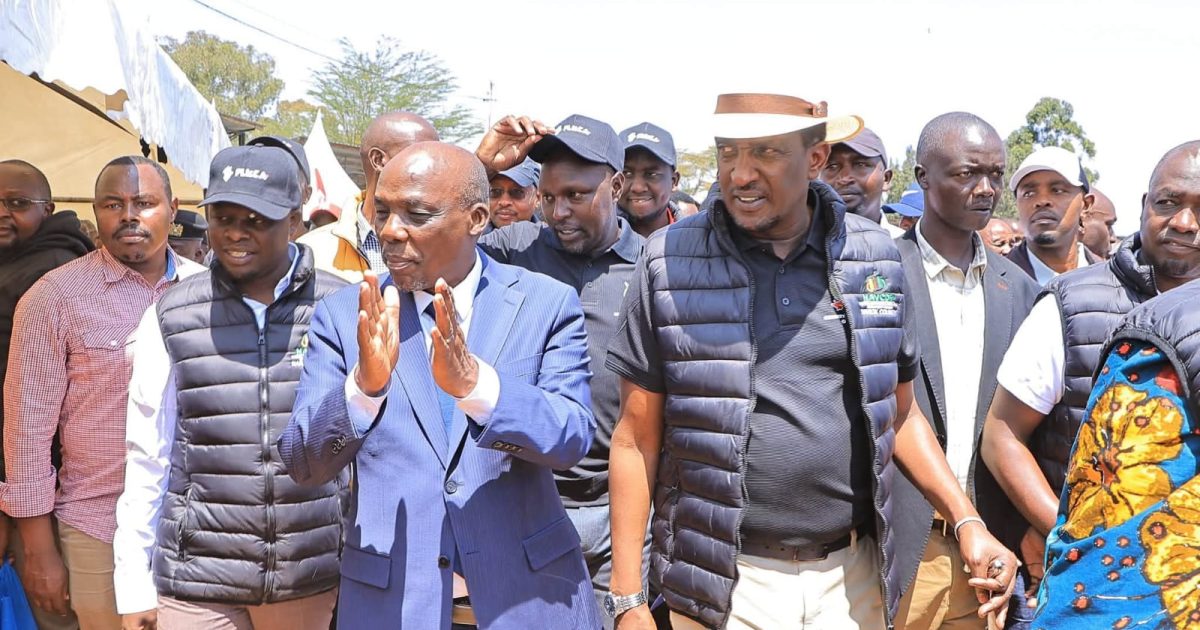
Speaking when he officially inaugurated the Agricultural, Environment and Climate Change exhibition, at the William Ole Ntimama Stadium in Narok Dr Ronoh said traceability was no longer optional if Kenya is to compete in the global meat market.
For years, Kenya’s livestock sector has struggled to meet the demands of the premium export market that require proof of animal origin, health history, production systems and compliance with food safety standards.
Dr. Ronoh who represented Cabinet Secretary for Agriculture and Livestock Development Mr Mutahi Kagwe at the event pledged that the Government remains committed to building a stronger and more profitable dairy sector for Kenyan farmers.
He pointed out that the dairy value chain is a vital economic pillar, supporting millions of livelihoods from farmers and transporters to processors, retailers and consumers.
The Principal Secretary emphasized that the interventions are part of the government’s efforts to revitalize the dairy sector in the country aimed at boosting value addition and creating sustainable jobs.
“The government is actively strengthening the dairy value chain to boost productivity, minimize post-harvest losses, and increase farmers’ incomes. Key initiatives include nationwide milk cooler distributions, tax exemptions on animal feed, and a transition to quality-based milk payment systems to reward farmers,” he stated.
He further called for collective support to strengthen the dairy value chain as a pathway to reducing poverty and creating jobs and reiterated the Government’s commitment to working with farmers through capacity building and improved market access both locally and internationally.
Official statistics indicate that nationally, livestock contributes 50 percent of Agricultural Gross Domestic Product (GDP) and over 10 percent of the National GDP. Dairy production is the largest contributor to the livestock GDP.
The statistics reveal that the dairy sub-sector yields about Sh237 billion annually and that Kenya is one of the leading Country in Africa in dairy cattle production
Dr. Ronoh stated that the industry is on an upward trajectory with an estimated growth rate of 3 percent to 4 percent per year adding that the Kenya Kwanza administration recognizes dairy value chain as one of the main sources of household incomes and a crucial contributor to food security.
Vision 2030 which has been adopted as a new model for Kenya’s development, emphasizes the enhancement of dairy productivity as key to increasing incomes, food security and nutrition.
The Ministry of Agriculture and Livestock Development developed a Dairy Master Plan 2010– 2030, and Kenya Dairy Industry Transformation Strategy & Investment Plan 2022-2032, developed by the Kenya Dairy Board, currently guides the Dairy Industry.
Dr. Ronoh said the government is striving to make the dairy subsector one of the leading sub-sectors in social-economic development through production, value addition and marketing.
This, he added, is being done by mobilizing and working with all stakeholders and development partners as Kenya seeks to maximize the utilization of all available opportunities and resources for the benefit of the entire country.
According to the United Nations Population Fund (UNFPA), with the world human population expected to increase to 10.5 billion, from 7.6 billion by 2067, an increase in demand for dairy products is expected globally.
This, Dr. Ronoh noted, should be an opportunity for more milk production, especially in regions which are not the main milk producers in the country.
According to Kenya National Bureau of Statistics (KNBS) data, Kenya had 22.4 million cattle, 26.2 million sheep, and 38.4 million goats in 2024.
“Kenya’s dairy sector is widely celebrated as one of Africa’s most dynamic. With a strong culture of milk consumption and thousands of households relying on dairy farming, the country has all the ingredients for high productivity,” noted the Principal Secretary.
With annual production of more than 5 billion litres each year, Kenya currently contributes at least 10 percent of Africa’s total milk production and 35 percent of the East African Community’s supply. The sector supports over 1.8 small holder farmers making it a crucial cog in the wheel of Kenya’s national progress.
Dr. Ronoh underscored the importance of value addition in minimizing post-harvest losses, improving milk quality, creating employment opportunities and increasing returns for farmers.
“Strengthened collection centres are expected to improve efficiency in milk handling, provide farmers with dependable market channels and support the continued growth of the dairy sector, one of Kenya’s leading economic pillars,” he pointed out
The Principal Secretary said investment in dairy value chains remains critical in helping farmers move beyond primary production and tap into higher-value dairy products.
He reaffirmed the national government’s commitment to collaborating with county government institutions and other stakeholders to unlock opportunities that enhance productivity and profitability across the dairy sector.
Dr. Ronoh advised wheat farmers to deliver their surplus harvests to the National Cereals and Produce Board (NCPB) depots to resolve market glut and stand-off with millers. Under this arrangement, the government arranged for local millers to buy the grain through NCPB as an aggregator, promising payments within 14 to 30 days.
Governor Patrick Keturet Ole Ntutu indicated that towards strengthening resilience against climate change, the County Government of Narok, in partnership with the National Government and the World Bank, has been implementing the National Agricultural Value Chain through the Department of Agriculture, and the Financing Locally-Led Climate Action (FLLoCA) Programme through the Department of Environment, Water, Energy, Natural Resources and Climate Change.
“Narok County is among the thirty-three counties implementing the National Agricultural Value Chain Development Project (NAVCDP). Now in its fourth year of implementation, the project is already demonstrating remarkable progress in increasing market participation, promoting value addition, and improving the livelihoods of our smallholder farmers and pastoralists,” noted Mr. Ole Ntutu.
He added “Through the NAVCDP, we are deliberately addressing the declining production and productivity experienced across the county due to reduced soil fertility, degradation of natural resources, the effects of climate change, and the increasing prevalence of crop and livestock pests and diseases. project is enhancing productivity through the adoption of Climate-Smart Agriculture (CSA), Technological Innovations, and Improved Management Practices (TIMPs), thereby equipping our farmers with practical and sustainable solutions.”
Governor Ntutu said The Financing Locally-Led Climate Action (FLLoCA), has played a pivotal role in strengthening local resilience to climate change through county-led planning, community participation, and targeted investments that address the priorities identified by the locals.
Through the FLLoCA Programme, he explained Narok County has witnessed the successful implementation of community-prioritized climate resilience projects across all sub-counties.
These include the solarization of boreholes and water supply systems to improve access to safe and reliable water, as well as the rehabilitation and protection of water sources and critical catchment areas to enhance water security and environmental sustainability.
“The programme has also promoted climate-smart agriculture through the distribution of fruit tree seedlings, pasture improvement initiatives, and the installation of institutional and household biogas systems, thereby reducing dependence on firewood and charcoal. Additionally, it has supported environmental restoration through tree growing and watershed conservation while strengthening community participation,” stated the Governor.
He indicated that his administration continues to implement a wide range of programmes aimed at promoting environmental conservation and strengthening climate resilience. These include forest and ecosystem restoration, landscape rehabilitation, protection of water catchment areas, implementation of the County Climate Change Policy, promotion of renewable energy technologies, enforcement of environmental safeguards, promotion of climate-smart agriculture, and continuous public awareness on climate change, among many other interventions.
Mr. Ole Ntutu observed that climate change remains one of the greatest threats to agricultural production, food security, water resources, and natural ecosystems.
“Building resilient agricultural systems therefore requires coordinated investments in sustainable farming practices, livestock improvement, irrigation development, environmental conservation, renewable energy, market access, cooperative development, and the adoption of climate-smart technologies.
It also calls for strong partnerships among government, development partners, the private sector, research institutions, and our farming communities,” he pointed out.
By Emily Kadzo and Hillary Shimnagha