Every morning before sunrise, the streets of Vihiga County begin to stir. Traders prepare to open their businesses, households sweep their compounds, and markets gradually fill with buyers and sellers.
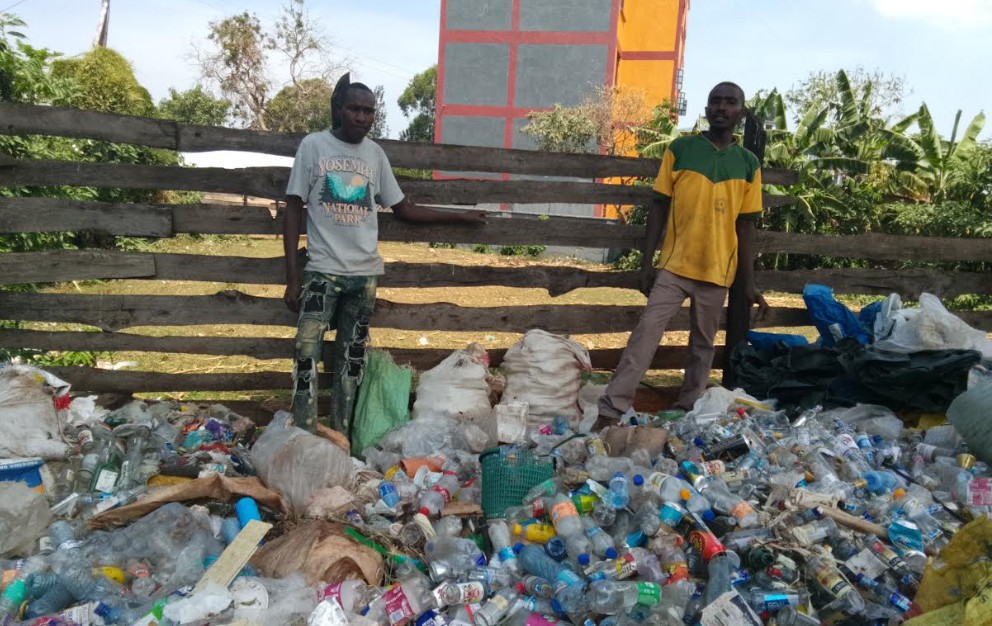
Along with the activities comes another inevitable reality, waste. Plastic bottles, food leftovers, paper, polythene bags and other refuse accumulate daily, posing a growing challenge to the county’s capacity to sustain a cleaner environment.
While many residents see waste as something to discard, a growing number of environmental experts, entrepreneurs and waste collectors are changing this perception. They are proving that what is thrown away today can become tomorrow’s economic opportunity.
Vihiga County is steadily embracing modern waste management practices that aim not only to keep the environment clean but also to create employment, improve public health and contribute to sustainable development.
According to Aquila Lwanga, the Vihiga County Environmental Director, in an interview with Kenya News Agency (KNA), effective waste management is no longer optional but an urgent necessity.
She explains that the county has experienced increased urbanisation, population growth and commercial activities, all of which have led to a rise in the volume of waste generated daily.
“Poor waste management affects public health, contaminates water sources and degrades the environment. Every resident has a responsibility to ensure waste is handled properly,” she said.
Lwanga noted that the county government has strengthened environmental policies and is working closely with stakeholders to improve waste collection, disposal and environmental conservation.
She emphasized that public awareness remains one of the most important pillars in achieving cleaner towns and healthier communities.
“Government alone cannot solve the waste problem. Communities, businesses, schools and individuals must all participate in proper waste management,” she added.
The County Environmental Planning Officer, Philip Angose, during an interview with KNA, who believes planning is critical in ensuring sustainable waste management systems, echoed the sentiments of the environmental director.
According to Angose, effective environmental planning begins with understanding where waste is generated, how much is produced and the most efficient methods of collecting, transporting and processing it.
He explained that proper planning enables the county to identify suitable waste disposal sites while minimising environmental risks.
“We are integrating waste management into our county development plans because environmental sustainability supports economic development, tourism, agriculture and public health,” he said.
Angose said the county also encourages environmental impact assessments for major development projects to ensure they include waste management measures before implementation.
He stated that future development must embrace sustainability if counties are to cope with increasing waste generation.
Beyond policy and planning, practical waste management takes place every day on the ground.
The Vihiga County Waste Management Officer, Jonanga Livingston, during an interview with KNA, said he spends much of his time overseeing waste handling activities and educating communities on proper waste disposal practices.
He said one of the biggest challenges is waste segregation.
“Many households still mix organic waste with plastics, glass and metals. This makes recycling difficult and increases the amount of waste that ends up in disposal sites,” he explained.
Jonanga encouraged residents to separate biodegradable waste from recyclable materials before disposal and reminded them that waste management is an individual responsibility and not just for the county alone.
He said organic waste can be converted into compost for farming, while plastics, paper and metals can be recycled into new products.
According to Jonanga, simple actions at the household level can significantly reduce environmental pollution.
He also stressed the importance of reducing littering in markets, schools and public places.
“When waste is disposed of carelessly, it blocks drainage systems, causes flooding and creates breeding grounds for disease-causing insects and rodents,” he said.
As governments and environmental officers continue to improve waste management systems, entrepreneurs are discovering business opportunities within the sector.
A circular economy entrepreneur, Justin Kapanga. During an interview with KNA, he said waste is not merely garbage but a valuable resource waiting to be transformed.
Kapanga explained that the circular economy encourages the reuse, repair, recycling and remanufacturing of products instead of disposing of them after a single use.
“In a circular economy, materials remain in use for as long as possible. We recover value from products instead of throwing them away,” he said.
Kapanga said recycling plastic waste into useful products creates employment while reducing environmental pollution.
He said that young people have enormous opportunities to establish businesses in waste collection, recycling, compost production and manufacturing recycled products.
“Instead of seeing waste as a burden, we should view it as raw material for business and innovation,” he said.
He noted that increased investment in recycling technologies and public education could significantly reduce the amount of waste reaching dumpsites.
Kapanga also advocated stronger partnerships between government agencies, private companies and community groups to expand recycling initiatives throughout the county.
While policymakers and entrepreneurs discuss long-term solutions, waste collectors remain the backbone of daily waste management operations.
Every day, Collins Idago, a waste collector, moves from one household and business premises to another collecting waste that many people no longer want to see.
During an interview with KNA, Idago said his work begins early in the morning and often ends late in the evening.
Despite the importance of his role, Idago said waste collectors face numerous challenges.
“Some residents fail to separate waste before collection, while others dispose of sharp objects without proper packaging, exposing collectors to injuries,” he explained.
He also pointed to inadequate protective equipment and occasional delays in payment as challenges affecting waste collection services.
Nevertheless, Idago said he remains committed to keeping communities clean.
He said he believes waste collectors deserve greater recognition because their work directly contributes to public health and environmental conservation.
“When waste is collected on time, communities become cleaner and diseases are reduced,” he said.
His experience demonstrates that successful waste management depends not only on government policies but also on the dedication of frontline workers. Community participation is equally important.
John Amalanda, a resident actively involved in environmental conservation, said during an interview with KNA that he believes behavioural change remains one of the greatest solutions to the waste problem.
He said that many environmental challenges originate from everyday habits that people often overlook.
“When people throw plastic bottles into rivers or dump waste in open spaces, they may not realise the long-term consequences,” he said.
Amalanda encouraged communities to organise regular clean-up exercises, plant trees and educate children about environmental conservation from an early age.
He said schools can play an important role in nurturing environmentally responsible citizens.
Environmental experts agree that proper waste management contributes directly to improved public health.
The National Environment Management Authority Director for Vihiga County, Fred Nambisia, during an interview with KNA, said that poorly managed waste contaminates water sources, pollutes the air through open burning and creates breeding grounds for mosquitoes, flies and rodents that spread diseases.
“Proper collection, recycling and disposal, therefore, reduce disease outbreaks while improving living conditions,” he said.
He said the benefits also extend to agriculture, where organic waste converted into compost improves soil fertility and reduces dependence on expensive chemical fertilisers.
“Farmers can therefore benefit from waste management initiatives while supporting sustainable agriculture,” said Nambisia.
Nambisia said that the waste management sector continues to create employment opportunities economically.
He explained that young people are increasingly finding work in waste collection, recycling plants, compost production, plastic manufacturing and environmental consultancy.
“As governments continue promoting green economies, environmental careers are expected to expand significantly,” he stated.
Nambisia said several challenges still hinder progress, where he included limited recycling infrastructure, inadequate funding, low public awareness, illegal dumping and insufficient waste segregation as major obstacles.
He said that overcoming these challenges will require stronger enforcement of environmental regulations, increased investment and continuous public education.
He also recommended introducing waste separation at the household level, expanding recycling centres, strengthening partnerships with private investors and encouraging innovation among young entrepreneurs.
“Schools, religious institutions and community organisations can also play a significant role in promoting responsible waste management practices,” he stated.
Nambisia added that as climate change and environmental degradation continue to threaten communities worldwide, proper waste management has become an essential component of sustainable development.
He said that for Vihiga County, the journey toward cleaner towns and healthier communities is already underway.
The commitment demonstrated by environmental officers, entrepreneurs, waste collectors and community members offers hope that waste can become part of the solution rather than part of the problem.
In Vihiga County, waste is gradually being redefined not as something to throw away, but as an opportunity to build a healthier, greener and more prosperous society.
By Clara Simiyu