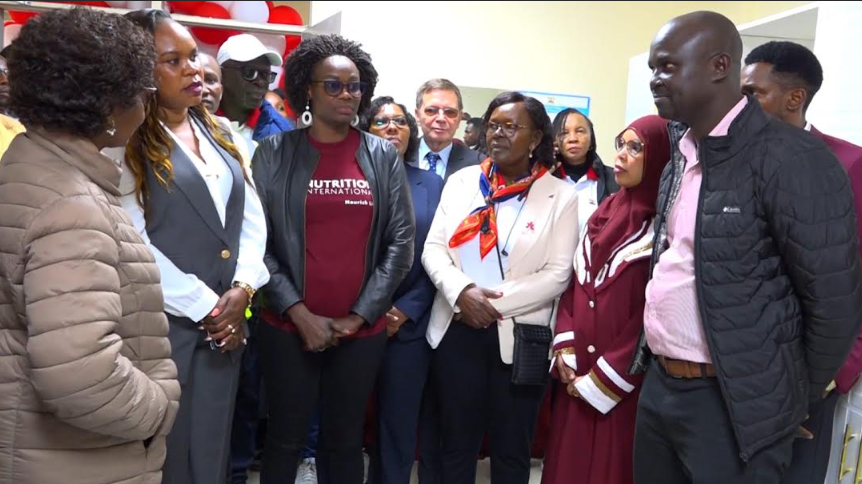
The Murang’a County Department of Health has stepped up efforts to support breastfeeding mothers, particularly working ladies, through the establishment of lactation centres at Kirwara and Kigumo Level – 4 health facilities.
The centers, established in partnership with development organizations, provide mothers with a safe and convenient environment to breastfeed or express and store breast milk while attending to their daily responsibilities.
County Coordinator of Nutrition Nancy Mwangi said the initiative was part of broader interventions aimed at creating a supportive environment for breastfeeding and improving maternal and child nutrition across the county.
“The lactation centres are intended to support mothers, especially those who have resumed work, to continue breastfeeding their children without interruption,” Mwangi noted as the country marks breastfeeding week.

The county administration, she added, is working to establish lactation centers in other hospitals, asking public institutions and companies to consider setting up lactation centers in workplaces.
The Nutritionist further noted that the county was implementing the Baby-Friendly Hospital Initiative (BFHI) and the Baby-Friendly Community Initiative (BFCI) to strengthen breastfeeding support both within health facilities and at household level.
According to Mwangi, the Baby-Friendly Hospital Initiative has been implemented in 15 public and private health facilities, with 50 healthcare workers trained on BFHI protocols.
She said self-assessments had also been conducted in all participating facilities to ensure that mothers receive quality breastfeeding counselling and support.
At community level, the county has trained 50 Trainers of Trainers and 50 healthcare workers on community-based Maternal, Infant and Young Child Nutrition (MIYCN) support.
The county has also built the capacity of 1,932 Community Health Promoters to provide breastfeeding advice and support to mothers at household level.
Mwangi said the county had established 720 Mother-to-Mother Support Groups and one Father-to-Father Support Group across 204 functional Community Health Units (CHUs).
“These support groups provide an important platform where mothers can share experiences, receive practical guidance and encourage one another to sustain breastfeeding,” she said.
The county has simultaneously intensified enforcement of the Breast Milk Substitutes (Regulation and Control) Act, 2012, through regular monitoring to safeguard breastfeeding practices and curb inappropriate promotion and marketing of breast milk substitutes.
Mwangi said the county had also developed a Maternal, Infant and Young Child Nutrition in Emergencies (MIYCN-E) Contingency Plan to ensure mothers and infants continue receiving appropriate nutrition support during emergencies.
She noted that the county had operationalized the Murang’a County Food and Nutrition Multi-sectoral Policy to promote coordinated action among different sectors involved in improving nutrition.
The administration has also embraced digitalization of maternal and child health services, including electronic antenatal and postnatal care records, immunization tracking and child growth monitoring.
Mwangi said the interventions had contributed to improved breastfeeding and child nutrition indicators in the county.
She said 74 per cent of mothers in Murang’a initiate breastfeeding within the recommended period after birth, compared with the national average of 62 per cent.
Exclusive breastfeeding among children aged zero to five months stands at 68 per cent in the county, above the national average of 60 per cent, she added.
Mwangi further said stunting had declined to 10 per cent while wasting stood at two per cent, both below the respective national averages.
She attributed the progress to sustained investment by the county government, domestic resource mobilization, collaboration with development partners, and integration of nutrition programmes into county development plans.
Mwangi urged mothers, families, employers and other stakeholders to create an enabling environment for women to continue breastfeeding, saying collective support was critical in ensuring children receive optimal nutrition during their formative years.
By Bernard Munyao and Ann Kendi