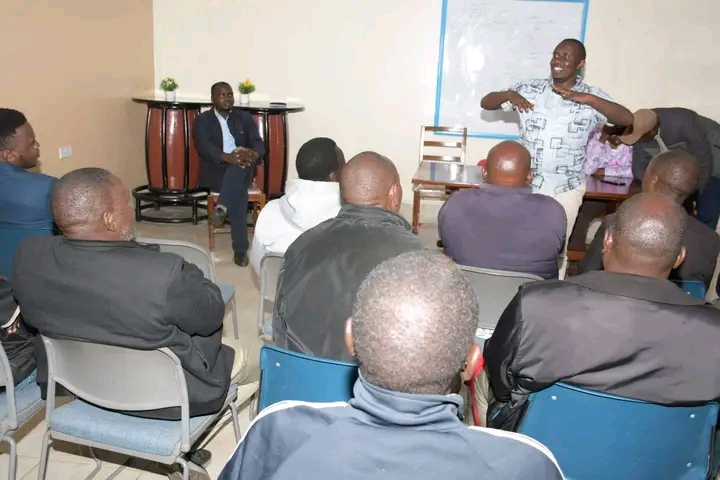
The emergence of Bunge za Wananchi, Swahili for “people’s parliaments”, is transforming the way ordinary citizens participate in political and governance debates, with the grassroots forums increasingly becoming influential platforms for civic education and public opinion across the country.
In Tinderet Sub-County, Nandi County, the informal assemblies are gaining prominence as residents seek spaces where they can freely interrogate leadership, development and socioeconomic issues affecting their communities.
The growing influence of the forums was recently demonstrated when former Nandi County Assembly Speaker and gubernatorial aspirant, Joshua Kiptoo, attended one of the Bunge sessions in Tinderet, where he chose to listen to the proceedings and views being expressed by wananchi.
Kiptoo’s decision to listen rather than dominate the gathering reflected the changing nature of grassroots political engagement, where citizens increasingly want leaders to hear their concerns directly before making political promises.
In his address, Kiptoo described the platform as important avenue through which wananchi can educate one another and discuss issues affecting society.
He underscored the potential of the gatherings to strengthen citizen participation beyond conventional political rallies.
“Unlike traditional political meetings, where politicians often control the agenda, Bunge za Wananchi give ordinary citizens an opportunity to determine what should be discussed,” he said.
He stated that farmers raise agricultural concerns, traders discuss markets and taxation, young people interrogate employment opportunities, while women and community elders bring forward issues affecting families and communities.
The former county assembly speaker said the forums have become informal schools of civic education.
He added that through open discussions, residents learn about their constitutional rights, responsibilities of elected leaders, public participation, government programmes and the importance of scrutinizing the use of public resources.
“The knowledge acquired during these forums is strengthening citizens’ ability to engage government institutions and demand accountability,” he noted.
For Tinderet, the significance of the forums is particularly pronounced as political activity gradually intensifies ahead of the 2027 General Election.
The Bunge platforms provide residents with an opportunity to interrogate competing political narratives and assess leaders on the basis of ideas, development records and proposed solutions rather than relying entirely on political rallies or social media campaigns.
They are consequently becoming important barometers of public sentiment.
Political analyst Peter Kibiwot said the views expressed in these gatherings can influence conversations beyond the meeting venues, as participants carry the issues discussed back to villages, workplaces, markets and social groups.
Kibiwot stated that the forums could therefore play an important role in shaping the political trajectory of Tinderet by influencing what residents consider important when evaluating candidates and political parties.
He added that their contribution to civic education is also particularly important for young people, who constitute a significant segment of the electorate.
By providing an open environment for political discussion, the gatherings are encouraging young citizens to understand their constitutional responsibilities and participate more actively in democratic processes.
However, he pointed out that the growing influence of Bunge za Wananchi also places responsibility on participants to maintain civility, verify information and avoid turning the forums into platforms for political propaganda or personal attacks.
“The strength of the people’s parliaments ultimately lies in their ability to provide an open space where competing opinions can coexist and citizens can question those seeking public office,” he stated.
The growing popularity of Bunge za Wananchi suggests that political participation is gradually moving beyond formal rallies and campaign meetings. The people themselves are creating spaces to debate leadership, development and governance.
As demonstrated by Kiptoo’s decision to attend and listen to one of the forums, these grassroots parliaments are becoming too significant for political leaders to ignore.
They are increasingly serving as platforms for civic education, instruments for shaping public opinion and potential forces in determining the political direction of the country.
By Sammy Mwibanda