Masinde Muliro University of Science and Technology (MMUST) marked the International Day of the World’s Indigenous Peoples by highlighting the importance of preserving indigenous knowledge, culture, and traditional practices for future generations.
Speaking during the celebrations at the university, Director of the Institute of Indigenous Knowledge, Cultural Studies, and Climate Change Prof. Josephine Ngaira said the institute seeks to empower local communities and older generations to preserve indigenous forests, foods, and medicines using modern methodologies.
Prof. Ngaira said the institute also seeks to bridge the gap between modern science and indigenous knowledge and cultures, noting that valuable knowledge held by older generations was increasingly being lost among the younger generation.
She said young people were increasingly abandoning indigenous ways of preserving food and using traditional medicines, despite communities possessing extensive knowledge of the practices.
“One of the most important goals is to empower the local communities and the older generations to be able to protect our indigenous forests and our indigenous foods using modern methodologies,” said Prof. Ngaira.
The celebrations focused on this year’s theme, “Honouring Indigenous Midwives: Safeguarding Life and Well-being,” which recognizes indigenous midwives as custodians of traditional knowledge and caregivers who play an important role in passing knowledge from one generation to another.
Traditional midwife Philis Mutei urged young people to embrace safe traditional family-planning practices and learn from indigenous health systems, saying there was a need to preserve knowledge passed down through generations.
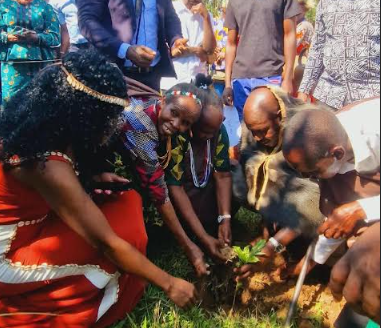
The university also announced plans to plant 130,000 indigenous trees across Western Kenya as part of efforts to combat climate change, conserve biodiversity and protect local ecosystems.
The indigenous trees to be planted include medicinal and culturally valued ones, including Markhamia lutea (Lusiola) and Croton megalocarpus (Musine).
The celebrations brought together indigenous communities and other stakeholders to showcase the value of traditional knowledge and promote its integration with modern scientific approaches.
By Annlinda Simiyu