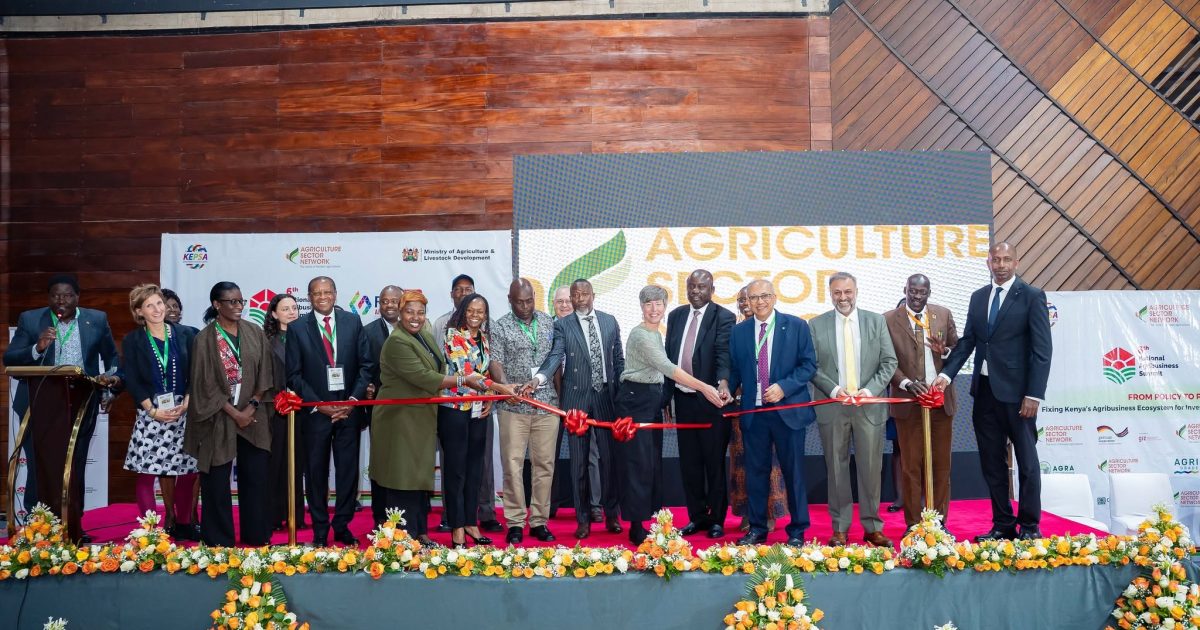
Kenya has been urged to strengthen private sector capacity, coordination and financing to ensure effective implementation of the National Agri-Food Systems Investment Plan (NASIP) 2026–2030.
Speaking during a panel discussion at the 6th National Agribusiness Summit at the Kenyatta International Convention Centre (KICC) in Nairobi Wednesday, experts said successful implementation of the five-year investment plan would require closer coordination among government, private sector, farmers, counties and development partners.
Agatha Thuo, Chief Executive Officer of the Agriculture Sector Network (ASNET), said the private sector was a key actor in implementing NASIP but needed to be better organised and equipped to take advantage of opportunities under the plan.
Ms Thuo called for mapping of private sector actors at county level, including cooperatives and farmer producer organisations, to identify gaps and strengthen coordination.
“We need to organize the private sector actors in the counties,” she said, adding that capacity building was necessary to enable businesses to understand and participate in investment opportunities provided under NASIP.
She said the private sector was broad and included farmers, food suppliers, logistics companies and technology firms, noting that fragmentation among actors remained a challenge.
Thuo further called on development partners to support private sector capacity building, saying business associations and other private sector actors also required resources to effectively coordinate their activities.
Dr Sophia Baumert, an agri-policy programme manager at the German Agency for International Cooperation (GIZ), said development partners should use their resources strategically to mobilize additional public and private investment rather than replace it.
She said fragmented, project-based financing could increase transaction costs and inefficiencies, adding that NASIP provides an opportunity to coordinate investments, implementation, budgeting and monitoring around a common national framework.
Baumert said development partners were particularly suited to supporting long-term, high-risk public-good investments such as climate resilience, water security and natural resource management, as well as de-risking investments through mechanisms such as guarantees and concessional financing.
She also stressed the importance of governance and coordination in ensuring that investments under NASIP translate into measurable results.
Dr Jedidah Wanjagi, a Public Financial Management Specialist at Expertise Global, said financing remained a major challenge for agricultural transformation and called for financial mechanisms that recognise the production cycles and risks faced by farmers.
Dr Wanjagi said farmers needed to become more bankable while financial institutions should develop financing arrangements that are better suited to agricultural production cycles.
She also raised concerns over post-harvest losses, climate-related risks, insurance costs and the ability of farmers to service loans under conventional repayment arrangements.
The panel moderator, Paul Gamba, an Agricultural and Rural Development Policy Expert, said the discussion was aimed at identifying practical measures for moving NASIP from planning to implementation.
The discussion also highlighted the need to involve young people in the implementation of NASIP.
Responding to concerns raised by youth participants, Thuo said ASNET had held a pre-summit youth webinar and was working with partners on incubation, commercialization and capacity-building opportunities for young people in agribusiness.
She encouraged youth to organize themselves at county and grassroots levels to create a stronger platform for participation in the agricultural sector.
The panel also heard calls for farmers to be regarded as investors and for counties to explore economic blocs that could help aggregate commodities and make agricultural infrastructure more economically viable.
NASIP 2026–2030 is Kenya’s national investment framework for transforming the agri-food system and mobilizing investment across the sector. The Ministry of Agriculture and Livestock Development says the plan seeks to mobilize KSh1.08 trillion in financing by 2030 and is aligned with Kenya’s commitments under the African Union’s Kampala CAADP Declaration.
The panel was held during the 6th National Agribusiness Summit, taking place at KICC from September 9 to 11 under the theme, “From Policy to Prosperity: Fixing Kenya’s Agribusiness Ecosystem for Investment, Innovation and Inclusive Growth.
by Emmanuel Mwendwa and Wasidia Freshwin