Jaramogi Oginga Odinga Teaching and Referral Hospital (JOOTRH) has recorded a major milestone in neurosurgical care following the introduction of vagus nerve stimulation (VNS) therapy for patients suffering from drug-resistant epilepsy.
Dr. Bethwel Raore, co-founder of the Kisumu Neuroscience Initiative, who has been leading a team of visiting neurosurgeons handling neurosurgical cases at JOOTRH, said the introduction of neuromodulation, including VNS, marked an important step in expanding specialised neurosurgical services in Kisumu and the wider region.
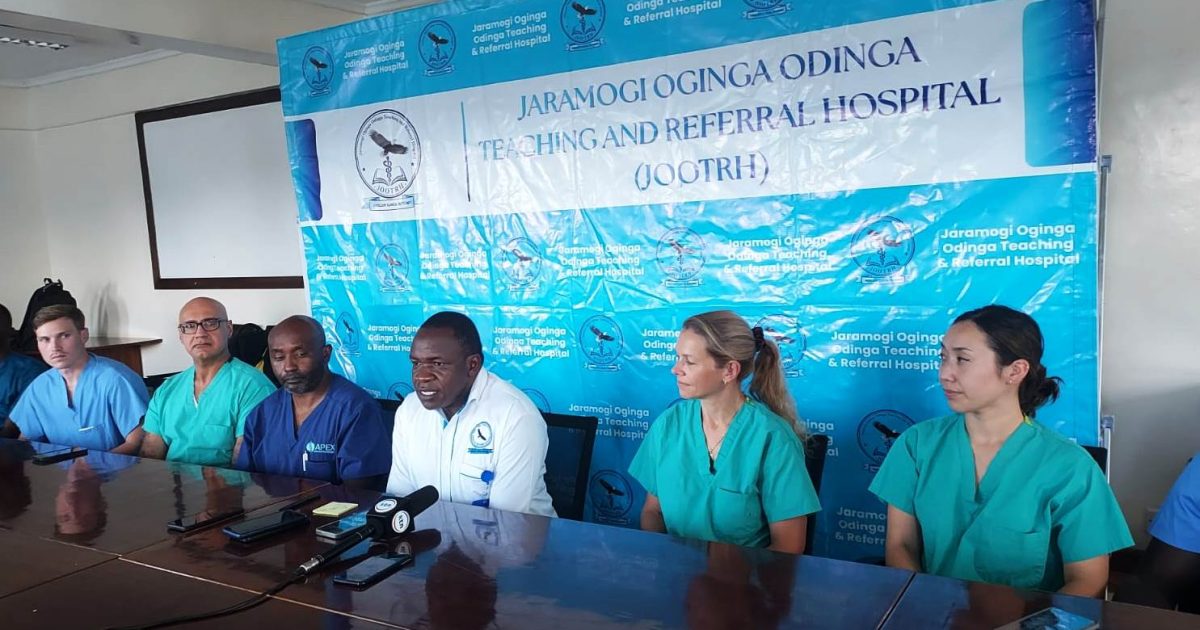
He spoke during a media briefing at JOOTRH on Friday following the conclusion of a five-day neurosurgical camp held at the facility.
VNS involves surgically implanting a small device that stimulates the vagus nerve in the neck by sending regular electrical impulses to the brain to help reduce the frequency and severity of seizures.
According to the specialists, the therapy is intended for patients with drug-resistant epilepsy whose seizures persist despite trying two or more anti-seizure medications.
The treatment does not necessarily cure epilepsy but can significantly reduce the frequency and severity of seizures. Specialists said patients may experience an average reduction of about 50 per cent in seizures, with improvement potentially increasing over time.
Dr. Raore, a board-certified neurosurgeon based in Georgia, USA, said the introduction of VNS at JOOTRH demonstrated the growing capacity of the hospital to provide advanced neurosurgical treatment locally.
He said the service was part of efforts by JOOTRH, which was elevated to a Level 6 hospital last year, and its partners to build local capacity in specialised neurosurgical care and reduce the need for patients to seek treatment outside the region.
JOOTRH Chief Executive Officer (CEO) Dr. Joshua Okise said the neurosurgical initiative, which began in 2017, had so far enabled more than 700 patients from across Kenya to undergo neurosurgical operations.
He noted that when the initiative began, Kisumu County did not have a single neurosurgeon, but the number has since grown to four neurosurgeons currently working at JOOTRH, including three who were recently employed by the facility.
“This is quite a growth in the neurosurgical world and we want this to continue,” he said.
Okise said the programme had focused not only on conducting surgical camps but also on training and capacity building for local medical teams, enabling the hospital to retain specialised skills after visiting specialists leave.
During the latest five-day camp, about 26 patients had undergone surgery by Thursday, with additional procedures continuing on Friday as the media briefing was held.
Patients undergoing procedures during the camp were required to register with the Social Health Authority (SHA), with no additional co-payment required.
Dr. Raore said the ultimate goal of the initiative was to establish a sustainable neurosurgical service in Kisumu that would be trusted and demanded by the community rather than relying on visiting surgical teams.
“When we started the camps, when we packed up to leave, we would leave and carry neurosurgery with us. Now we are packing and we are not carrying neurosurgery with us. Neurosurgery is staying in Kisumu with the experts who have been employed at JOOTRH and some mentored by us,” he said.
He said the growing number of local neurosurgeons and increasing volume of cases had created an opportunity for Kisumu to develop into a centre for neurosurgical training and research.
The visiting team included specialists from the United States, among them neurosurgeons and a paediatric neurosurgery and epilepsy surgery specialist. The team members have supported the programme using their own resources, including covering travel expenses and contributing their time and expertise.
The initiative has also received support from medical technology partners, including Medtronic, which has provided spine instrumentation used during the surgical camps.
Raore said the team hoped to expand neurosurgical education and create opportunities for specialists from other parts of Kenya and the region to come to Kisumu for training.
Okise said the knowledge and skills transferred to local specialists during the camps would remain at JOOTRH even after the visiting surgeons leave, enabling the hospital to continue offering specialised services.
He added that the hospital planned to cascade the knowledge and skills to other facilities in Kisumu County and neighbouring counties as part of efforts to strengthen specialised healthcare in western Kenya.
The development comes as JOOTRH continues to expand its specialised services following its elevation to a Level 6 facility, positioning it to serve patients requiring complex treatment from Kisumu and the wider western Kenya region.
by Mabel Keya-Shikuku and Chrispine Oduor (trainee)