Kenya’s financial institutions and the private sector have been challenged to move beyond traditional lending models and begin actively financing the country’s shipping and maritime economy, a sector described as a “sleeping giant” with the potential to create jobs, attract investment, and accelerate economic growth.
The Principal Secretary (PS), State Department for Shipping and Maritime Affairs, Mr. Aden Millah, said Kenya cannot achieve its ambition of becoming a competitive, industrialized, and prosperous economy without unlocking the enormous potential of the maritime sector.
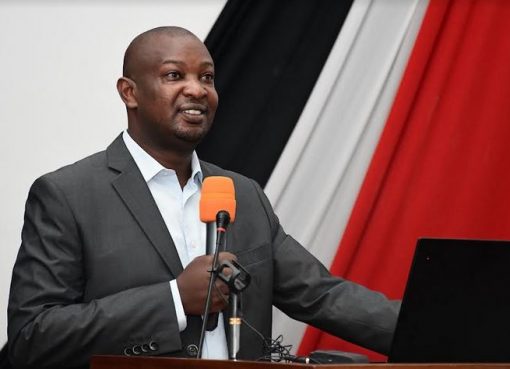
Speaking at Bandari Maritime Academy during the FY 2027/28 and Medium-Term Expenditure Framework Stakeholders’ Engagement Forum, PS Millah called for stronger collaboration between the government, private investors, financial institutions, development partners, counties, academia, and industry players.
“It’s high time that Kenya’s financial institutions must be part of Kenya’s shipping and maritime journey. Our financial institutions must understand and support maritime investments,” Mr. Millah said.
The PS said the maritime sector should no longer be viewed as a niche government function but as a major economic ecosystem capable of generating employment, expanding the tax base, increasing foreign exchange earnings, and supporting industrialization.
Kenya’s strategic location, he noted, gives the country a major advantage in global trade. The country has approximately 640 kilometres of coastline, territorial waters covering about 9,700 square kilometres and an exclusive Economic Zone of about 230,000 square kilometres.
More importantly, about 95 per cent of Kenya’s international trade is conducted by sea, making shipping and maritime activities central to the country’s trade and logistics architecture.
Despite this advantage, Mr. Millah said a significant proportion of the country’s maritime potential remains underexploited.
The opportunities range from international shipping, maritime transport and logistics to shipbuilding and repair, cargo handling, maritime education and training, marine insurance, offshore energy, marine biotechnology, blue data, freight forwarding, ship-handling, port agency services, oil bunkering and maritime tourism.
“Our responsibility as a government is to create an enabling environment in which these opportunities can be transformed into bankable investments and sustainable jobs,” he said.
The call for financial institutions to take a more prominent role comes at a time when the government is seeking to expand Kenya’s shipping capacity, maritime infrastructure, and human capital.
Mr. Millah said the sector requires long-term capital capable of supporting infrastructure, vessels, logistics, ship repair, port-related services, maritime technology, training institutions, and businesses along the maritime value chain.
He said financial institutions must understand the unique nature of maritime investments and develop financing solutions that can unlock private capital.
“Government cannot unlock the full potential of the maritime sector alone. We need stronger partnerships with the private sector, financial institutions, development partners, counties, academia, international maritime organizations, and local communities,” he said.
He added that Kenya must create an environment where private capital complements public investment, innovation is encouraged, and investors can identify clear and predictable opportunities.
Through the Vijana Baharia Programme, the State Department has set an ambition of training 35,000 seafarers, facilitating recruitment and placement of 20,900 Kenyan seafarers and providing sea-time opportunities to 14,500 seafarers.
The programme is designed not only as a training initiative but also as an employment and economic empowerment intervention.
The progress already made is significant. The PS said 9,969 seafarers have been trained, while 7,457 have secured employment through the programme.
This presents an opportunity for financial institutions to participate in financing the wider maritime skills ecosystem, including training infrastructure, certification, technology, accommodation, equipment, and enterprises established by trained professionals.
The government is also advancing maritime transport projects beyond the Indian Ocean coastline.
The State Department plans to advance maritime transport and investment projects covering the Coast Region, Lake Victoria, Lake Baringo, Lake Naivasha, and Lake Turkana.
According to PS Millah, the expansion of maritime infrastructure into inland waterways will open new opportunities for transport, trade, and economic activity.
“Our maritime agenda must therefore extend beyond the coast. Kenya’s lakes, rivers, and inland waterways are part of the national maritime economy,” he said.
The projects provide potential investment opportunities for banks, pension funds, insurers, development finance institutions, and private equity players interested in infrastructure, logistics, and transport.
The government is also seeking to strengthen Kenya’s national shipping capacity through efforts to revitalize the cargo capacity of the Kenya National Shipping Line under Project Mashariki and expand the KENSHIP Registry.
A stronger national shipping capability, Mr. Millah said, is important for Kenya’s trade competitiveness, resilience, and participation in international shipping markets.
For financial institutions, this presents opportunities across vessel financing, trade finance, marine insurance, cargo financing, logistics, ship agency services, and other supporting industries.
The PS said the country must change the way it approaches investment in the maritime sector.
“We must move from simply allocating resources to financing results,” PS Millah said.
He challenged stakeholders to ensure that every shilling invested in the maritime sector produces measurable economic value, including jobs, increased cargo throughput, lower costs of doing business, increased foreign exchange earnings, private investment, and improved maritime safety and security.
The same principle, he said, should apply to private capital.
Banks and other financial institutions should look beyond conventional sectors and recognize that maritime investments can create long-term and diversified economic opportunities.
For decades, Kenya’s maritime economy has largely been associated with the port of Mombasa and coastal activities. However, the emerging policy direction points to a much wider ecosystem involving shipping, logistics, inland water transport, maritime training, marine resources, insurance, technology, infrastructure, and international trade.
If properly developed, the sector could become an important engine for employment, investment, food security, foreign exchange earnings, export growth, and inclusive economic development.
The government is simultaneously working on policy and regulatory reforms, including the review of the Kenya Maritime Authority Act, 2006, and Merchant Shipping Act, 2009, alongside the development of maritime legislation and the Bandari Maritime Academy Bill.
The State Department is also working towards finalizing and operationalizing the Maritime Investment Policy and Incentive Regime, while strengthening maritime security and domesticating international maritime conventions.
PS Millah warned that lack of awareness of the economic value of the sector remains one of the barriers to investment.
“A sector that is not sufficiently understood cannot attract the investment, talent, and political attention required to reach its full potential,” he said.
He called for a stronger national conversation about shipping and maritime affairs as a major economic opportunity rather than simply a government function.
The message from the stakeholders’ forum was clear: Kenya has the geography, natural resources, human capital, and strategic location to become a major maritime and logistics hub.
What is required now is capital, innovation, partnerships, and disciplined implementation.
The PS said the ambition of the State Department is to position Kenya as a competitive maritime and logistics hub while ensuring that the benefits of the maritime economy reach ordinary Kenyans.
“The maritime sector must become a stronger source of jobs, investment, trade, innovation, revenue, and sustainable economic growth,” he said.
For Kenya’s banks and financial institutions, the opportunity is, therefore, no longer simply about financing another sector. It is about becoming partners in unlocking an economic giant that sits at the center of the country’s international trade.
With about 95 per cent of Kenya’s international trade moving by sea, the question is increasingly becoming not whether Kenya has a maritime opportunity, but how quickly the country can finance, build, and commercialize it.
By Justus Anzaya (PCO)